



Training for teachers – classes outside the school walls
The training “Organizacja lekcji terenowych i edukacji regionalnej w edukacji geograficznej” directed to primary and secondary school teachers took place in October. The event took place as a part of the FERS project – “Uniwersytet Wrocławski: Rozwój kadr dla dolnośląskiego rynku pracy”. The project was accomplished thanks to the European Funds for Social Development programme 2021-2027.
The training was conducted by academic staff from the Institute of Geography and Regional Development: mgr Marta Helt (Centre for Geography Didactics), dr inż. Dorota Borowicz-Mićka (Department of Geoinformatics and Cartography), dr Bartosz Korabiewski (Department of Physical Geography), and dr Krzysztof Parzóch (Department of Geomorphology).
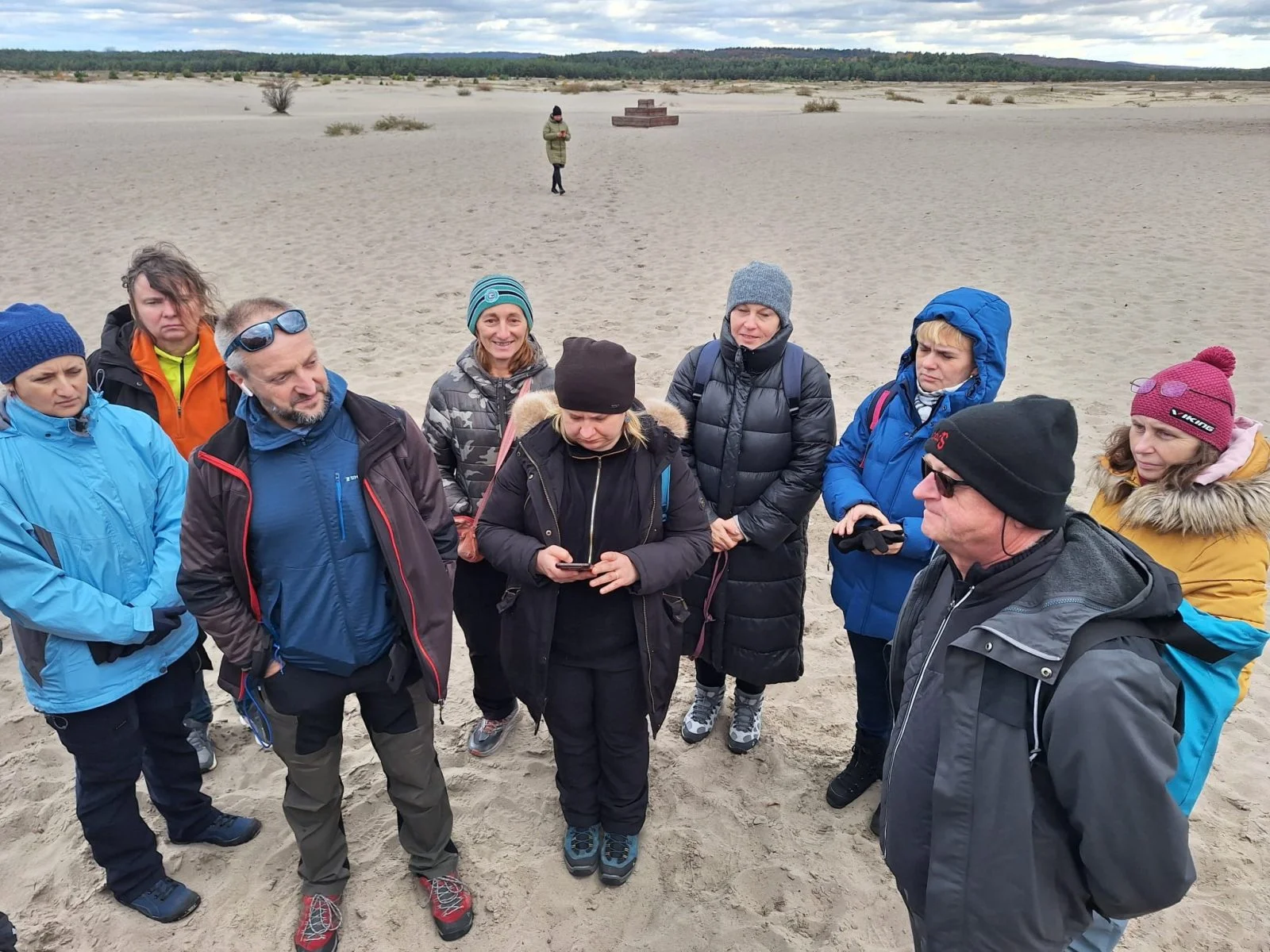
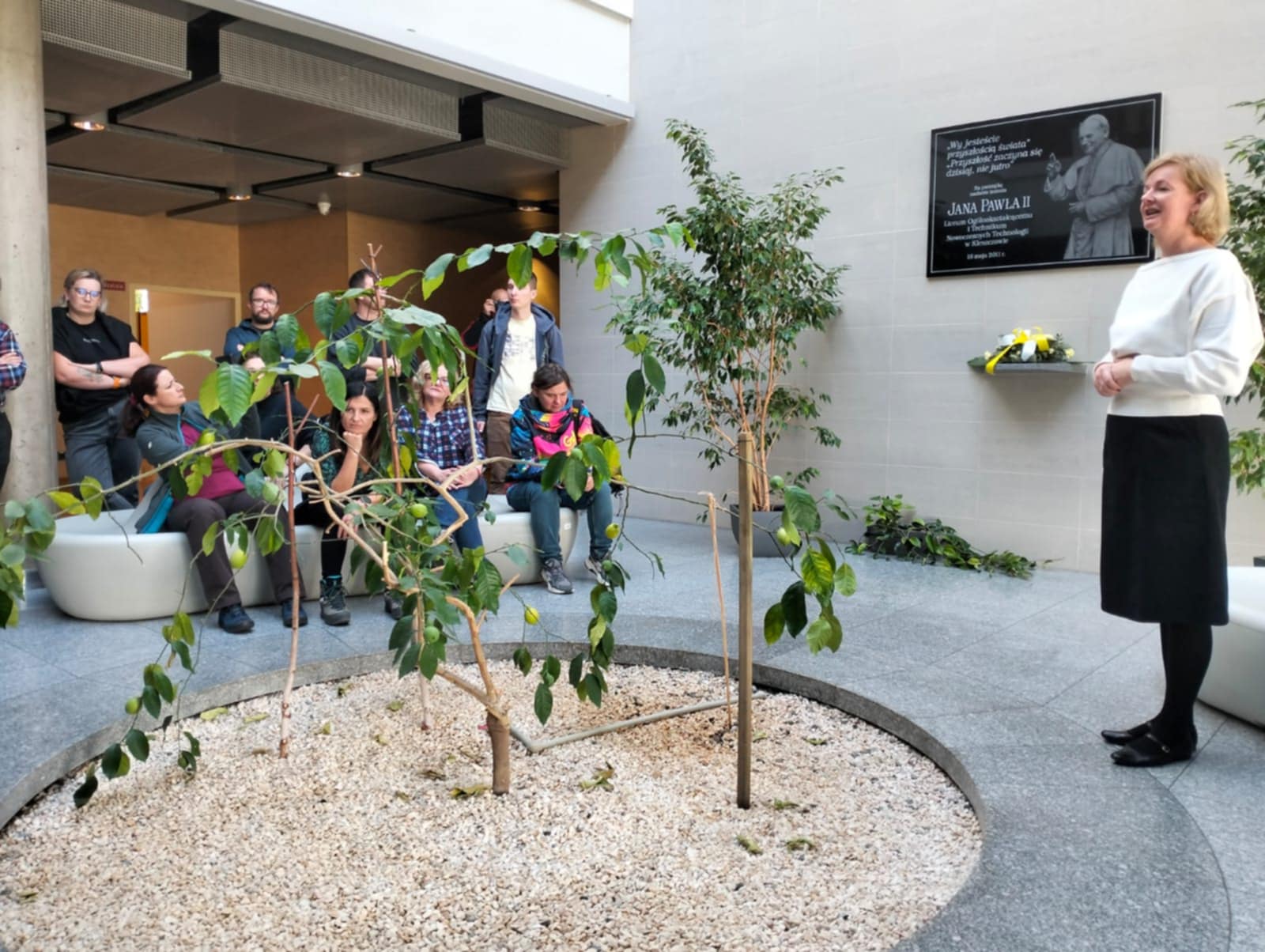
Thirty-five teachers participated in the training. On the very first day, they had an opportunity to get to know the rules of operation of the Bełchatów brown coal mine and power plant in the socio-economic and environmental context. Moreover, the educational offer and didactic base of the Technical Secondary School of Modern Technologies in Kleszczów (the best technical secondary school in Poland according to the “Perspektywy” ranking) were introduced to the participants. They also tested field methods of environmental research in the Załęcze Area of Outstanding Natural Beauty, such as the lichen bioindicator scale, apps for plant recognition, and tools helpful in field mapping.
The second day of the training was devoted to activities with the use of educational and upbringing values. Taking into account the fact that the accomplishment of a pupil’s assumed achievements takes place solely under conditions of active and conscious construction of knowledge by a pupil (not only by a teacher who provides information), the participants focused on the methods of analysis of tourism development in Złoty Stok and Karłów. The group had an opportunity to get to know these two places, which are explored by tourists in different ways. This in turn contributes to their diverse character of tourism development: the Mine in Złoty Stok and Karłów.
It is vital to remember that the accomplishment of goals in geographic education should take place through using methods that enable shaping observation skills of phenomena, and natural and anthropological processes during field classes. It is also important to introduce methods and didactic measures, as well as using facilities and educational centres which are conducive to noticing the beauty of the surrounding world in its different aspects, and for contemplating natural values and facilities of cultural heritage.
The third day concerned issues of the technical aspects of trips and field classes organisation. The financial, legal, logistic, and financial problems were discussed together with the matters of safety and care of children and young people. Working in subgroups, the participants tried to find solutions to examples of difficult situations that they may experience while fulfilling their duties as organisers and attendants during field classes.
The participants were analysing the possibilities of conducting field classes and the realisation of the selected content of the geography curriculum in the following places: St. Anne’s Mountain Nature Reserve, Błędowska Desert, and Ogrodzieniec Castle in Podzamcze.
The teachers learned how to modify the programme of trips in a practical way depending on the weather conditions. They also explored the content of the geographic education curriculum and the ways of improving key abilities of their pupils during trips. Furthermore, the participants “learned” how to construct pupils’ world according to the concept that pupils can actively extend their knowledge only when teachers provide them with an opportunity to acquire experience, and when teachers properly organise space for learning.
The teachers’ job seniority and their unique openness had a great impact on the effectiveness of the training. They willingly exchanged their experiences and analysed the presented situations. Teachers with less experience became more aware of the legal aspects of classes outside the school walls.
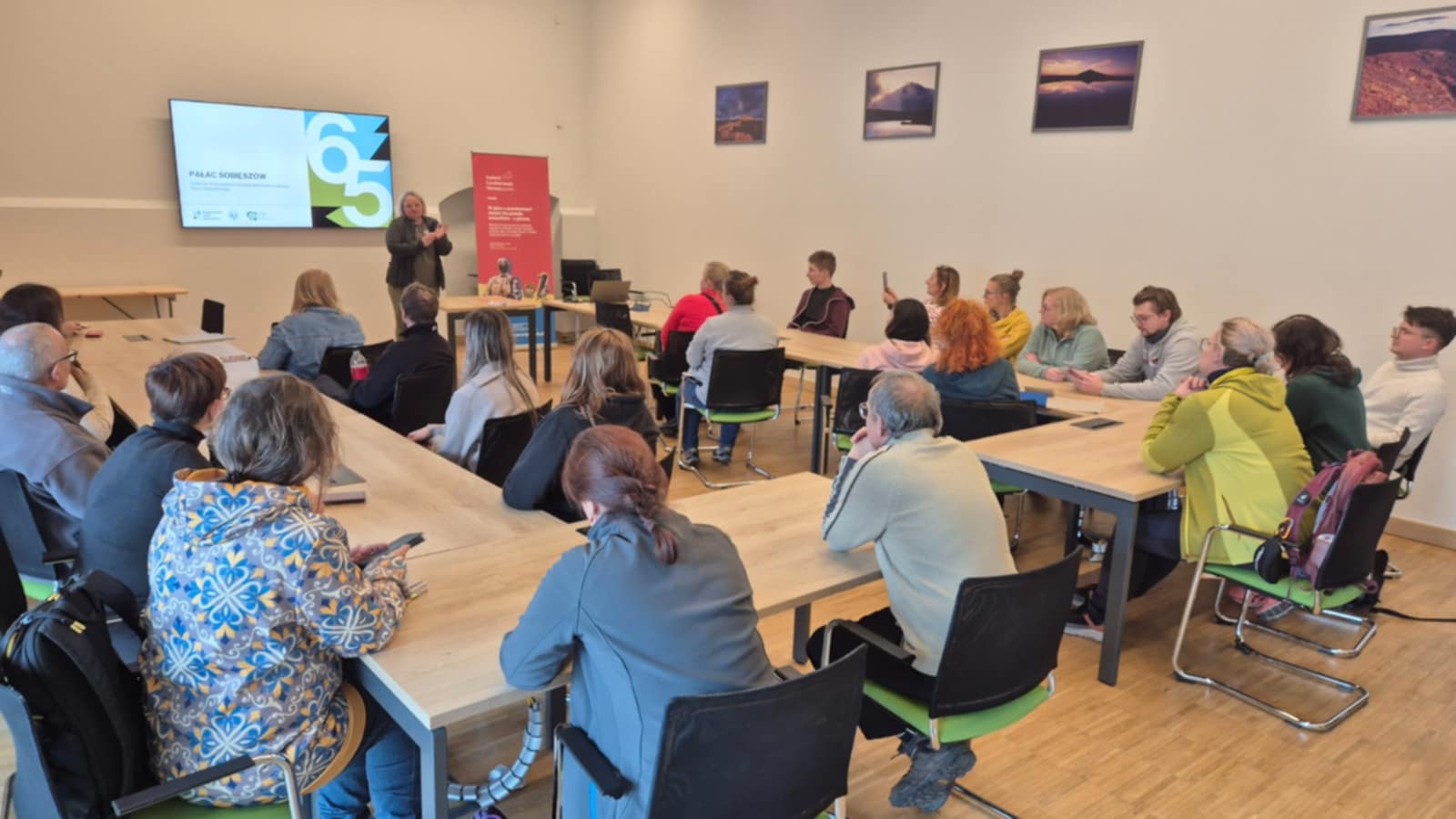
On the last day of the training, the group of teachers focused on exploring the possibilities of using the available didactic offer in education, presented by public subjects which realize their educational activity in the scope of geography. For this purpose, the teachers became familiar with the topics of classes and courses offered as a part of educational activities for children and young people by the Nature and Education Centre of the Karkonosze National Park – Sobieszów Palace in Jelenia Góra and the Education Centre “Domek Laboranta” in Karpacz. The participants’ task was to connect the topics of classes covered in field, interactive museums, and laboratories of these facilities with the content of the geographic education curriculum and evaluate possibilities of enriching and effecting the process of teaching. Additionally, the teachers familiarized themselves with the “Storczyk” Ecological Station of the University of Wrocław, which is located in Karpacz in the Karkonosze National Park and functions, among other things, as an accommodation and didactic base for so-called “green schools” (pl., zielone szkoły).
Organisation of field classes by teachers and their preparation are essential due to the fact that the purpose of such classes is to shape the careful perception of the surrounding space and its value. The organisers believe that the inimitable character of the places selected for the training and their atmosphere influenced the way in which the participants perceive these landscapes. Moreover, the substantive support that the teachers received will be fundamental for them in the realisation of unforgettable projects with their pupils.
Translated by Kinga Krzywonos (student of English Studies at the University of Wrocław) as part of the translation practice.


Date of publication: 21.11.2025
Added by: M.J.


