



Everyday life relics of former residents of Wrocław
Archaeological works connected with a new investment of the University of Wrocław, located at the junction of Kuźnicza and Uniwersytecka Streets, on the site of the former Kalogródek area, are coming to an end. In the final stage of the research, the remains of a tenement house erected in 1866 were uncovered. The building was destroyed during the siege of the city in 1945.
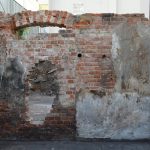
One of the clearly identifiable traces of the final phase of the war was a breakthrough made in a previously bricked-up doorway of one of the cellars, documented during the excavation works. Archival sources and eyewitness accounts indicate that such passages were created during the siege in order to ensure communication between neighbouring tenement houses.
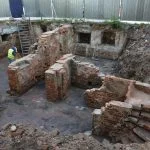
During the course of the research, the remains of cellar walls were uncovered and documented, and numerous objects belonging to the building’s last residents were discovered. Most of these were containers for food and beverages, made of glass and porcelain. Among them, bottles produced by local beer breweries (including the Hasse brewery in Wrocław) and herbal liqueurs (such as Aechter Alpenkräuterlikör and H. & L. Guttentag, Breslau) predominated.
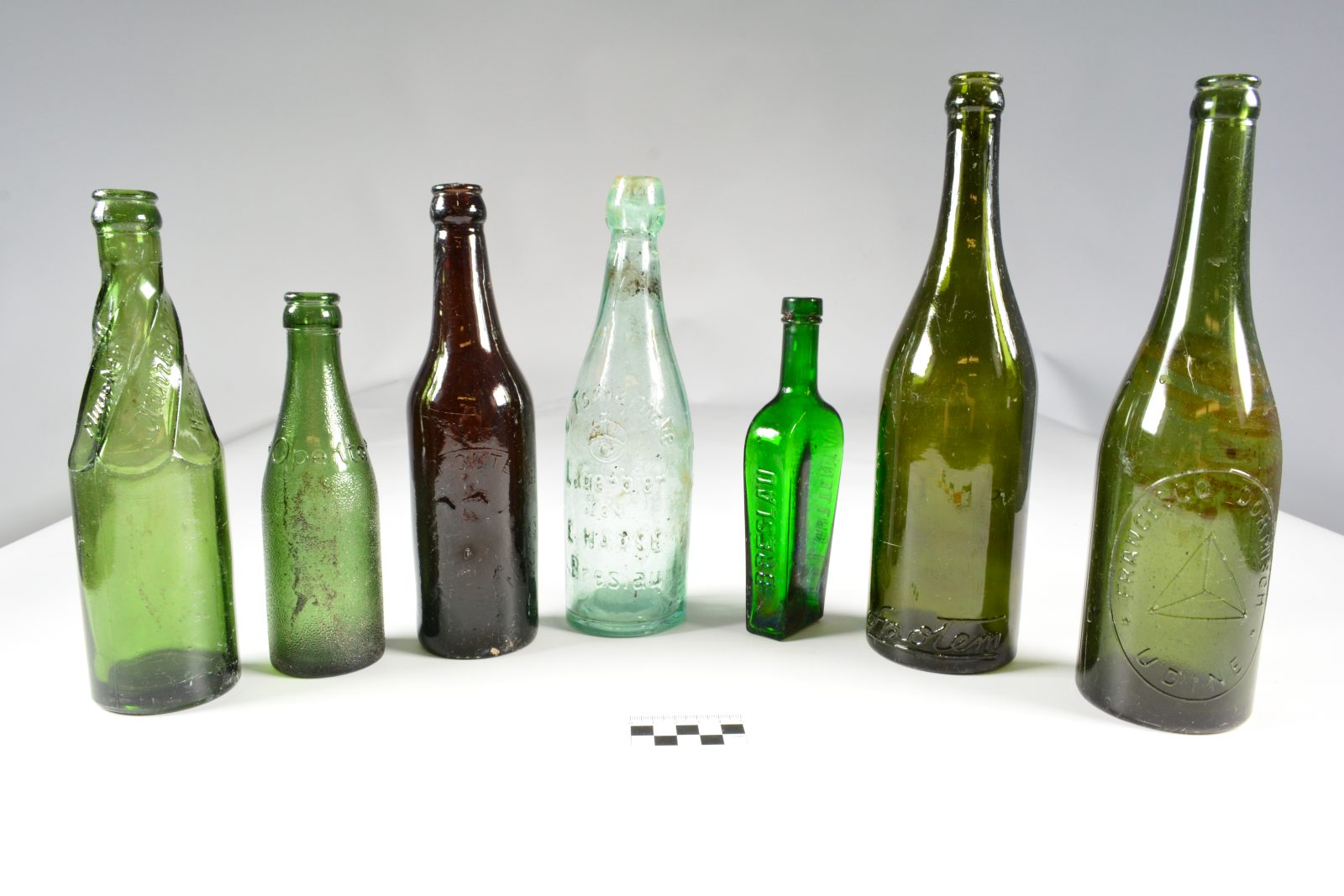
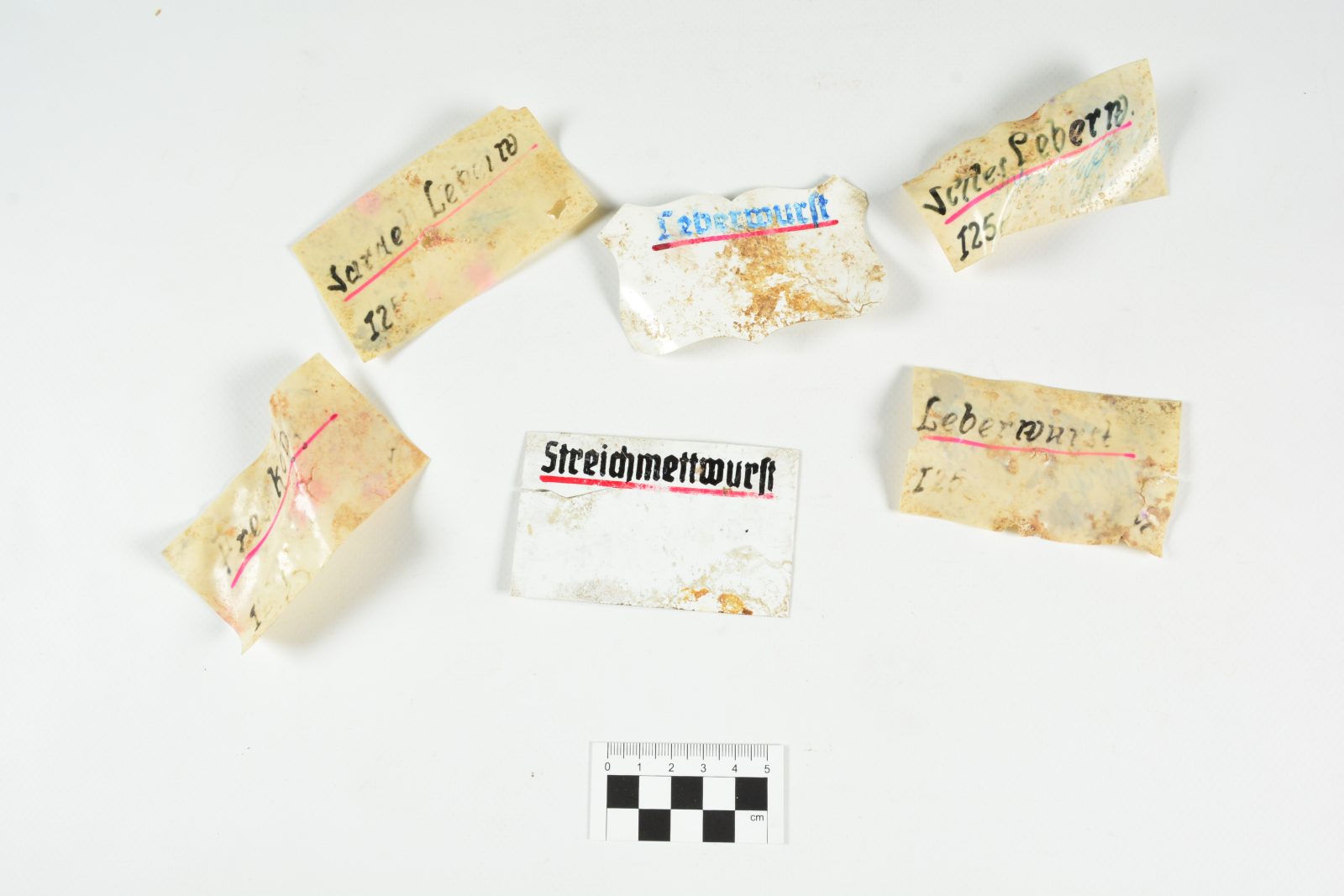
However, products originating from more distant centres were also present, including Munich, Poznań (the Mycielski Brewery, renamed during the Second World War as Brauerei Gutenbrunn Posen), the “Społem” cooperative, and the Italian city of Udine (Francesco Dormisch, export beer from 1937). Also recorded were damaged elements of the fittings of one of the shops that had operated on the ground floor of the building, including a cash register manufactured by the National company and labels bearing the names of different types of sausages.
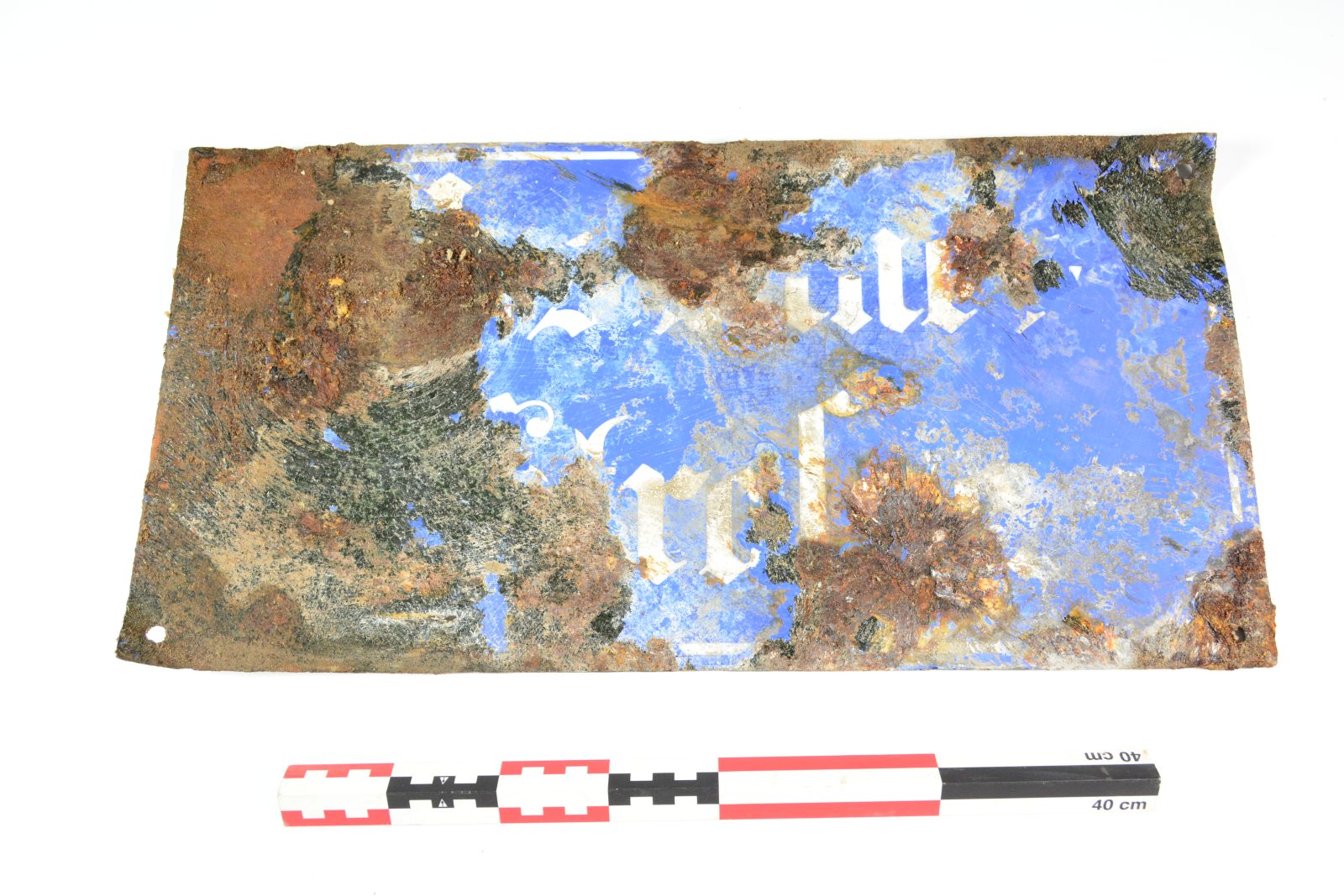
Nad gruzem wypełniającym wnętrza piwnic wyróżniała się warstwa związana z powojenną akcją usuwania niemieckich śladów z przestrzeni Wrocławia. Znajdowała się w niej silnie zniszczona tablica z dawną nazwą Ursulinenstrasse (ob. ul. Uniwersytecka), wykonana w charakterystycznej dla połowy XIX w. wrocławskiej stylistyce – białe litery na błękitnym tle.
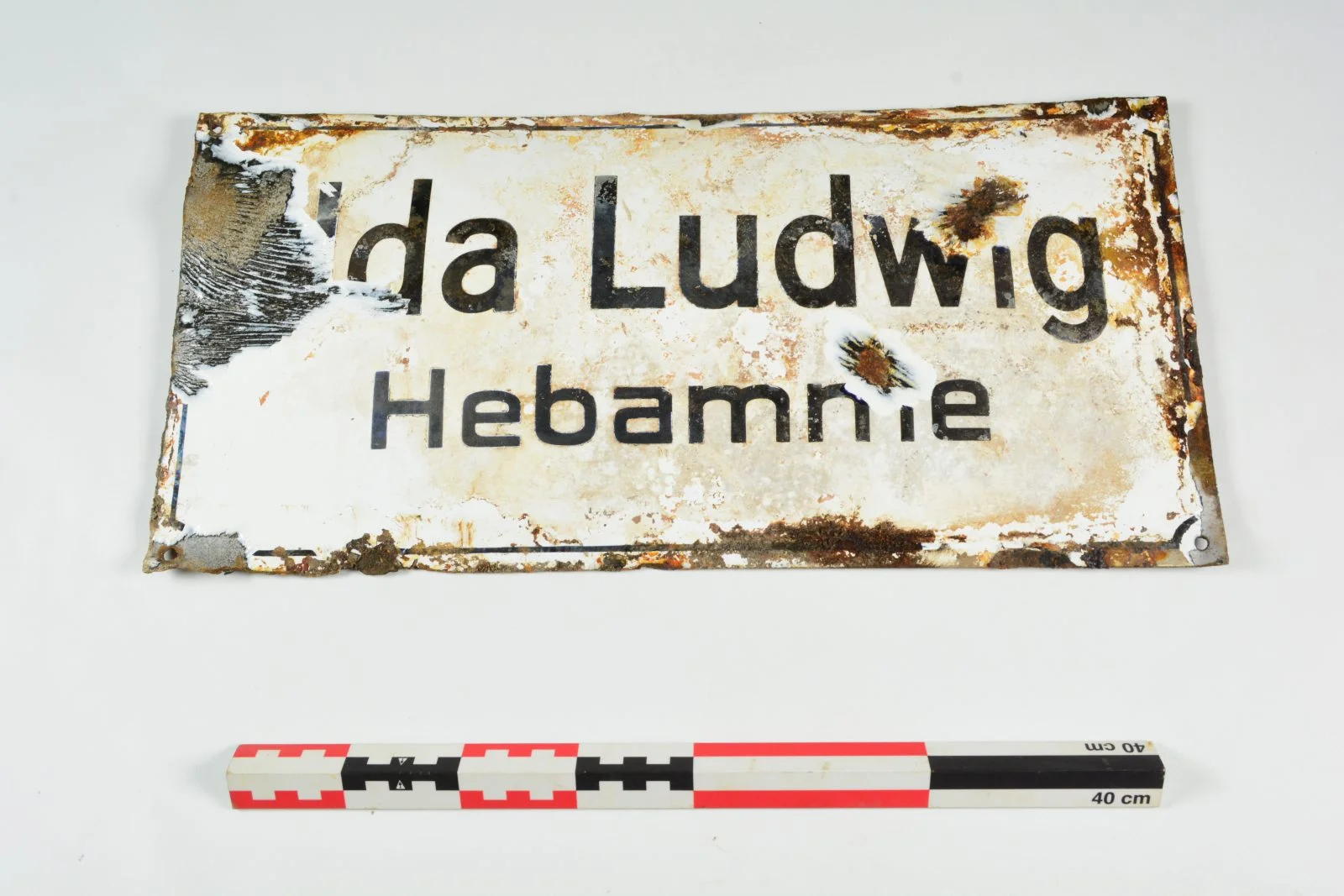
An enamel sign belonging to the midwife Ida Ludwig was also discovered. It had been torn from the façade of the tenement house at 43–45 Kuźnicza Street (the House under the Green Pumpkin and Two Poles), located on the opposite side of the street. Address books indicate that the midwife lived there towards the end of the war.
In the rubble associated with the fire that destroyed the building, a copper plaque covered with examples of decorative initials was also found. It bore the name Alois Woltz, along with the date and place: Hanau, 1902. In addition, a plastic key fob bearing the surname Dokter was discovered.
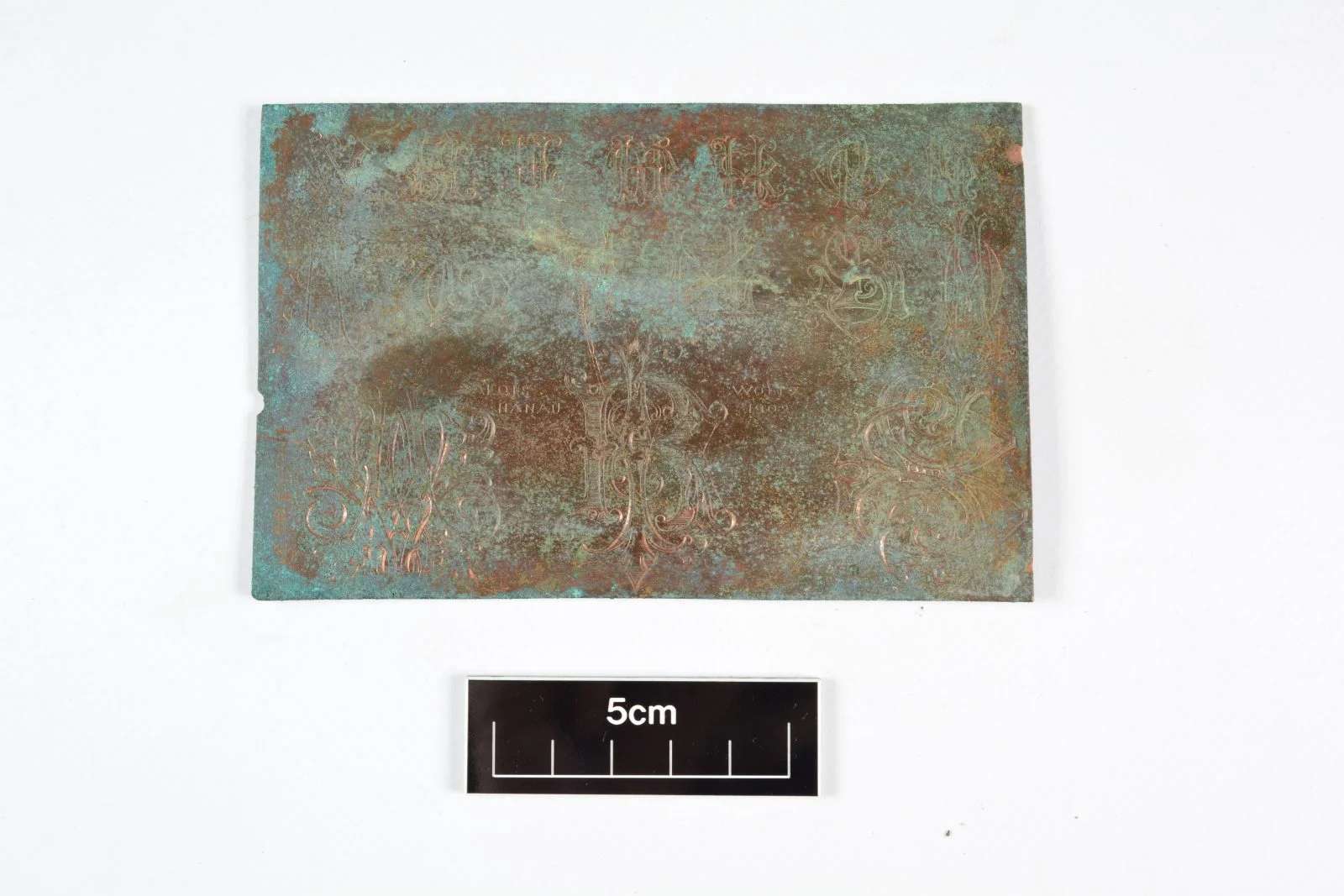
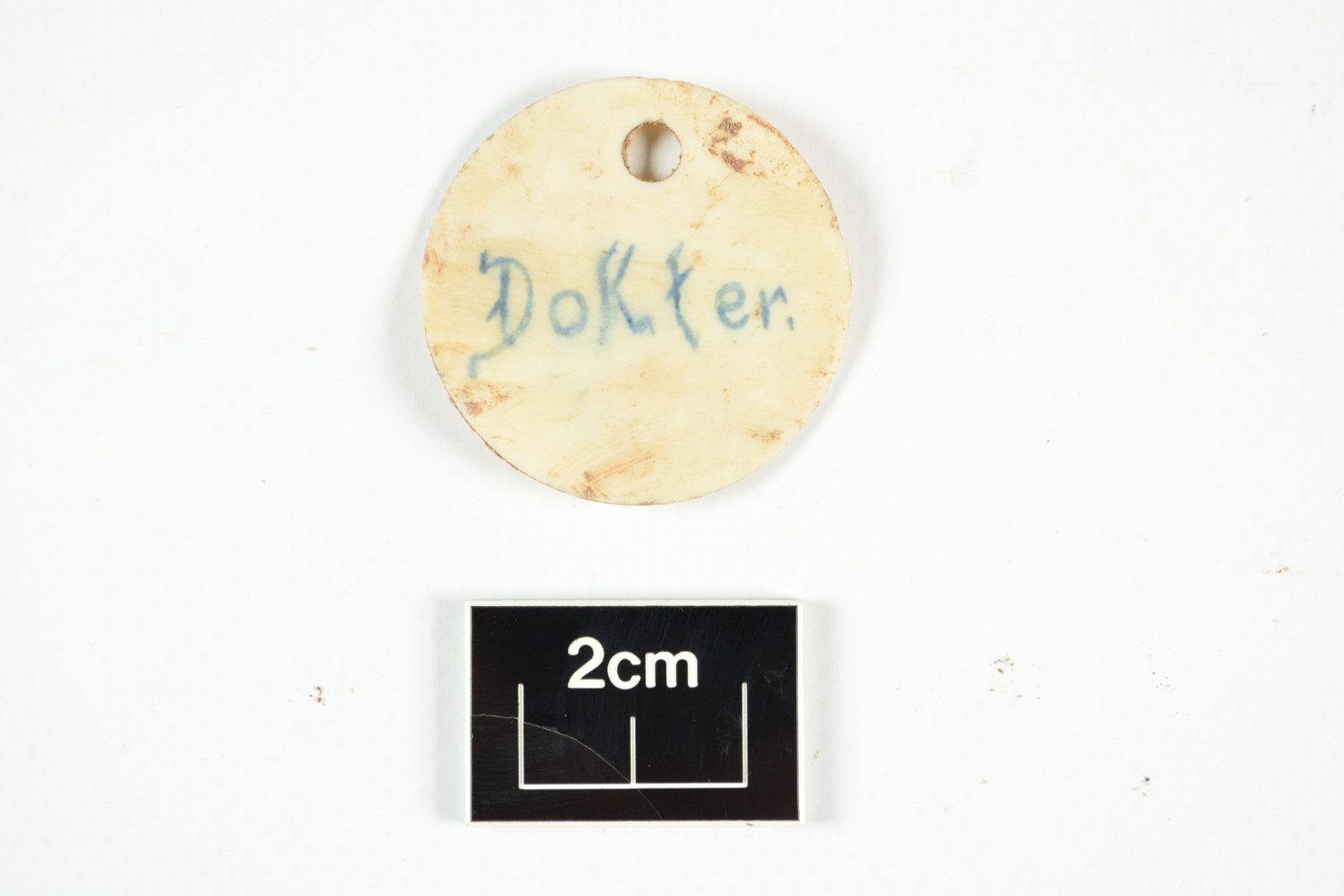
Thanks to preserved archival documents and detailed archival research, it was possible to establish a great deal of information concerning the owners of the recovered objects.
Ida Ludwig, née Vogel, was born in 1880 in Wołów. In 1903 she married Georg Ludwig. At that time, the couple lived at Neumarkt 12 (today Nowy Targ Square) and had two children, Erna and Kurt. Erna died after six weeks. Georg Ludwig, Ida’s husband, died in 1941. The post-war fate of the midwife remains unknown.
Alois Woltz was born on 22 June 1886. He studied at the School of Arts and Crafts (Kunstgewerbeschule). In 1922 he worked in silver processing in Essen, and later arrived in Wrocław from North Rhine-Westphalia (Jülich). In November 1934 he moved into the tenement house at 29b Kuźnicza Street and was listed in address books as an engraver and metalworker. His presence in this building was not coincidental – he married the widow of the owner of the Schlossarka jewellery shop. He survived the war and was still living in Bonn in 1965. At the time the discovered plaque with samples of initials was made, he was 16 years old; it may have been an assignment completed as part of a journeyman’s examination.
Fritz Dokter, born on 27 January 1910, was a turner by trade. He moved into the building in 1938, and from 1939 served as the caretaker of the tenement house under investigation.
It is also known that from at least 1910 one of the floors housed an academic boarding house rented by the University of Wrocław. In addition to accommodation, students were able to purchase meals there at affordable prices.
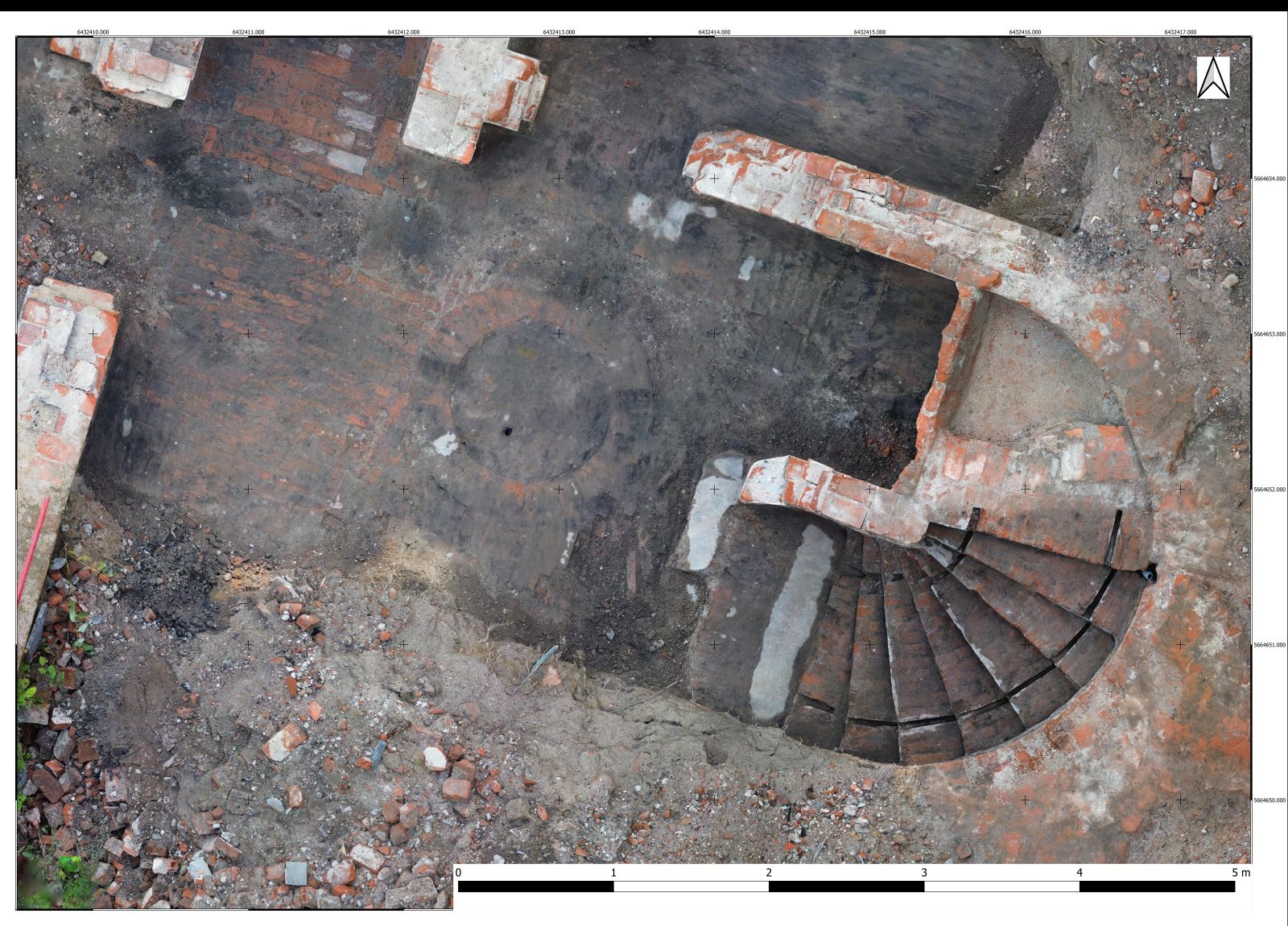

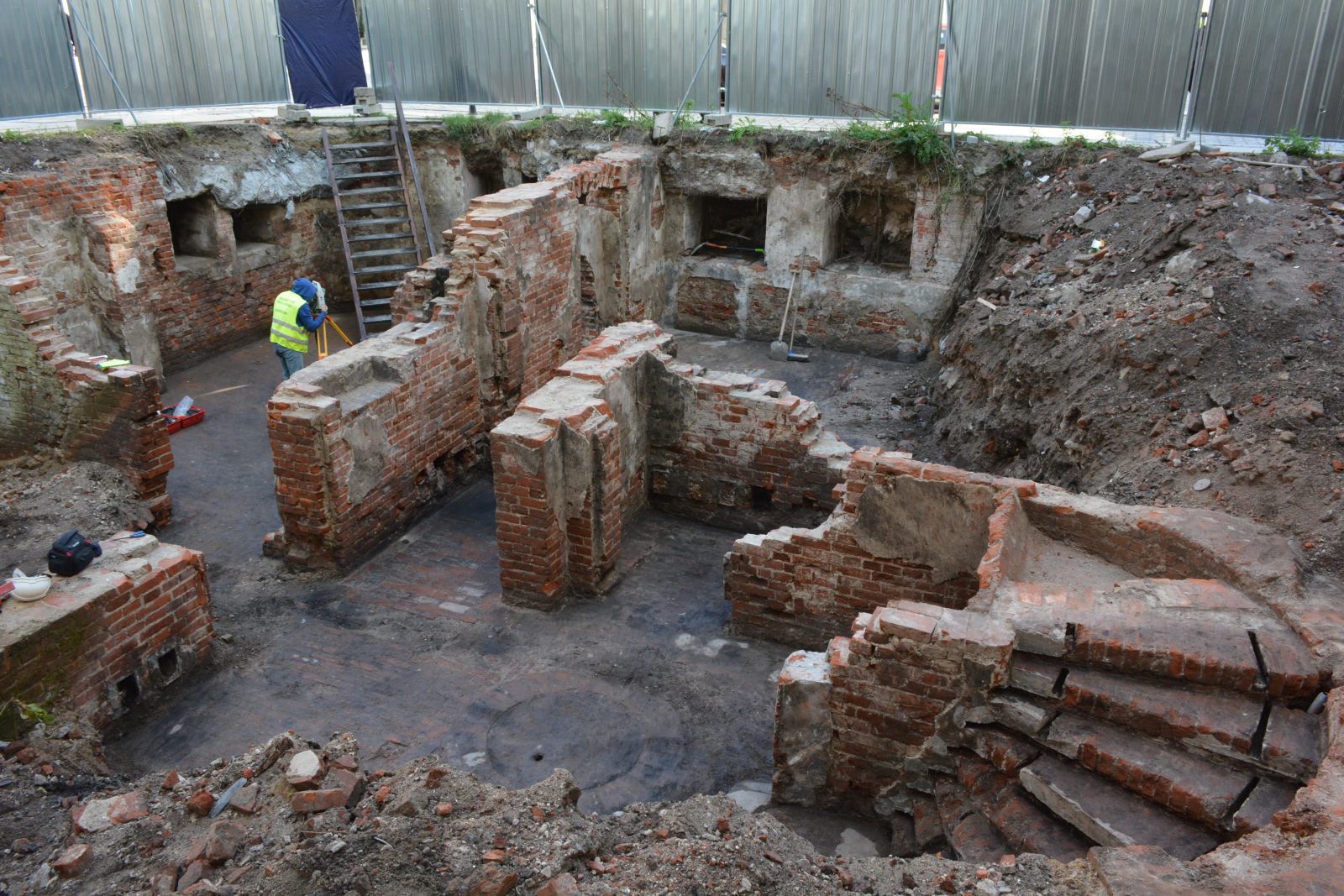
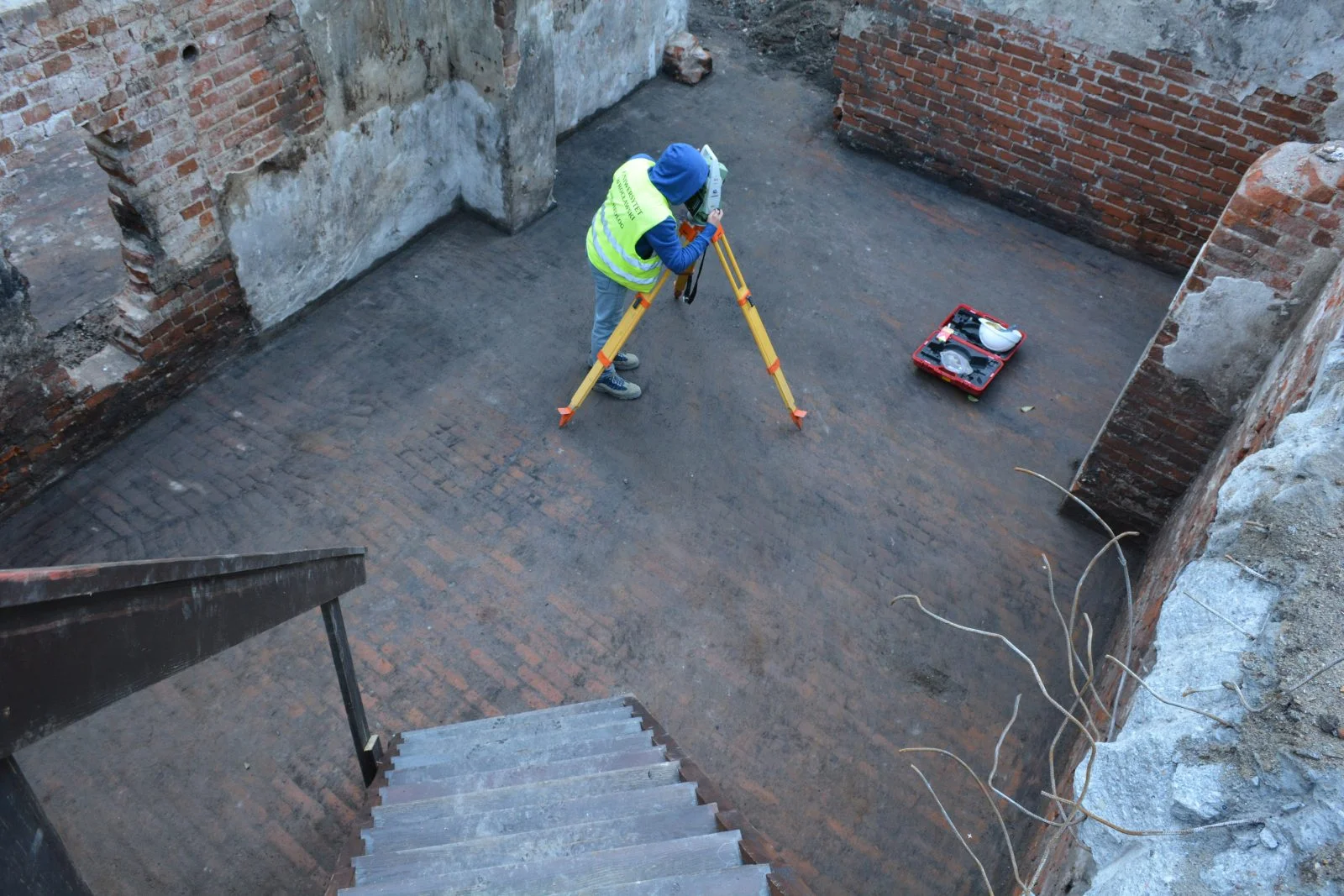


The artefacts uncovered during the research constitute a rare example of a situation in which specific archaeological objects can be linked to identified individuals. They contain a record of the biographies of former residents of the city connected with the site under investigation. In this case, archaeology serves as a tool for restoring the memory of these people’s everyday lives. In the future, the objects will be displayed in the new building planned for this location.
Text by dr Paweł Duma, Department of Historical Archaeology, Institute of Archaeology, Faculty of Historical and Pedagogical Sciences.
The text was produced in cooperation with the initiative “Spod ziemi patrzy Breslau”.
A new university building in the city centre
Other recent studies conducted at the University of Wrocław in connection with various investments:
Botanical Garden and its history
War traces near Koszarowa Street
Complied by Katarzyna Górowicz-Maćkiewicz
Photographs: P. Duma, M. Grześkowiak, Institute of Archeeology of the University of Wrocław
Date of publication: 18.12.2025
Added by: E.K.


