




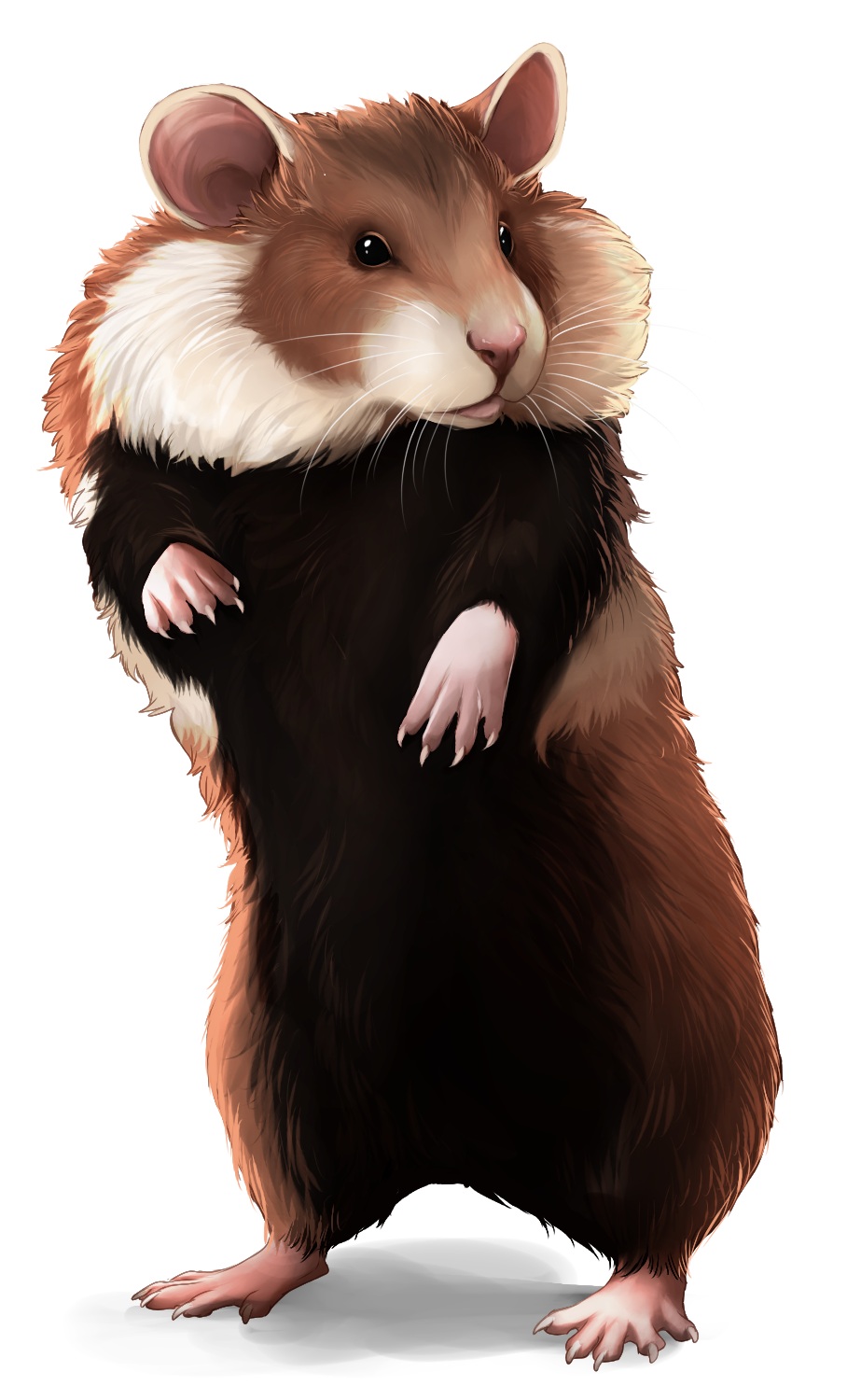
The European hamster – our favourite for the “Animal of the Year 2026” title
The Ministry of Climate and Environment invites the public to take part in the vote. The plebiscite is an initiative aimed at raising awareness of native species and their protection. We love all animals – but why, out of twelve candidates, is this likeable mammal our favourite?
− The European hamster is one of the fastest-declining mammals in Europe. It once ranged across almost half of our country,” explains our scientist from the Faculty of Biological Sciences − dr hab. Adrian Marciszak, prof. UWr.
The European hamster Cricetus cricetus (Linnaeus, 1758) remained a permanent and well-recognised component of Poland’s fauna until the 1990s. The open, extensive and almost flat agricultural landscapes of Silesia and Greater Poland provided optimal conditions for the species. Progressive transformation of the landscape into agricultural land – including deforestation and the expansion of arable areas – created favourable living conditions for this mammal, originally associated with vast steppe environments.
Large expanses of arable fields with an abundant food base of cereals and root crops, together with wide field margins providing shelter, promoted the species’ spread and population growth. Surveys conducted between 1953 and 1970 showed that the hamster occupied almost the entire area of Silesia and Greater Poland in a continuous range. It avoided only the central and higher parts of the Sudetes, reaching an altitude of 460 m above sea level in the Sudeten Foreland. These studies confirmed its presence at more than 250 localities.
A reassessment carried out a decade later reduced this figure to just over 100 sites. Nevertheless, the species was still commonly encountered across most agricultural areas.
However, nationwide surveys conducted between 1999 and 2005 revealed a catastrophic situation. The hamster was not recorded at any of the Lower Silesian sites reported sixteen years earlier. Only a few localities in the western part of the Opole region, adjacent to Lower Silesia (including the Głubczyce Plateau), indicated probable persistence of the species. Sites discovered since 2013 near Jawor and Legnica are the only ones that have survived in Lower Silesia. The populations from the Trzebnica Hills, discovered in 2015, now appear to have disappeared. The current distribution map in Poland shows that the remaining relatively continuous range has shifted far to the east and now runs roughly along the Gliwice–Lubliniec–Kłobuck line.
− It should be emphasised that the Lower Silesian population is exceptional, as it represents a unique northern lineage of the species, not found elsewhere in Poland and occurring only in isolated pockets in western Europe − our researcher notes.
How did this happen?
It is natural to ask what factors led to such a dramatic decline in a rodent that was still common only a few decades ago. The obvious answer is the wide range of human activities, but it is worth briefly examining the mechanisms behind this process.
The European hamster is a typically steppe species of Asian origin. Human-driven landscape transformation enabled many originally steppe species to adapt to a new environment – agricultural ecosystems. Historically, the fields of Silesia, embedded in a diverse agricultural landscape with a mosaic of fields and meadows and varied crop rotation, provided excellent habitats for species such as the great bustard, stone curlew, grey partridge, skylark, spotted souslik, steppe polecat, birch mouse, harvest mouse, and, of course, the European hamster.
This extensive farming model persisted until the first half of the twentieth century, though not everywhere to the same degree. Compared with central and eastern Poland, industrialisation and monoculture farming progressed more rapidly in Lower Silesia, especially in its western and central parts, as well as in Greater Poland. In many other regions, particularly the Sudeten Foreland, a modified version of this traditional system survived until the end of the twentieth century. This explains why hamsters persisted in areas such as Jawor and the Trzebnica Hills.
Fields in these areas still partly resembled the diverse agricultural mosaics of 100–200 years ago, fragmented by wide field margins and vegetated farm tracks, accompanied by small watercourses (ditches, canals, ponds and small field pools). Unploughed strips provided natural “islands” where dispersing juveniles, digging much shallower burrows, could survive the most dangerous period in late summer and autumn. Most farm work was carried out manually or with simple tools. The fallow period after harvest was relatively long, allowing hamsters to collect and store sufficient food reserves for winter survival. Only later did increasing mechanisation, chemical inputs and agricultural intensification lead to a marked deterioration of habitat conditions for steppe species, including the hamster.
This process intensified in Poland in the late 1970s and early 1980s, particularly in the lowland parts of Silesia and in Greater Poland. Small, narrow fields with diverse crop rotations were converted into uniform monocultures, often covering dozens or even hundreds of hectares and lacking field margins or other in-field refuges.
Wasteland was ploughed up, hedgerows and field margins were reduced or eliminated, and grazing was abandoned. Ploughing also became significantly deeper and was usually carried out immediately after harvest. Increasingly heavy and efficient machinery enabled rapid harvesting and full preparation of fields for the next growing season.
Paradoxically, mechanised harvesting leaves more residual food than manual harvesting once did. However, the extremely short interval afterwards prevents hamsters from accumulating adequate winter stores. Moreover, rodents foraging on bare fields without vegetation cover are particularly vulnerable to predators, especially birds of prey.
Arable fields have effectively become production factories from which all “non-productive” elements are removed. There is virtually no space for other living organisms, and any attempts at colonisation are immediately counteracted. This applies especially to so-called “pests” – a term reflecting a human, subjective perspective – such as weeds, insects or rodents, which are quickly eradicated using chemical or mechanical methods.
Negative competition for burrows between brown rats and hamsters has also been identified. Rat pressure may significantly affect hamster populations and constitute an important mortality factor at some sites. Hamsters also fall victim to free-roaming dogs and cats, among the most serious threats to native wildlife.
The European hamster as an umbrella species
The European hamster also performs very well as an umbrella species – a symbolic guardian of other organisms and the habitats it occupies.
An umbrella species is one whose protection indirectly safeguards many other species co-occurring in the same ecosystem. As a resident of arable fields, steppes and open landscapes, relatively large for a rodent, easily recognisable, feisty in character and visually appealing – “a rat in a luxury edition” – the European hamster serves as an ambassador for the relic steppe flora and fauna once widespread in Poland. Today, their last remnants survive mainly in the country’s eastern regions. By protecting the hamster, we also protect the habitats of familiar species whose numbers have declined sharply in recent decades, such as the European hare, grey partridge and skylark. In spring fields where hamsters still persist, these species are often encountered first, followed by signs of hamster presence.
− The European hamster works extremely well as an ambassador and umbrella species because it is colourful, distinctive and stands out clearly among other rodents. In today’s world, where colour, image and movement attract attention, it is an ideal flagship species. Other co-occurring species benefit as well − emphasises prof. Adrian Marciszak.
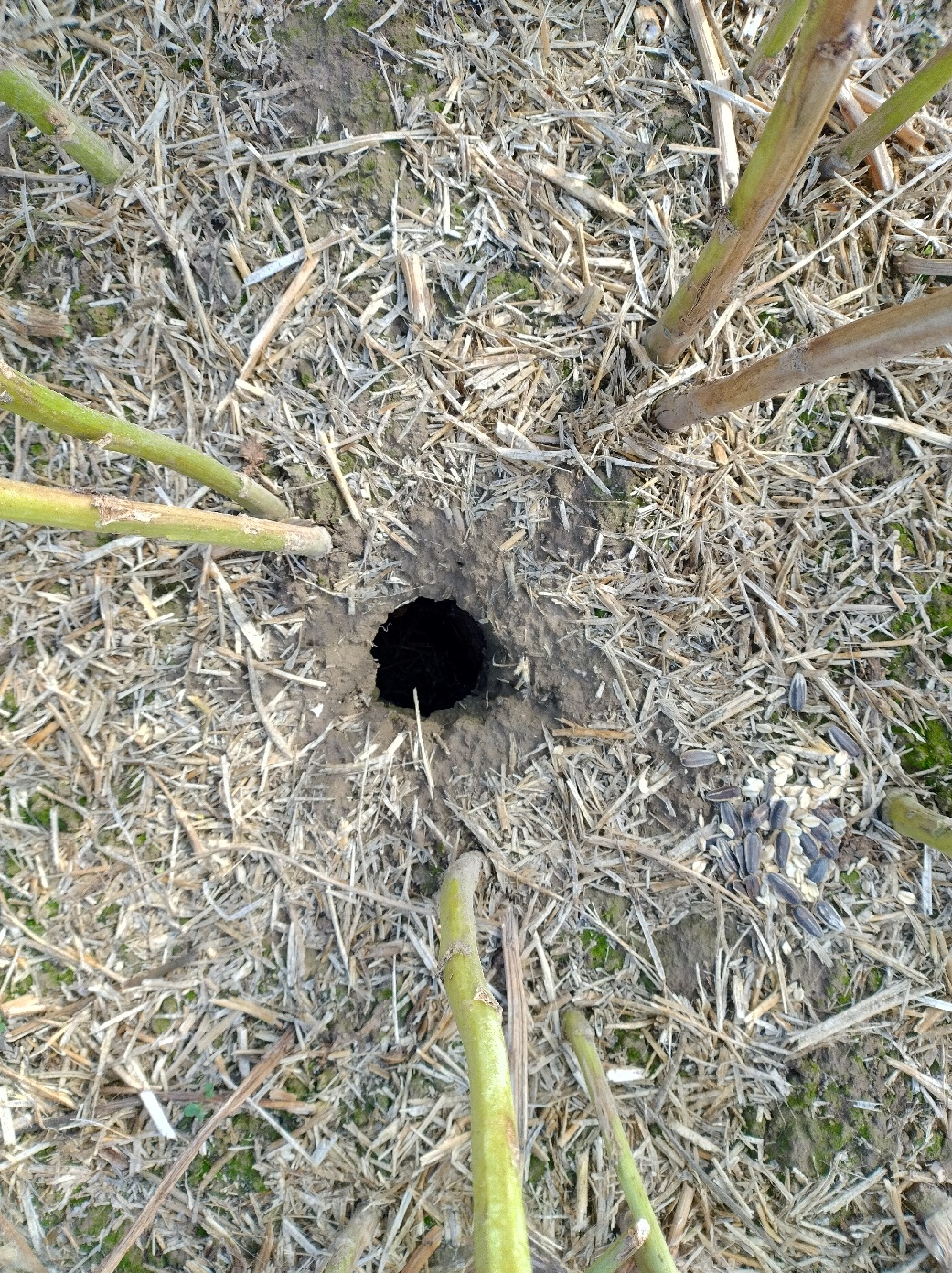
The Department of Palaeozoology at the University of Wrocław supports and actively participates in the national monitoring of the European hamster in Lower Silesia. Students, including Maciej Struski – the author of the photograph – were involved in last year’s live-trapping efforts aimed at preserving the population’s genetic diversity.
How to vote in the “Animal of the Year 2026” poll
- Visit the “Animal of the Year” poll website.
- Choose your favourite from the 12 candidates and cast your vote.
- Each person may vote only once from a single device.
- Voting closes on 31 January 2026.
- Results will be announced in February.
- Every vote helps raise awareness of biodiversity conservation and supports efforts to protect endangered species.
We also recommend:
Strona na facebooku Program ochrony chomika europejskiego
Artykuł Aktualne stanowiska chomika europejskiego Cricetus cricetus (Linnaeus, 1758) w powiecie jaworskim na tle historii występowania gatunku na Dolnym Śląsku
Edit. KGM
Date of publication: 26.01.2026
Added by: S.F.


