




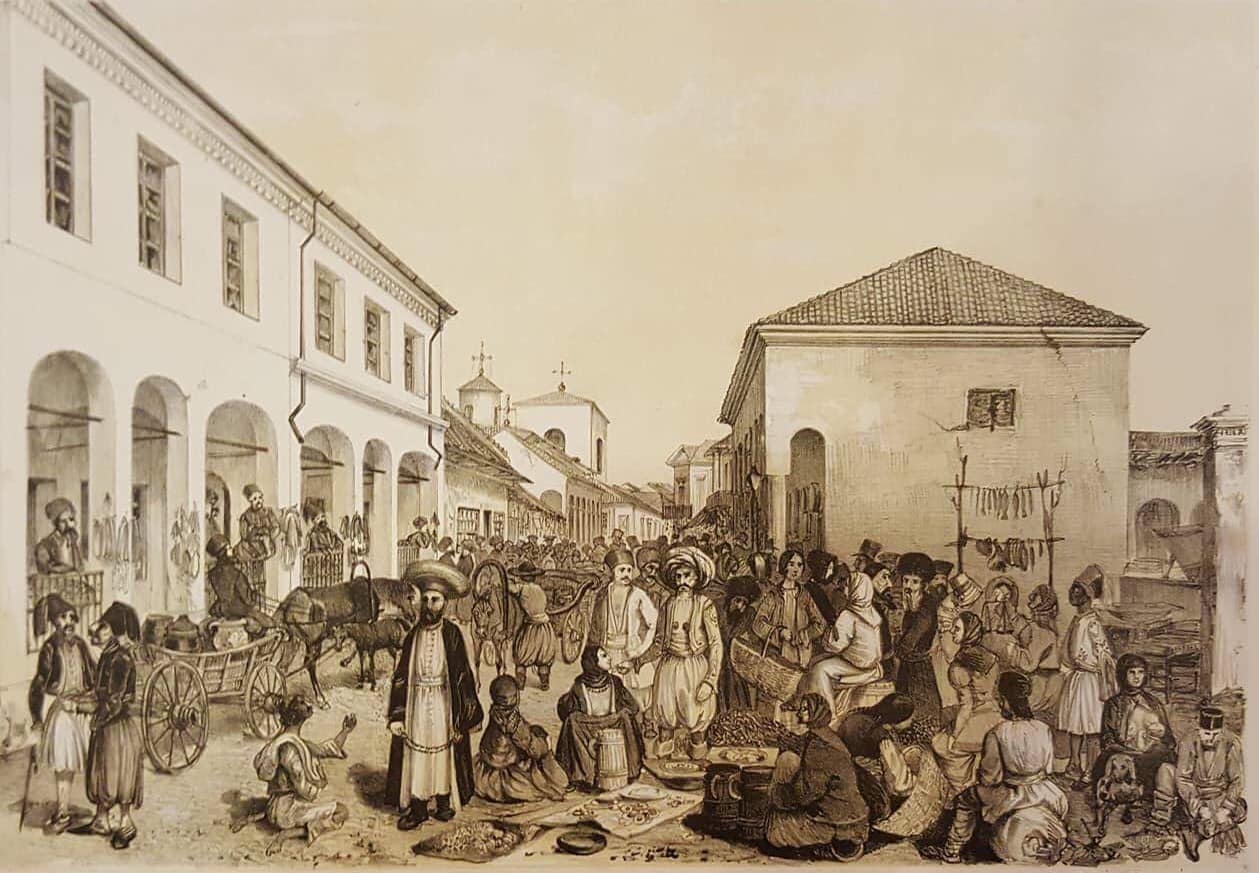
Lecture by prof. Laurențiu Rădvan: “Medieval and Pre-Modern Towns in the Romanian Principalities”
The Institute of Art History cordially invites all interested participants to a university-wide lecture by Professor Laurențiu Rădvan entitled “Medieval and Pre-Modern Towns in the Romanian Principalities.”
The lecture will take place on 16 November 2022 at 5:00 p.m. at the Institute of Art History (ul. Szewska 36, Room 309). Its aim is to present the characteristics of towns in regions less frequently addressed by researchers, namely the Principalities of Wallachia and Moldavia. The urban centres of these territories displayed many similarities and underwent distinctive transformations over time. From the fourteenth to the sixteenth century, the influence of Central European models of urban organisation was evident, reflected, among other things, in the election of a representative from among the townspeople (known in Moldavia as the soltuz — a term that reached the region via Poland) and a town council (composed of twelve pârgari, derived from the German word Bürger), while maintaining a certain degree of internal autonomy.
In the seventeenth and eighteenth centuries, by contrast, a gradual strengthening of the power of local princes can be observed, as they replaced local officials with their own appointees. Similarly, in the late Middle Ages these towns were closely linked socially and economically with trading partners in Hungary and Poland, whereas in the early modern period they increasingly oriented themselves towards the Ottoman Empire. Local German and Hungarian communities were progressively supplanted by increasingly influential groups of Greeks, Wallachians, and Albanians. By the eighteenth century, the position of these towns had declined significantly: they came under princely control, and some (particularly smaller or declining centres) were even granted to boyars or to the Church.
Although both principalities retained a degree of autonomy and their rulers behaved as autocrats, travellers visiting these lands often had the impression of being within the sphere of Ottoman rule. Only the gradual disengagement from the Ottoman Empire during the eighteenth-century wars between the great powers enabled these towns to reorient themselves towards Europe.
Professor Laurențiu Rădvan is visiting the University of Wrocław as part of the IDUB Visiting Professors Programme.


