




It is important to speak about differences without assigning value
What are the roots of Women’s Day? How does anthropology study women? Is a woman’s heart the same as a man’s?
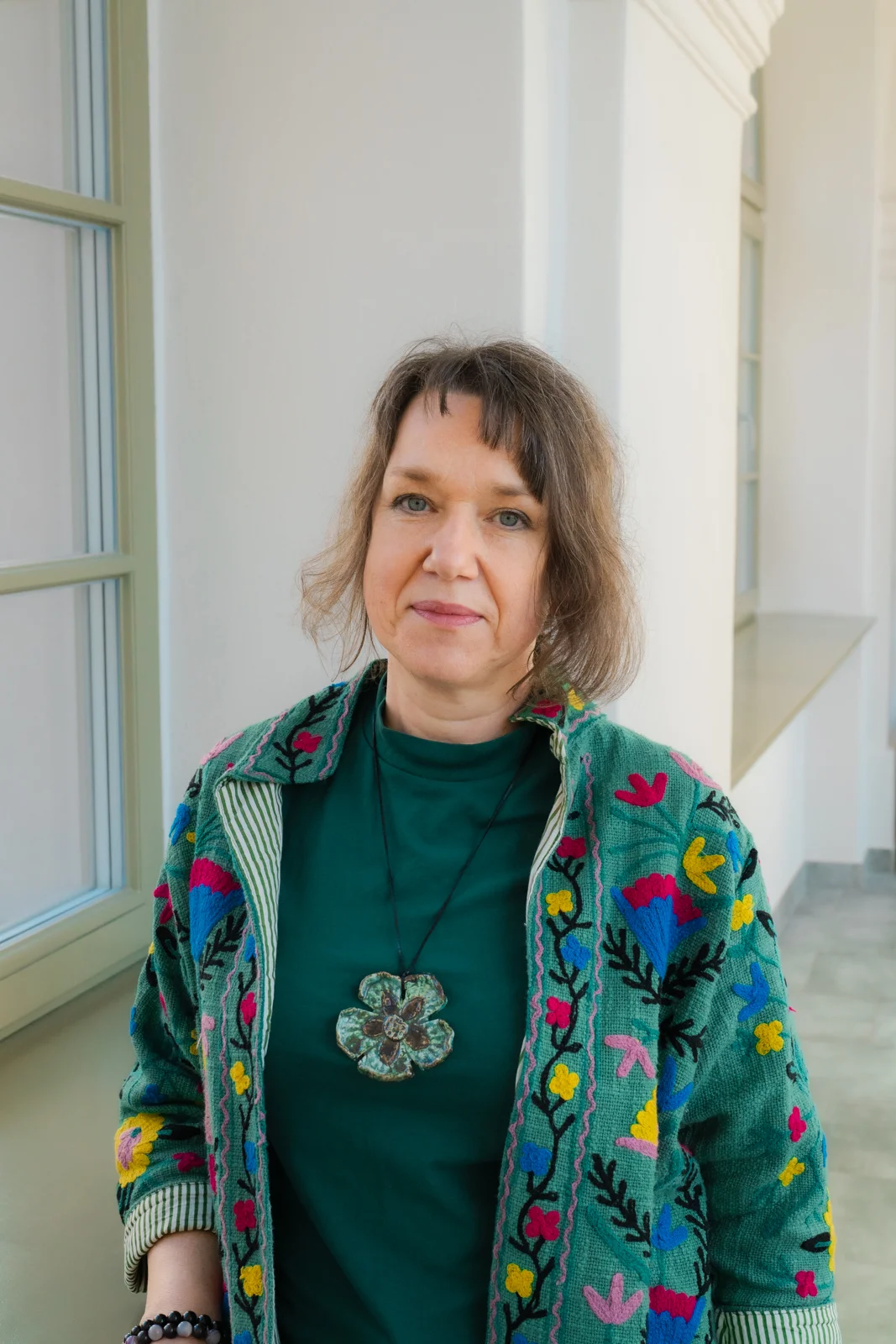
On the occasion of Women’s Day, we speak with prof. Monika Baer, head of the Institute of Ethnology and Cultural Anthropology at the University of Wrocław.
Ewelina Kośmider: The pretext for our conversation is the upcoming Women’s Day. What is the contemporary symbolism of this holiday, and how has it changed over the last decades?
Prof. Monika Baer: To understand what Women’s Day is, we must look back at its history, which involves two threads. The first recorded celebrations are linked to New York. On February 28, 1909, the Socialist Party of America organized a demonstration in the city, reportedly to honor the garment workers’ strike that had taken place a year earlier. The origins of this holiday are tied to the labor, socialist, and feminist movements. Clara Zetkin, a German theorist and feminist/communist activist, drew on the New York event and proposed an International Working Women’s Day. This was adopted in 1910 by the International Socialist Women’s Conference in Copenhagen.
In 1911, demonstrations commemorating working women were held on March 19 in several European countries—Austria, Denmark, Germany, and Switzerland. However, we likely owe the March 8th date to Vladimir Lenin, who established it in 1922 to commemorate women organizing strikes under the slogan “Bread and Peace” in 1917, which sparked the February Revolution.
E.K.: So, from the beginning, Women’s Day was linked to a social and feminist context?
Prof. Monika Baer: Yes. I also would like to add that in Poland, various social upheavals also began with women’s protests (for example, related to rising bread prices). I see a repetition of history here, specifically in its “female” aspect.
Because Women’s Day was established by Lenin, once socialism spread across much of Europe and the world, March 8th began to be celebrated as a state holiday in socialist countries. I think this is the moment when Women’s Day became a caricature, as it is primarily associated with carnations…
E.K.: And tights!
Prof. Monika Baer: Yes, with carnations and tights that party officials handed out to women working in the factories.
But is it really a caricature? I was wondering and I thought that for women working in those factories, it might have been a truly pleasant event—especially when tights were simply unavailable on the market.
I come from a family of intellectuals from Poznań, and I think it was typical in urban intellectual circles: in the 70s and early 80s, this holiday was ignored as socialist, state-driven, ideologized, and manipulative. So, I think my own sense of “caricature” stems from ideas brought from home and present in the Polish intellectual milieu.
Regarding the Polish intelligentsia, in the 70s, women generally felt equal to men and did not want to be treated as a separate category that needed special commemoration. Of course, there were gender regimes that positioned men and women differently in social life. However, female researchers writing after 1989 about the situation of women in Central/Eastern Europe pointed out that women under socialism considered themselves equal to men. This is why the feminist movement—despite the fact that 1989 worsened the situation for women in many former Eastern Bloc countries—did not find mass support and following in Poland, which was criticized by both Western and also Polish activists. This is the socialist history that resonates most in Poland.
E.K.: Yet there are also aspects of Women’s Day that go beyond socialist themes?
Prof. Monika Baer: Yes. I want to emphasize that the holiday also has a more international history. In 1975, the UN proclaimed International Women’s Day to be celebrated globally on March 8th. The establishment of International Women’s Year was part of a broader UN agenda: the years 1976–1985 were declared the United Nations Decade for Women. Since then, major world conferences have been held under the auspices of the UN: in 1975 in Mexico City, in 1980 in Copenhagen, in 1985 in Nairobi, and in 1995 in Beijing.
This significance is not just commemorative but, above all, about equality—linked to the pursuit of ending discrimination against women in both private and public spheres. This is the second aspect of the holiday, which ten, twenty, or thirty years ago in Poland was largely forgotten. Today, that is changing.
Older generations who experienced state socialism primarily associate Women’s Day with state policies. They may link it to various emotions – perhaps nostalgia for security, employment, housing, or holidays by the sea – or, oppositely, they may view it as ideological manipulation.
I also think that today, many people treat Women’s Day as a pleasant occasion to offer best wishes or give a flower. It has become a holiday similar to Valentine’s Day or Boy’s Day – more of a social custom than an event of socio-political significance. It is a good excuse to go to a café for coffee and cake.
However, I believe – and I observe this in anthropology as well – that over the last 10–20 years, the socio-political aspect has become increasingly important. Women’s Day is more and more often an opportunity to speak publicly about women’s rights, discrimination based on gender and sexuality, and ‘herstory’ – the forgotten history of women. This aspect is derived from the feminist movements of the early 20th century, but also from the UN agenda, which is more liberal-feminist than socialist.
E.K.: What are contemporary women like from an anthropologist’s perspective? What are their expectations?
Prof. Monika Baer: That is a question I cannot answer. Anthropology deals with specific people living in a specific time and place. Women are very diverse and have very different expectations. Anthropology hasn’t spoken of “women” as a single category for a long time—it is not an analytical category. We speak of the categories of sex/gender. We look at how “gender regimes” work—how the categories of sex and sexuality shape people and how people oppose such categories.
E.K.: For those unfamiliar with the term, it’s worth explaining what a “gender regime” means.
Prof. Monika Baer: If we say that gender is a power relation, that women as a social group are discriminated against, and that gender is a factor of discrimination, it is worth noting that in anthropology—ever since the interwar publications of Margaret Mead, one of the most recognizable anthropologists outside the field—it has been argued that society acts oppressively in the context of gender and sexuality not only toward women, but also toward men. Mead wrote that a young boy is disciplined by culture just as much as a young girl.
That is why it is so important for me to emphasize: we, as anthropologists, do not focus exclusively on women—we talk about people. There are norms regarding gender and sexuality, social expectations that affect us all.
When I speak of a ‘gender regime,’ I mean this social normativity: how a ‘good woman’ behaves, how a ‘good man’ behaves, what sexual practices are proper, what emotions are appropriate. ‘A real man never cries’—that is a gender regime. ‘A woman shouldn’t…’ or ‘women are emotional, therefore less rational’—these are also gender regimes that we owe to 18th-century Enlightenment philosophy. So, we are talking about various beliefs that are ideological and conceptual, but translate into social practices—into how we function in the world.
I don’t mean to say, of course, that anthropology, including that inspired by feminism, does not deal with women. The point is that contemporary analyses look at how different forms of masculinity and femininity emerge in various contexts: how they are conceptualized, practiced, and experienced. Masculinity and femininity are treated here as products of a system of difference—because femininity is always meant to be something other than masculinity. If something is ‘feminine,’ it is ‘not masculine.’
This is the basic theoretical framework that defines how contemporary feminist anthropology approaches gender issues. The category of ‘woman’ does appear in anthropology, but it is treated as a subject that emerges at the intersection of various other categories. It’s not that we have a ‘woman’ first, and only then skin color, sexual orientation, economic status, or education. The point is that individuals emerge at the intersection of gendered, sexual, ethnic, national, and educational conditions, as well as those related to their place of residence—such as city or countryside—and various others.
Today, in the social sciences, there is much talk about intersectionality—the idea that individuals do not have a one-dimensional identity. Identities are treated as entities built from various fragments, as processual, dynamic, and triggered differently in different contexts.
Allow me a digression: toward the end of my master’s studies, I wrote a paper titled ‘What it means to be a woman in Poland,’ in which I repeated various generalizations present in the Polish academic discourse of the time, and I presented it at a doctoral seminar in Bielefeld. I was heavily criticized by a PhD student, more advanced than I was, who told me I was talking nonsense. She said that the Polish women she had spoken to were proud of their work, education, and their own money—and that one cannot tell a single, general story of ‘women in Poland.’ And she was right.
Of course, we can talk about women in Poland, but we must take into account differences in needs, expectations, and experiences. On social media, this is very clear—there are distinct groups of women who speak about the world in entirely different ways.
Furthermore, we must remember that when speaking of ‘women,’ we cannot assume it is self-evident who belongs to this group or that it is a self-explanatory social category. Here, self-identification is paramount, including the inclusion of trans people. Gender can be thought of as a continuum stretched between an ‘ideal,’ 100% masculinity and an ‘ideal,’ 100% femininity, because the actual materiality of bodies, experiences, and identities are very diverse—both stable and fluid; both fulfilling socio-cultural norms and resisting them. This way of thinking, also in the context of sexuality, was brought into the social sciences and humanities, among others, by anthropology.
E.K.: What research topics regarding women does contemporary anthropology undertake?
Prof. Monika Baer: A very important contribution of anthropology is the constant balancing act between relativism and universalism. On one hand, we have the relativistic approach, which emphasizes that different customs should be understood within their own contexts and respected. On the other, we have the universalist discourse, linked to the concept of human rights, which criticizes and combats, for example, the requirement of face-covering or the ritual female genital mutilation.
Contemporary feminist anthropology seeks to weigh when Euro-Atlantic feminism becomes a tool of imperialism—imposing its own norms—and when actual harm occurs that feminist anthropologists should react to. In other words, feminist anthropologists working in the field try to understand, observe, and support, without imposing their own value systems.
As for other contemporary topics, significant anthropological studies have developed at the intersection of feminism and queer theory—treating gender and sexuality as performative and strategic categories. For many years, a key theme has been women’s reproductive health and reproductive technologies, linked to feminist inspirations in medical anthropology. Research shows how oppressive Western health regimes can be and how little they take women’s agency into account. Many studies analyze UN programs regarding women’s rights—again, often conducted in the language of Euro-Atlantic liberal feminism, and thus requiring a critical, reflective insight.
Feminist anthropologists also deal with issues of armed conflict, migration, the climate crisis, and other ‘hot’ contemporary topics, examining how gender differences affect the experiences of both women and men.
E.K.: Looking at world events, one sometimes gets the impression that patriarchy is still doing quite well?
Prof. Monika Baer: The journey that activists fighting for women’s rights in the Euro-Atlantic context have gone through—from the times when they were imprisoned in jails and psychiatric hospitals to the present day—is impressive. Thanks to them, we have the opportunity to work, receive an education, manage property, and enjoy normal civil rights. It cannot be said that nothing has changed. But it also cannot be said that we have achieved equality—because that is simply not true. There are many spheres of life where much still needs to be done.
E.K.: What is the situation for women in academia?
Prof. Monika Baer: As for academia, I do not feel that I am discriminated against as a woman. There are many women in the social sciences and humanities. In our Institute of Ethnology and Cultural Anthropology, there are many of them (though slightly fewer than men), but the head office is taken by a woman.
However, it is common knowledge that the higher you go in social hierarchies, the fewer women you find. Female rectors are a rarity at Polish universities. In academic, social, and political bodies – men dominate.
I would also like to emphasize: I support quotas – as long as we promote competent women. However, the danger lies in the fact that gender is not the only criterion for progressive policy in the context of sex and sexuality. What matters is what someone has in their head and what their program is. We have many women in politics who do not act in accordance with feminist demands.
E.K.: What about the feminist movement today?
Prof. Monika Baer: First and foremost, there is no such thing as feminism as a single entity. There are many different currents that engage in conversation with each other, often through mutual critique. They compete, having different ideas and political strategies. I think the common denominator of feminism is that the category of gender is treated as something inevitably entangled in power relations. That is the common ground.
In textbooks—for instance, in Chris Barker’s Cultural Studies: Theory and Practice, which I use in my ‘Theories of Culture’ classes—many strands are distinguished: liberal, socialist, difference feminism, Black feminism (which I would rather call the feminism of the Global South, as it’s not just about African American women), post-structuralist feminism, or post-feminism.
Feminism should therefore be understood as a theoretical and practical project with many faces and many ideas about what the problem is and how it should be solved. In this sense, we should speak of feminisms in the plural.
Regarding feminism in Poland—which I know partly from research and partly from practice—the situation looks different than in the United States. A mass, million-strong movement like the one there never emerged in Poland. However, back in the 1990s, when I was researching this for my doctorate, it was clear that the Polish movement took a form that Warsaw anthropologist Magdalena Grabowska called ‘bubbling ponds.’ This means there are various grassroots initiatives and local practices that together make up the feminist movement.
In Poland, there have always been many small, local groups of women doing something for themselves and their communities. This was the practical dimension of feminism. I remember a conversation with an activist who said that in her local context, women from very different backgrounds—both liberal and conservative—were able to find common goals in working for women. The only point of contention was reproductive issues, especially abortion. But this practical, local feminism was very strong. I also have a sense that in Poland, feminism has always been linked with actions for other excluded social groups, not just women.
The most important themes of the feminist movement in Poland include reproductive rights, combating violence against women, economic equality, and reclaiming women’s history—so-called ‘herstory.’
Polish feminism is practical, networked, and local. Of course, there are mainstream organizations, but the strength of Polish feminism lies in grassroots actions. Importantly, many groups avoid the word ‘feminism’ itself, but it’s the actions that matter, not the label. Today, however, I see that the perception of feminism in Poland is changing—especially at universities.
One more thing I wanted to add—I mentioned it recently in my ‘Anthropology of Gender and Sexuality’ class. It’s about the sexual difference and the feminist egalitarian tradition. Liberal feminism, whose origins date back to the 18th century, was an egalitarian current: women and men are the same, and gender should not be a significant variable. This was a very important and necessary element of emancipation, but it also led to situations where sexual differences began to be ignored, which had negative consequences.
E.K.: You mentioned the importance of the “difference” approach. Could you elaborate?
Prof. Monika Baer: Let me give you an example: for years, it was believed that a woman’s heart was simply a smaller version of a man. Only recently have we started talking about the fact that a woman’s heart does not function like a men at all, and that heart attacks in women manifest differently. Many women failed to see a doctor because their symptoms differed from the ‘male model of a heart attack.’ This is the result of that egalitarian idea: ‘difference doesn’t matter.’ But it does.
That is why it is important to be able to speak about difference without assigning value—different but equal. Anthropology has been teaching this for a long time: in many so-called ‘simple’ societies, women and men performed different roles, but this did not mean they were not equal. I believe we must learn to recognize differences without turning it into a hierarchy. This is also a feminist message: to level the playing field, to support, and to adapt conditions—rather than assuming that we are all the same.
E.K.: As an anthropologist, what do you wish for women on their holiday?
Prof. Monika Baer: I wish—not just for women, but for all of us—that our gender or sexual identity, our appearance, or our views are never a reason for discrimination. I wish for a world that is open, inclusive, and supportive of those who struggle more. I wish us all a society of care, support, and equal opportunity.
E.K.: Thank you for the interview.
Translated by Aleksandra Brzeska (student of English Studies at the University of Wrocław) as part of the translation practice.
Date of publication: 06.03.2026
Added by: E.K.


