




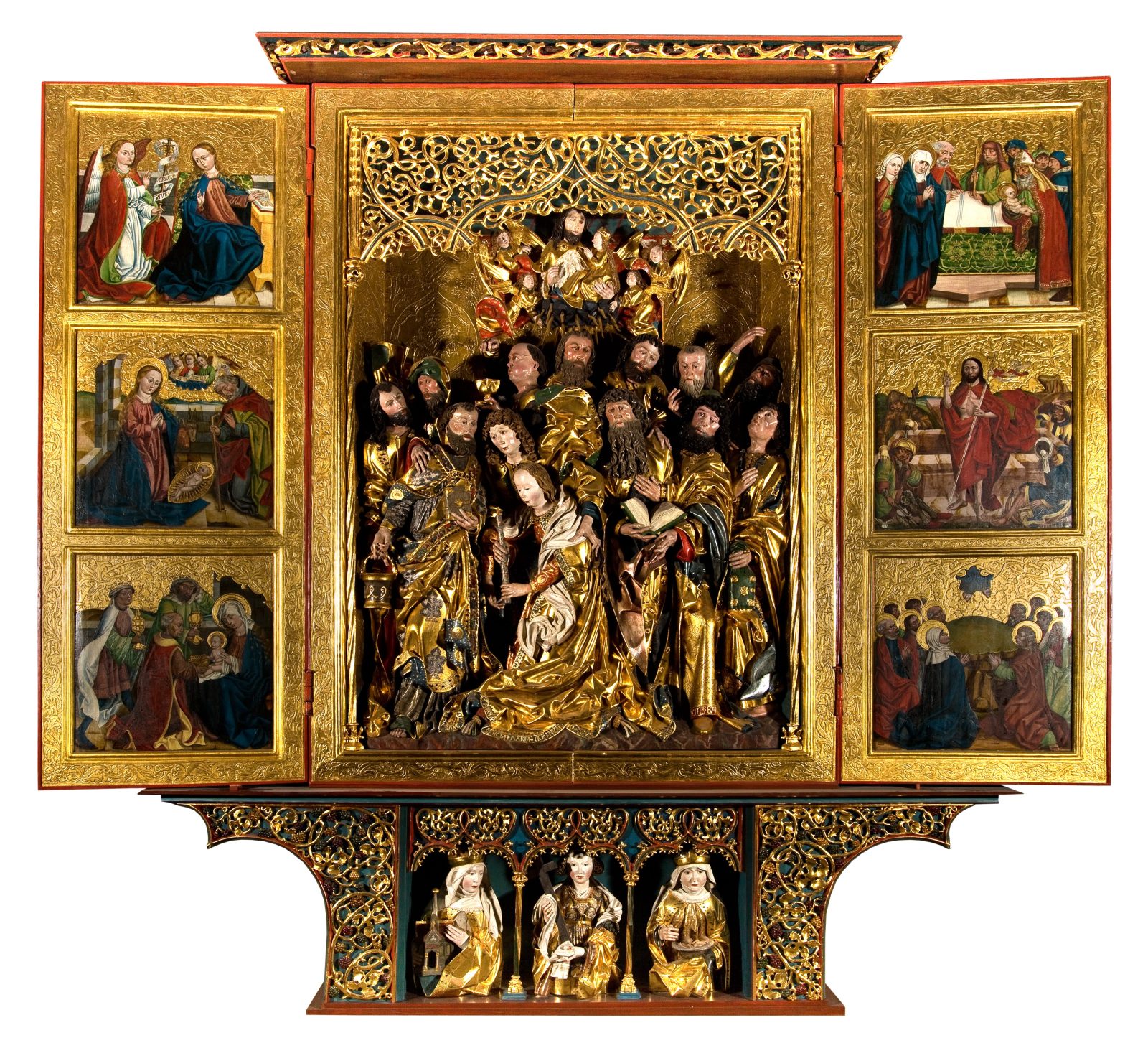
Polish–German Collaborative Research on Retabulum
A research team from the University of Wrocław, in cooperation with German partners as part of the Weave-UNISONO project, will conduct comparative research on winged altarpieces from Upper Lusatia, Silesia and Franconia.
In the project, as part of the Weave-UNISONO project, titled: „Retabulum: Interdyscyplinarne badania porównawcze nad skrzydłowymi nastawami ołtarzowymi z Górnych Łużyc, Śląska i Frankonii – badania dendrochronologiczne, technik montażu, materialności i (inter)medialności drewnianych skrzyń ołtarzowych” (eng. „Retabulum: Interdisciplinary comparative research on winged altarpieces from Upper Lusatia, Silesia and Franconia–dendrochronological analysis, installation techniques, materiality and (inter)mediality of wooden retabulum”), the Polish research team will be led by dr Agnieszka Patała from the Department of Prehistoric and Medieval Art History (Institute of Art History, Faculty of Historical and Pedagogical Sciences), while the German research team will be headed by Dr Thomas Eißing from the University of Bamberg.
The subject of the research in this project is late-Gothic altarpieces, also known as retabulum, which are complex, multimedia structures featuring sculptural and painted decoration, placed above or behind a Christian altar. Representing a complex system of artistic and theological expression, they fulfield a variety of religious, educational, mnemonic and decorative functions within church interiors.
During the 15th and early 16th centuries, retabula experienced a particular boom in Western and Central Europe, usually taking the form of monumental winged retabula cabinets with one or more pairs of opening panels.
The researchers will analyze 34 artefacts from Upper Lusatia, Silesia and Franconia dating from approximately 1450-1530. By bringing together methods from art history, the natural sciences and conservation studies, the researchers will investigate previously less explored aspects of the technological construction of these objects, such as the construction of retabulum cases and wings
The analysis will make it possible to date retabula, identify the sources of the materials used and the standards of craftsmanship, and gain a better understanding of the technological transfer between regions. The research will also help to reveal the circumstances in which the altarpieces were commissioned, as well as shed light on the further functioning of retabula in their original settings.
The proposal was evaluated by the German Research Foundation (DFG), while the NCN accepted the results of this evaluation as part of the Weave project partnership framework. The Polish budget of the project amounts to nearly 300,000 PLN.
The Weave-UNISONO competition is the outcome of various cooperations between research funding organisations that are members of the Science Europe association. It was announced in order to simplify the procedures for submitting and selecting research projects across all scientific fields, bringing together researchers from two or three European countries.
The selection of winners is based on the leading agency procedure, according to which only one of the partner institutions is responsible for the full evaluation of the proposal, while the other partners accept the results of that evaluation.
As part of the Weave project partner research teams are funding proposals to both the lead agency and the relevant institutions participating in the project. The collaborative project must include coherent research plans that clearly demonstrate the added value of international cooperation.
The Weave-UNISONO competition is open on an ongoing basis.
More information is available on the website: Winners of the Weave-UNISONO Competition Announced
Translated by Oleksandra Humeniuk (student of English Studies at the University of Wrocław) as part of the translation practice.

Edit: Katarzyna Górowicz-Maćkiewicz
Date of publication: 19.03.2026
Added by: EJK


