



An unusual ornament from Domasław named a “unique artefact”
The oldest, the largest and the most important – this is how the annual “Archaeological Sensations” awards are described. They constitute a yearly summary of scientific discoveries organised by the magazine Archeologia Żywa. This year’s poll also featured a contribution linked to the University of Wrocław, thanks to the involvement of one of our biologists.
The “Archaeological Sensations” poll, organised by the editorial team of Archeologia Żywa, focuses on major discoveries and noteworthy events connected with archaeological research. The discoveries and events are assessed by a jury composed of journalists, science communicators and independent creators.
This year, awards were granted in ten categories: the most important heritage premiere, the most effectively popularised research, unique artefact, the most interesting project launched in 2025, best temporary exhibition, most important book, most important treasure, best archaeological photograph, the most important foreign discovery by Polish archaeologists, and the most important archaeological discovery in Poland.
Last year, the title of the “Greatest Treasure of 2024” went to papyri discovered in Egypt by Polish archaeologists.
So what remarkable discoveries were made by Polish archaeologists in 2025, both in Poland and abroad?
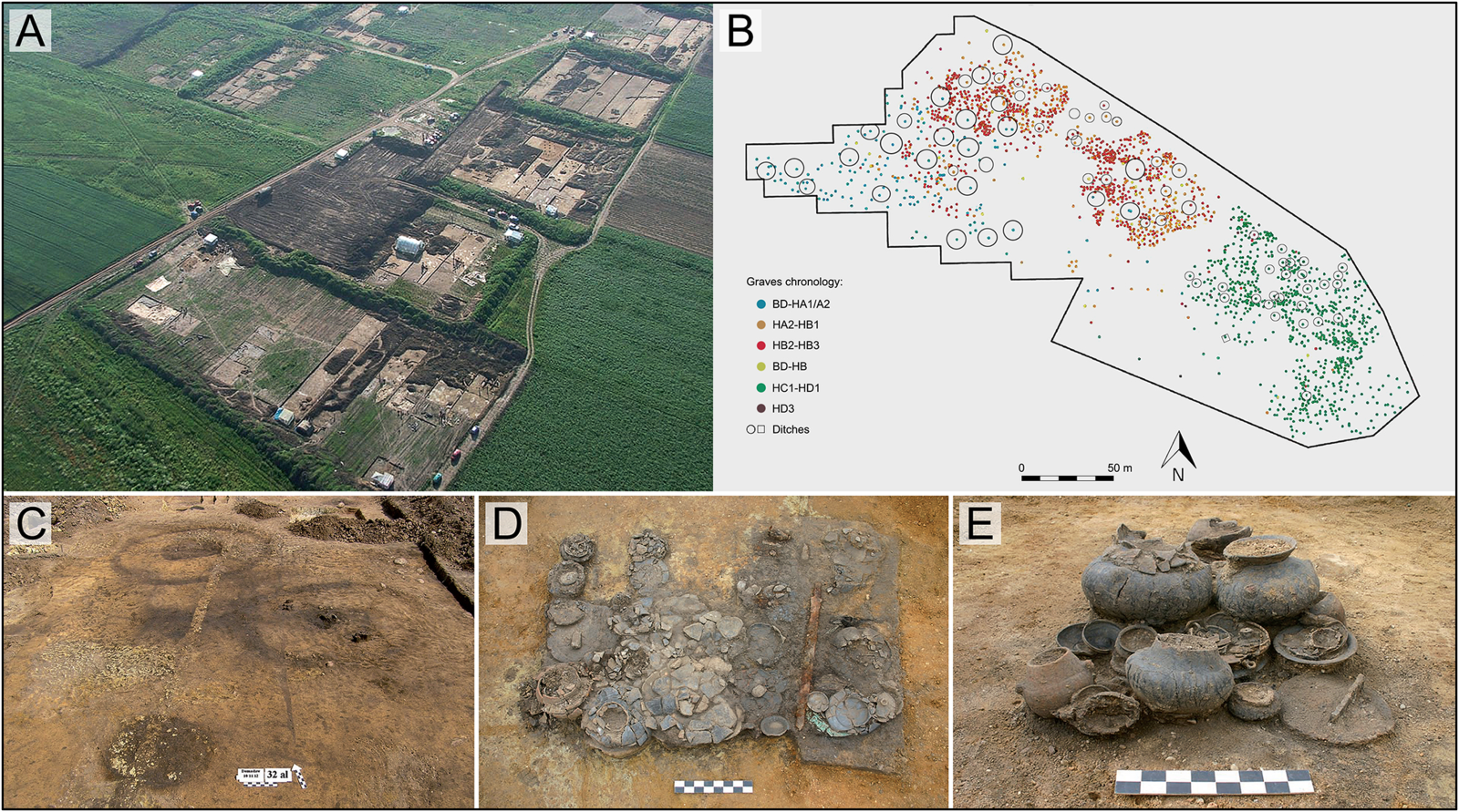
In the “Unique Artefact” category, third place was awarded to a discovery from Domasław (Lower Silesia). It is an ornament made of beetles, found in the grave of a child dating back approximately 2,700 years.
Specialist analyses of artefacts from the Lusatian culture cemetery in Domasław involved prof. dr hab. Marcin Kadej from the Faculty of Biological Sciences at the University of Wrocław. The interdisciplinary research also included Dr Agata Hałuszko, a biology graduate and PhD in archaeology from the University of Wrocław (currently an assistant professor at Maria Curie-Skłodowska University in Lublin), and Dr Anna Józefowska-Domańska, also a graduate of the University of Wrocław (currently an assistant professor at the Institute of Archaeology and Ethnology of the Polish Academy of Sciences).
The researchers identified the ornament as being made from the chitinous pronota of beetles (Phyllobius viridicollis). It had been placed in the funerary urn of a child aged approximately 9–10 years.
The unusual ornament from Domasław proved to be not only a curiosity but also a valuable source of knowledge. It demonstrated that a wide range of materials – from durable bronze to ephemeral flowers and insects – were used in funerary ceremonies to commemorate the dead. Thanks to this discovery, scholars can reconstruct more fully the world of beliefs from over 2,500 years ago, and Domasław once again confirms its exceptional status on the archaeological map of Poland. Further details can be found in an article published in the journal Antiquity.
About the results of this year’s poll
edit. Katarzyna Górowicz-Maćkiewicz
Date of publication: 20.01.2026
Added by: M.K.


