



UWr biologists are co-author of the publication “Nature”
Plants across Europe are responding to climate warming—high mountain areas are rapidly losing species adapted to lower temperatures, while there is an increasing share of warm-adapted species in forests and grasslands. Unfortunately, these findings are not encouraging. The study, recently published in “Nature”, provides the most comprehensive Europe-wide comparison to date of how different ecosystems respond to climate change.
An international study led by scientists from Forest & Nature Lab (ForNaLab, Ghent University), with significant contributions from the Research Institute for Nature and Forest (INBO) and participation of researchers from the University of Wrocław, demonstrates how vegetation communities across Europe are being transformed by climate change.
The researchers analysed a unique dataset covering more than 6,000 monitoring plots in forests, grasslands and mountain summits across Europe. Combining long-term observations spanning 12 to 78 years made it possible, for the first time on such a large scale, to compare how different ecosystems respond to climate warming.
Key findings:
- An increased share of warm-adapted species. Across all analysed ecosystems, the share of vegetation that prefers warmer climatic conditions is increasing. This phenomenon, referred to as “thermophilisation”, involves the gradual replacement of species adapted to Europe’s cooler, traditional climate.
- Mountain regions are the most vulnerable to climate warming. The most severe changes are observed in mountain regions. In the Alps and other European mountain ranges, species adapted to cold climates are disappearing at an exceptionally rapid rate.
- Forests and grasslands are undergoing changes in species composition. In these ecosystems, the number of warm-adapted species is clearly increasing, while some cold-adapted species are gradually disappearing.
- A growing “climatic debt”. The observation also conveys that vegetation communities respond to climate warming more slowly than climatic conditions are changing. This leads to a growing “climatic debt”, which may increase the risk of sudden ecosystem destabilisation and biodiversity loss in the future. In other words, the vegetation is no longer in balance with the local climate. This phenomenon is particularly evident in forests, including Polish forests, as well as in the vegetation of high mountain ranges.
The results clearly demonstrate that the effects of climate warming vary across the studied vegetation communities. Various ecosystems respond differently depending on their structure, history and species composition
— ”Our study demonstrates that it is not possible to tell a single, universal story about the effects of climate warming. While mountain regions are losing species that have nowhere to migrate, forests and grasslands are primarily changing their species composition towards a greater share of warm-adapted species. This has serious consequences for biodiversity conservation in Europe,” says prof. Pieter De Frenne (Ghent University).
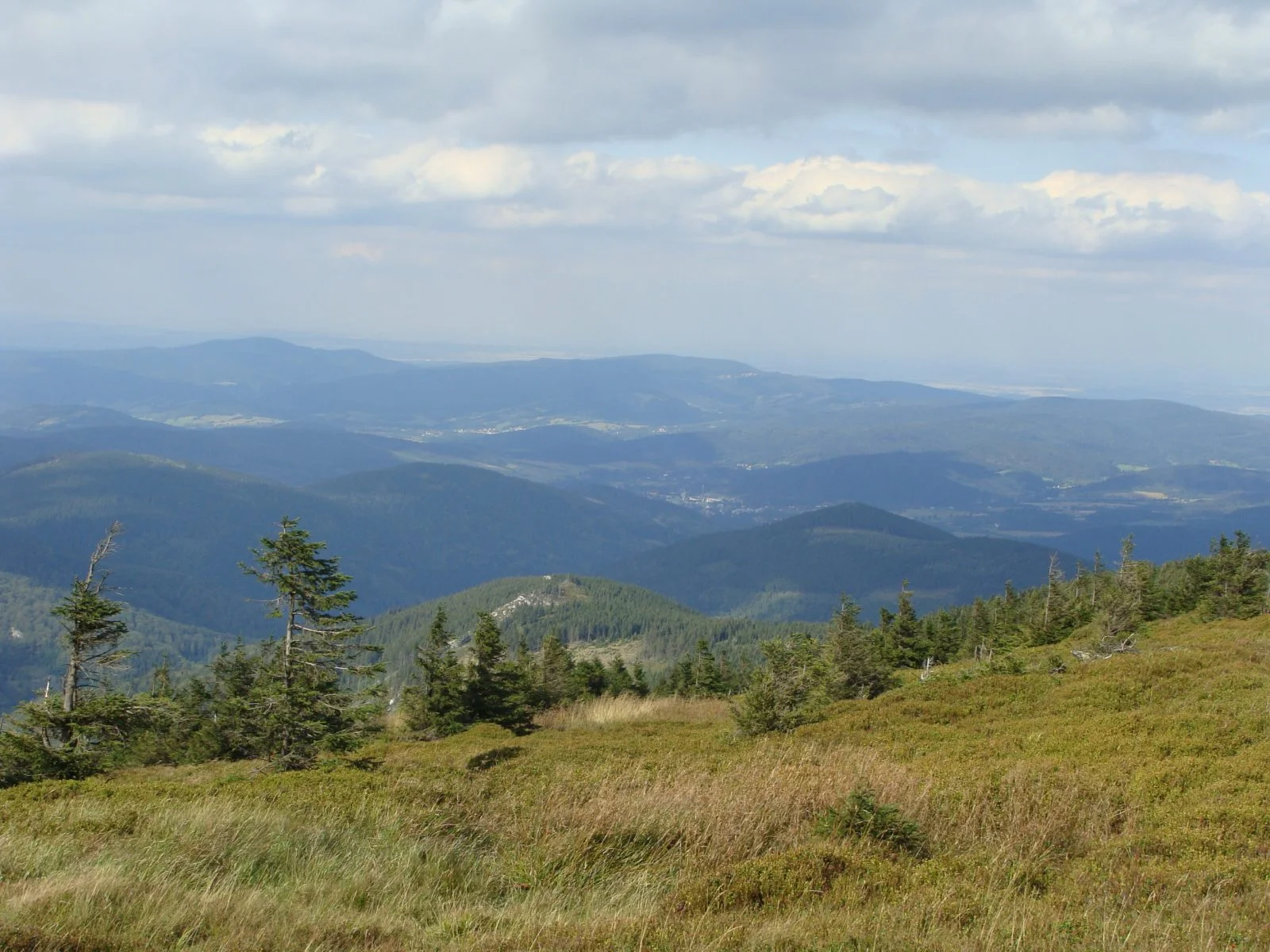
Prof. Krzysztof Świerkosz from University of Wrocław: “The conclusions of the article should be interpreted in the context of many other published studies conducted by research consortia associated with the forestREplot (forests), GLORIA (mountain summit vegetation) and GRACE (grassland and meadow vegetation) initiatives.” Climate change affects certain ecosystems more severely when they are exposed to intense human pressure (e.g., intensive forest management or mass tourism) as well as to water and air pollution, particularly pollution leading to high levels of nitrogen enrichment. These findings indicate that the declining share of certain species groups (usually rare and adapted to specific habitat conditions) is compensated for an increasing share of common species with broad ecological tolerances and wide geographic ranges. This observation therefore provides further evidence supporting our concerns about the future of biodiversity in Europe.
The study involved several dozen scientists from Europe, North America and Asia. The analysis is based on long-term data concerning vegetation communities in forests, grasslands and on mountain summits. Across Europe, this is the most comprehensive comparison to date of how different ecosystems respond to climate change.
The University of Wrocław was represented by dr hab. Krzysztof Świerkosz prof. from the Museum of Natural History, University of Wroclaw, and dr Kamila Reczyńska and dr Marek Malicki from the Department of Botany, Faculty of Biological Sciences.
The full article is available on the Nature website..
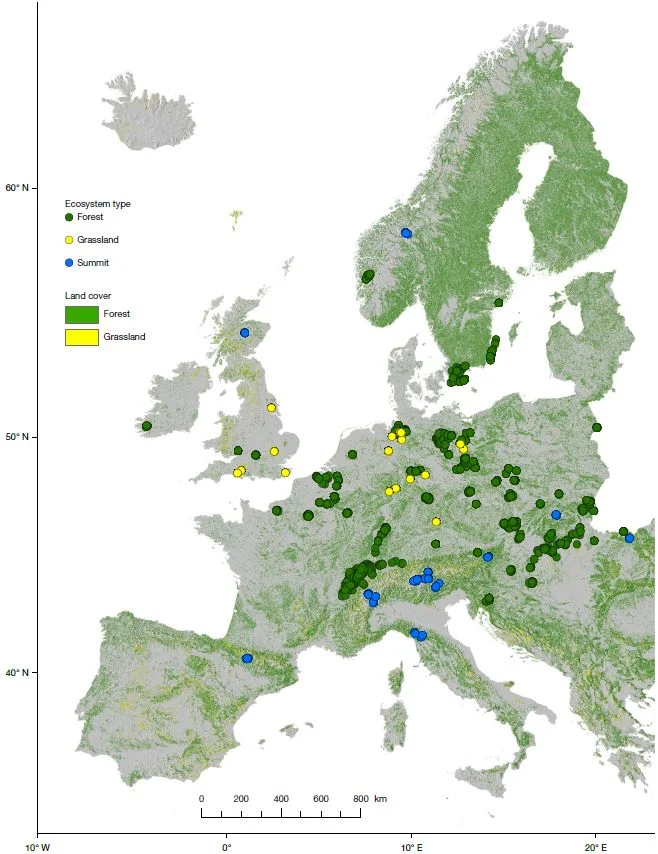
The map below presents the distribution of study sites.
Translated by Oleksandra Humeniuk (student of English Studies at the University of Wrocław) as part of the translation practice.
Date of publication: 19.03.2026
Added by: EJK


