



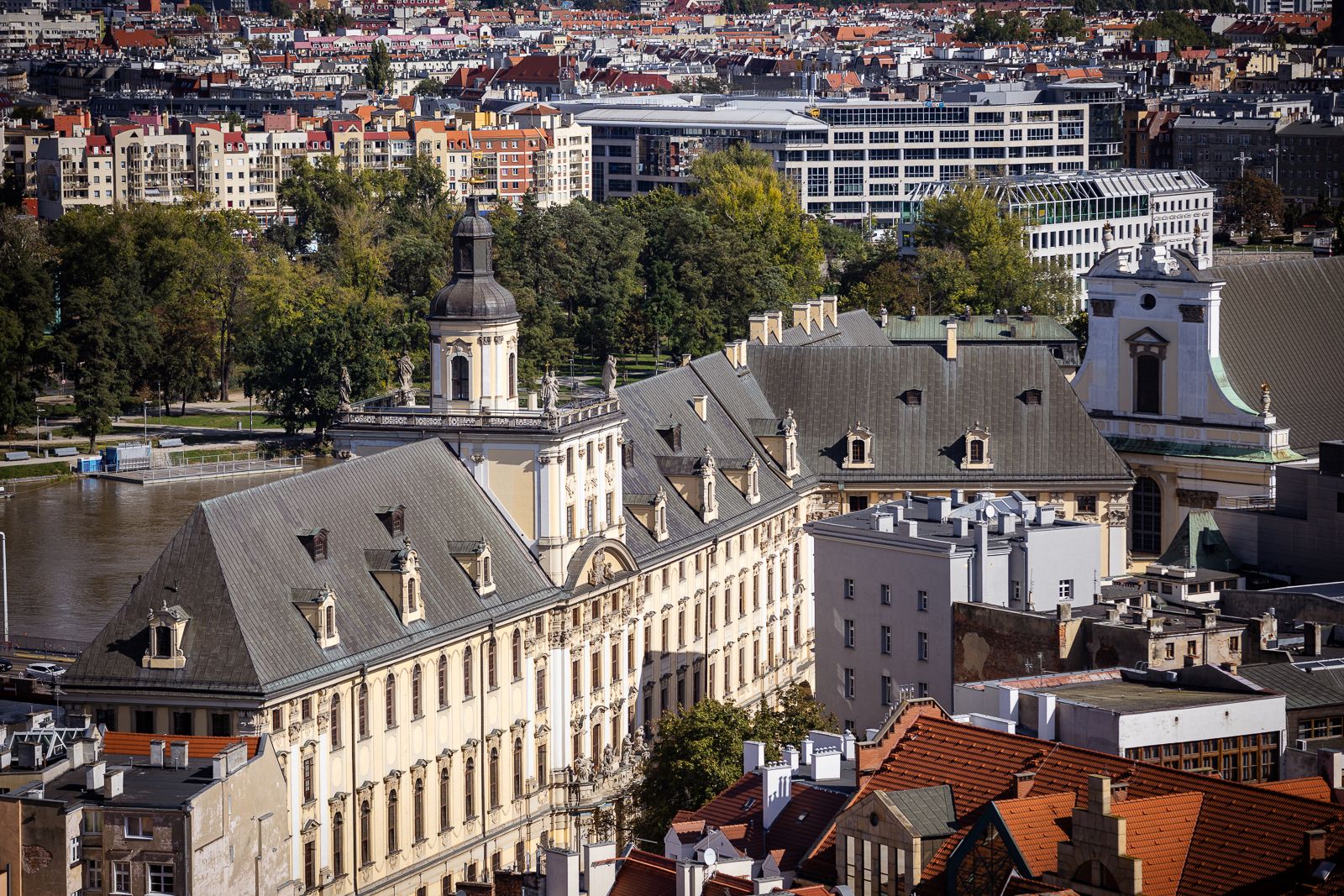
Doctor Honoris Causa of the University of Wrocław awarded to Serhiy Zhadan
On 25 February 2026, the Senate of the University of Wrocław resolved to confer the title of Doctor Honoris Causa upon the outstanding writer, poet, essayist, translator, musician and social activist Serhiy Zhadan, widely regarded as one of the most important witnesses of his time and one of the moral consciences of contemporary Ukraine.
The conferral of the title has a symbolic dimension. It constitutes a significant gesture of solidarity by the academic community of the University of Wrocław with Ukraine and its struggle for freedom, identity and culture, as well as an important affirmation of Wrocław’s role as a city open to the Global East, supporting Ukrainian culture and intercultural dialogue. It is also a powerful tribute to a creator whose work transcends literature, becoming both a testimony to an era and an instrument of resistance to violence.
Serhiy Zhadan’s creative output and public activity represent an exceptional contribution not only to Ukrainian culture, but also to European and world culture, as well as to the defence of the values of freedom, solidarity and human dignity. For many years the University of Wrocław has been actively engaged in intercultural dialogue, supporting Ukrainian culture and promoting the values of freedom, solidarity and civic responsibility. Therefore, the decision of the University Senate to confer the title of Doctor Honoris Causa upon Serhiy Zhadan is fully justified.
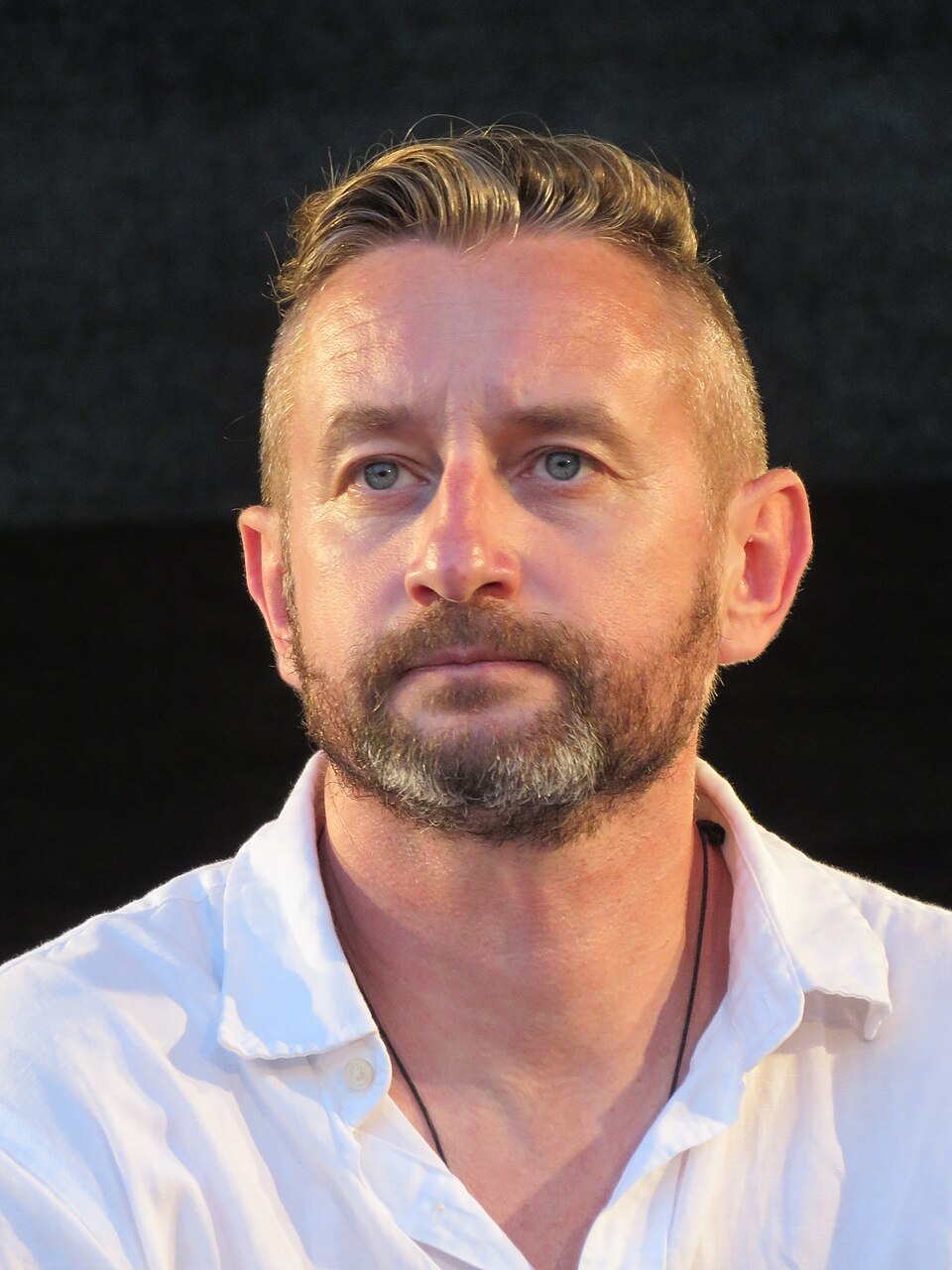
Serhiy Zhadan [Сергій Жадан], born in 1974 in Starobilsk and belonging generationally to the first cohort of writers of the post-systemic transformation, is one of the most important voices in contemporary Ukrainian literature and, alongside Taras Shevchenko, the most recognisable Ukrainian writer in the world today.
Zhadan studied Ukrainian and German philology at Hryhorii Skovoroda Kharkiv National Pedagogical University, where in 2000 he obtained a doctoral degree in philology on the basis of a dissertation on Ukrainian Futurism (The Philosophical Views of Mykhailo Semenko), which dominated the first stage of his work in the 1990s. In the following decade, his writing evolved smoothly towards postmodernism, masterfully combining its stylistics with magical realism and brutal naturalism.
In his prose and poetry, the author has perfectly fused elevated lyrical language with mass culture, creating a refined intertextual collage in which ordinary people, hippies, proletarians, criminals and saints coexist. The language of his works is vivid, authentic and dynamic, full of urban slang and incisive, often bitter metaphors. This style lends his texts a raw, almost rock-like energy. However, the most important feature of Zhadan’s writing, his novels, essays, poetry and plays, is his masterful capture of the dramatic social and identity transformations of Ukraine following the collapse of the Soviet Union, as well as the experience of war and resistance to Russian aggression.
− It may be boldly stated that his works function like a sensitive barometer, instantly reacting to socio-political earthquakes. His writing, especially after 2014, constitutes an uncompromising and penetrating, deeply memorable testimony of war. This is evident, for example, in the novel The Orphanage, where the author insightfully portrays the psychological and existential emptiness of life on the front line while following the journey of a protagonist who must extract his nephew from an occupied zone. Likewise, poetry collections such as Life of Maria and Templars fuse biblical and love motifs with the harsh, brutal reality of the front. Importantly, Zhadan reflects not only pain and loss, but also heroic resilience and everyday, persistent resistance, giving voice to those directly affected by the conflict (…)” − reads an excerpt from the justification of the motion.
For many years Serhiy Zhadan has been present in the cultural life of Wrocław, a city that held the title of European Capital of Culture in 2016 and has belonged to the UNESCO Creative Cities Network as a City of Literature since 2019. His work has been presented at the most important cultural events in Wrocław. He is the laureate of the Angelus Central European Literature Award and has appeared at the International Short Story Festival and the Wrocław Good Books Fair.
His work has been and continues to be widely discussed in undergraduate, master’s and doctoral courses on Central and Eastern European literatures, as well as at seminars and international academic conferences organised by the Institute of Slavic Studies, the Institute of Polish Studies, the Institute of English Studies and the Institute of Cultural Studies.
Zhadan is not only an outstanding writer but also an activist and an engaged citizen. After the Russian invasion in 2022, he remained in Kharkiv, where he organised humanitarian aid, and in 2024 he joined the National Guard of Ukraine, in whose ranks he continues to serve.
The conferral of the title will take place on 22 May 2026 during the conference “The Future Is Already Here. Poland – Ukraine – Europe”, which will in part ceremonially inaugurate the activities of the Wrocław University Center for Polish-Ukrainian Cooperation.
The conference “The Future Is Already Here. Poland – Ukraine – Europe” is organised by the Wrocław University Center for Polish-Ukrainian Cooperation together with the Faculty of Languages, Literatures and Cultures, the Faculty of Law, Administration and Economics, the Faculty of Social Sciences, the Faculty of Letters, the Faculty of Historical and Pedagogical Sciences, the International Cooperation, and WUSA – the Association of Ukrainian Students and Academics of the University of Wrocław.
Strategic international academic and institutional partners of the conference:
- Taras Shevchenko National University of Kyiv
- Ukrainian Catholic University in Lviv
- Foundation of the Ukrainian Catholic University in Wrocław
- Ivan Franko National University of Lviv
- Ukrainian Institute in Kyiv
Strategic national academic partners:
- General Tadeusz Kościuszko Military University of Land Forces in Wrocław
- Wrocław University of Economics and Business
- Ossoliński National Institute in Wrocław
- Pan Tadeusz Museum, a branch of the Ossoliński National Institute
Strategic national institutional partners:
- Office for International Cooperation, Presidential Division, Wrocław City Hall
- Office for Cooperation with Higher Education Institutions, Wrocław City Hall
- Department of Foreign Cooperation, Marshal’s Office of the Lower Silesian Voivodeship
- Academia Europaea Wrocław Hub
- University Library in Wrocław
The Chair of the Organising Committee is professor Agnieszka Matusiak-Bakuła, Director of the Wrocław University Center for Polish-Ukrainian Cooperation.
Ed. kg
Date of publication: 25.02.2026
Added by: M.J.


