



Grants for our scientists
Applications received by the National Science Centre (pl. Narodowe Centrum Nauki – NCN) in July were evaluated in the last round of the MINIATURA 9 contest. Among 906 submitted applications, experts from the NCN qualified for funding 191 activities of a total amount of more than 70 million Polish zlotys (PLN). Our young researchers are among these. Congratulations!
The following researchers received Miniatura:
- dr inż. arch. Michalina Litwicka, an assistant professor at the Incubator of Research Excellence – Solar and Stellar Activity at the Faculty of Physics and Astronomy, for the research “Modelling of chromospheric emission: Effect of the beam of nonthermal electrons on modelling of the Sun’s flare atmosphere” (PLN 16 264)
- dr Kamil Wojtkowiak, an assistant professor in the Department of Informatics Applications in Chemistry at the Faculty of Chemistry, for the research trip as part of the project “Large-scale simulations of complexes of nucleic acids and proteins” (PLN 37 070)
- dr inż. Karol Kułacz, an assistant professor in the Department of Physical Chemistry at the Faculty of Chemistry, for the research trip as part of the project “Nanocomposite Kaolinite/Fe-S as an adsorbent of organic pollution: preparatory procedures, characteristics, and analysis of sorptive properties” (PLN 49 964)
- dr Aaron William Peat, an assistant professor at the Incubator of Research Excellence – Solar and Stellar Activity at the Faculty of Physics and Astronomy, for “Research on inversion of polyatomic solar prominences with the use of a framework based on radiation transfer” (PLN 17 888)
- dr Grzegorz Joachimiak, an assistant professor at the Department of Historical Musicology at the Faculty of Historical and Pedagogical Sciences, for the project “Reconstruction of a collection of Aleksander Poliński’s musical documents (1845 – 1916): queries and initial research on the lost Polish cultural heritage” (PLN 42 617)
The laureates of MINIATURA are scientists who received their doctoral degrees on the 1st of January 2013 or later, and have at least one published thesis, work, artistic achievement, or artistic-scientific achievement. The contest enables acquiring experience in independent leading of one’s grant and preparation for participating in other contests organised by the NCN. A grant of up to 50 thousand Polish PLN can be devoted to the realisation of scientific activity in the form of initial research, a query, a scientific trip, and a mentor’s support in preparation of assumptions for further research.
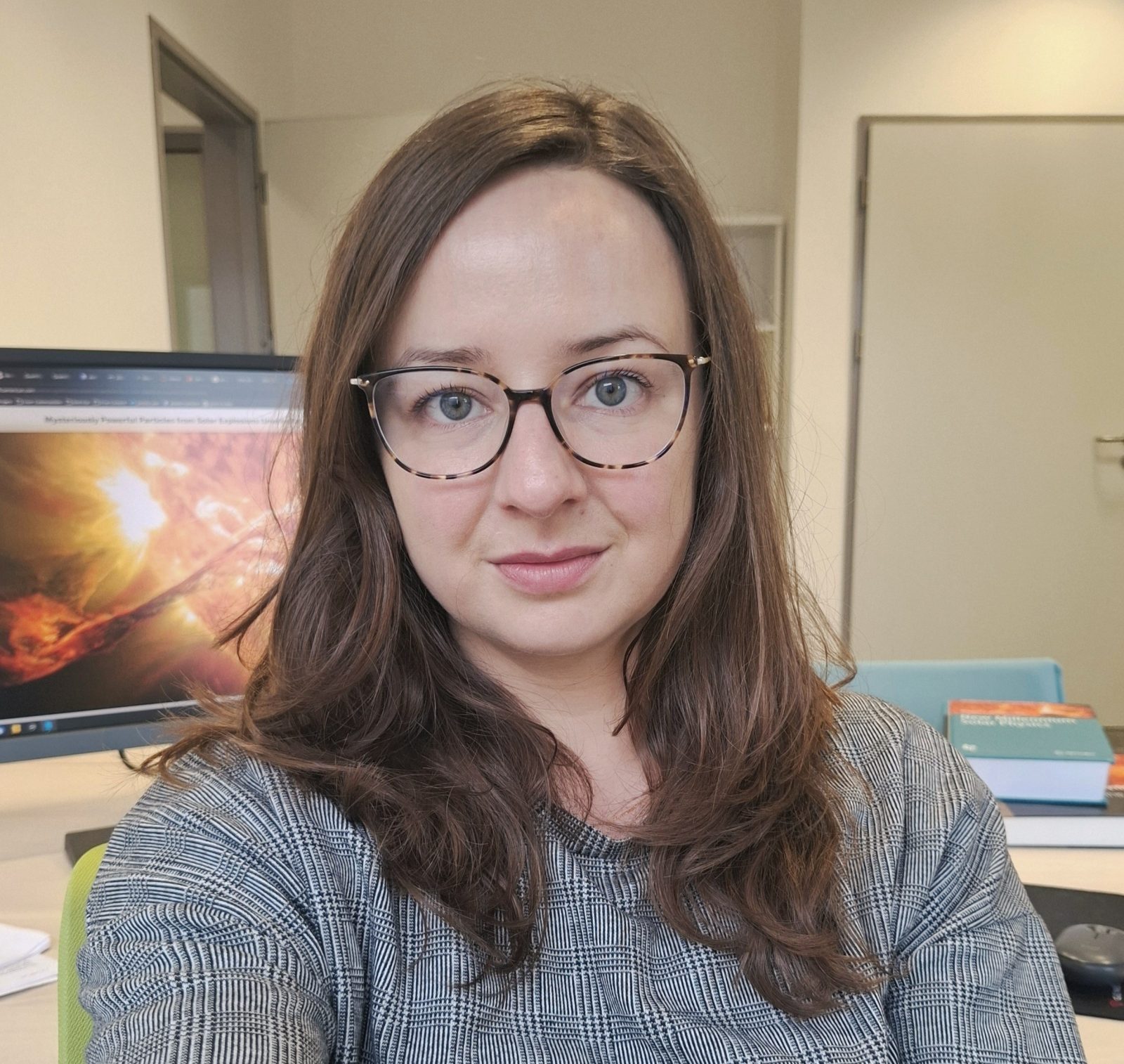
Dr inż. arch. Michalina Litwicka from the Incubator of Research Excellence – Solar and Stellar Activity at the Faculty of Physics and Astronomy received Miniatura for the project “Modelling of chromospheric emission: Effect of the beam of nonthermal electrons on modelling of the Sun’s flare atmosphere”.
The project concerns studying the processes taking place in the Sun’s chromosphere during solar flares. These phenomena emerge as a result of switching the line of magnetic field, which releases large amounts of energy and directs them to electron acceleration towards denser, cooler layers of the atmosphere. Consequently, these areas start to emit light in the ultraviolet and visible range, among others. In order to understand more precisely the nature of flares, advanced modelling of processes is necessary with the use of complex numerical codes. Two different modelling devices will be used and compared in the project. One of them (FLARIX code) creates detailed simulations of flares, including nonthermal electrons that interact with plasma. The other one (STiC code) enables recreating the Sun’s atmosphere on the basis of the observed spectrum, not taking into account nonthermal processes.
The project also includes a short research visit to Stockholm University, where code StiC is developed. An experiment will be conducted during the visit, consisting of the flare simulation in FLARIX and then recreating the atmosphere from the same spectrum with the use of the code StiC. It will let us state whether models omitting nonthermal processes can properly reproduce the atmosphere during flares, and how much the parameters of plasma depend on changes in the beam of electrons.
The effect of the research will be a better understanding of the phenomena taking place in the chromosphere, and an evaluation of the possibilities of using FLARIX and STiC codes in the future research on solar and stellar flares and other active phenomena.
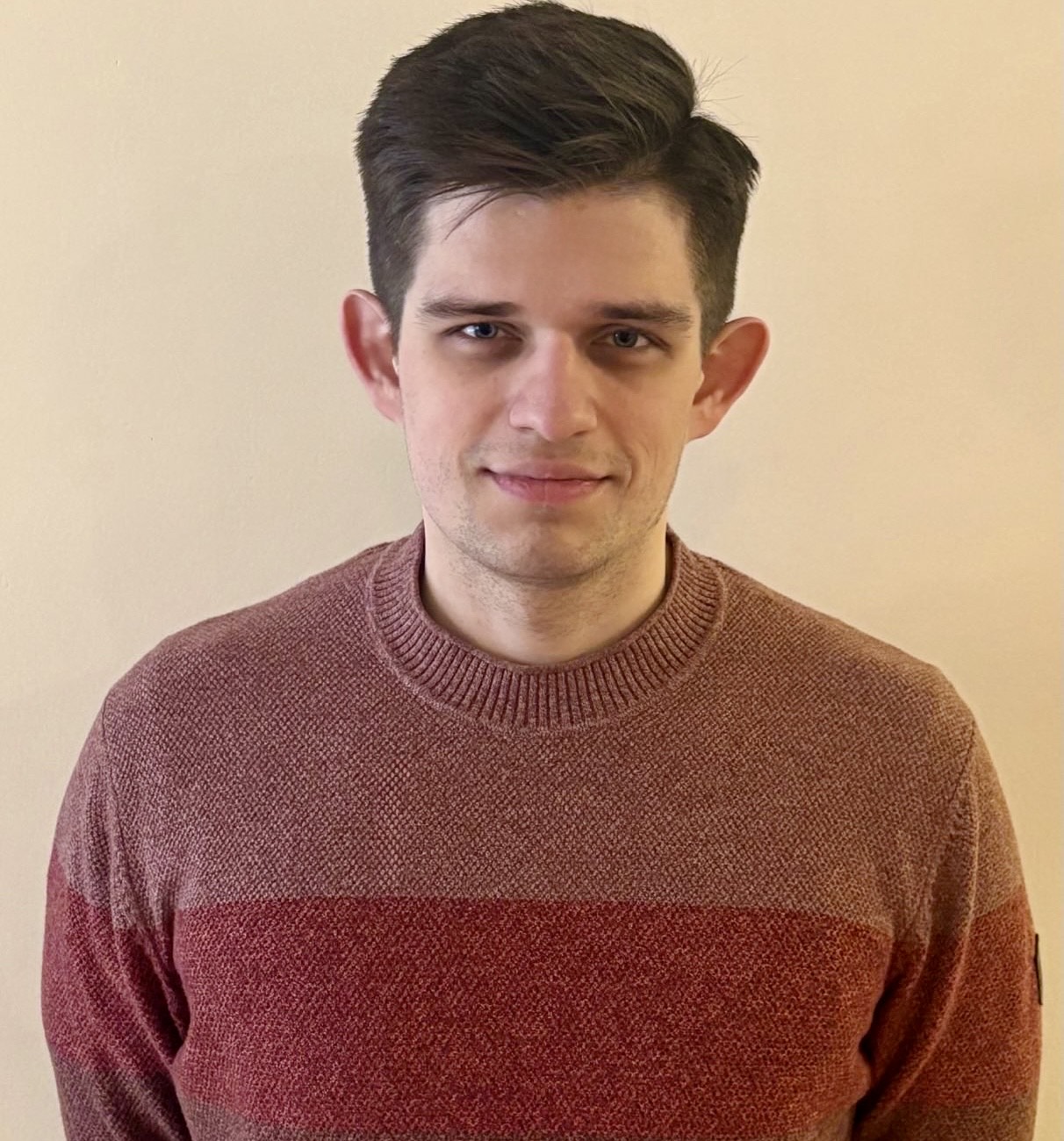
Dr Kamil Wojtkowiak from the Department of Informatics Applications in Chemistry at the Faculty of Chemistry received Miniatura for the research trip as part of the project “Large-scale simulations of complexes of nucleic acids and proteins”. The planned research project aims to explore issues connected with large-scale simulations of protein systems and nucleic acids. Significant parameters of molecular simulation will be studied, such as force fields describing the energy of subsystems, discrete solvent-based models, specific geometric bonds among distinguished parts of a system, and the shape of the solvation shell. The conducted tests of calculative protocols will enable performing more precise simulations, which may have measurable contributions to a better understanding of stability, processes of creation, interactions, and the internal dynamics of the ribosome. The research trip to a research team at the Czech Technical University in Prague, during which the initial studies will be accomplished, will enable the creation of the foundations for further studies on these matters and establish long-term interdisciplinary cooperation with experts in this field.

Dr inż. Karol Kułacz from the Team of Structure and Molecular Interactions at the Faculty of Chemistry received Miniatura for the research trip as part of the project “Nanocomposite Kaolinite/ Fe – S as an adsorbent of organic pollution: preparatory procedures, characteristics, and analysis of sorptive properties”. Environmental pollution is an increasing problem on a global scale. Hence, it is necessary to implement efficient solutions and technologies limiting emissions and removing pollution from the air and water. Designing selective sorptive materials becomes a promising direction of research. Such materials are able to remove selected groups of chemical compounds.
The research activity includes a research trip to Professor Robert Szilagyi’s group (University of British Columbia, Canada). During the research trip, work including preparatory procedures of the nanocomposite Kaolinite/Fe-S, its detailed structural characteristics, and broad studies on chemisorptive properties will be conducted. The studies on the system of nanokaolinite/Fe-S will focus on understanding its structure and reactivity in the scope of the binding of organic compounds as model reactions. Selectivity and efficiency of pollution adsorption by nanokaolinite/Fe-S will be evaluated depending on changeable conditions, which include pH, temperature, and contact time. The received experimental data will be complemented by results of in silico studies, which will enable identification and a detailed description of adsorption mechanisms at the molecular level, as well as localisation of potential places of pollution binding on the surface of a material.
The results of the conducted studies will enable the evaluation of the effectiveness of the nanocomposite in binding organic molecules that cause environmental pollution. Moreover, the results will deliver significant information concerning the possibilities of further modifications of the nanocomposite in terms of its potential applications in environmental protection. A set of vital data on compounds efficiently interacting with the surface of nanocomposite kaolinite/Fe-S will enable dr Kułacz to define key structural and chemical properties that decide about effective adsorption. Integration of experimental and theoretical methods will also let him design a model correlating the structure of a material with its sorptive properties among selected organic pollutants.
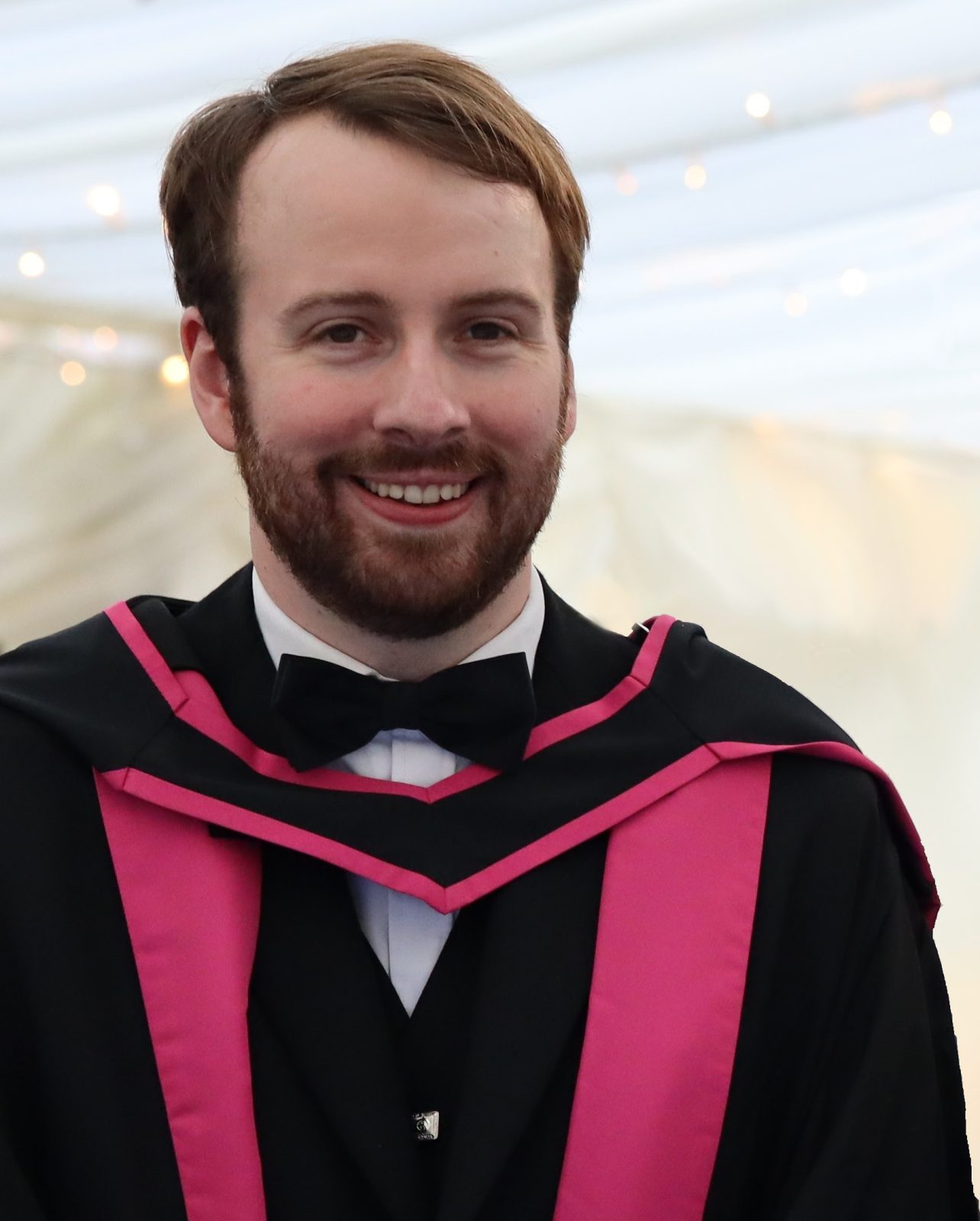
Dr Aaron William Peat from the Incubator of Research Excellence – Solar and Stellar Activity at the Faculty of Physics and Astronomy received Miniatura for the project “Research on inversion of polyatomic solar prominences with the use of a framework based on radiation transfer”. He writes about his project in this way:
Solar prominences are cool, dense structures hanging in the Sun’s atmosphere that sometimes erupt as part of the coronal mass ejection, which can interact with the Earth and its surroundings. These structures are commonly observed on the Sun, and they may sometimes exist stably for a long time, which may offer a unique opportunity to analyse interactions of plasma in the Sun’s atmosphere. Modelling of radiation transfer is necessary to understand the physics of solar prominence. However, we encounter many small complications in the modelling of these structures, such as illuminative radiation emitted from the Sun’s surface, movements on the small spatial scale, and redistribution of energy photons.
In this project, I’m planning to design a technique that will let us better understand the thermodynamic properties of solar prominences through polyatomic modelling of radiation transfer based on observation of these phenomena. Thanks to taking into account many types of atoms, the aforementioned complications can be properly solved. Furthermore, the final result of this project is designing a programme that will be able to predict thermodynamic properties of any solar prominence. It is possible to extend the scope of the project and include stellar prominences about which we know more and more thanks to advanced observational techniques.
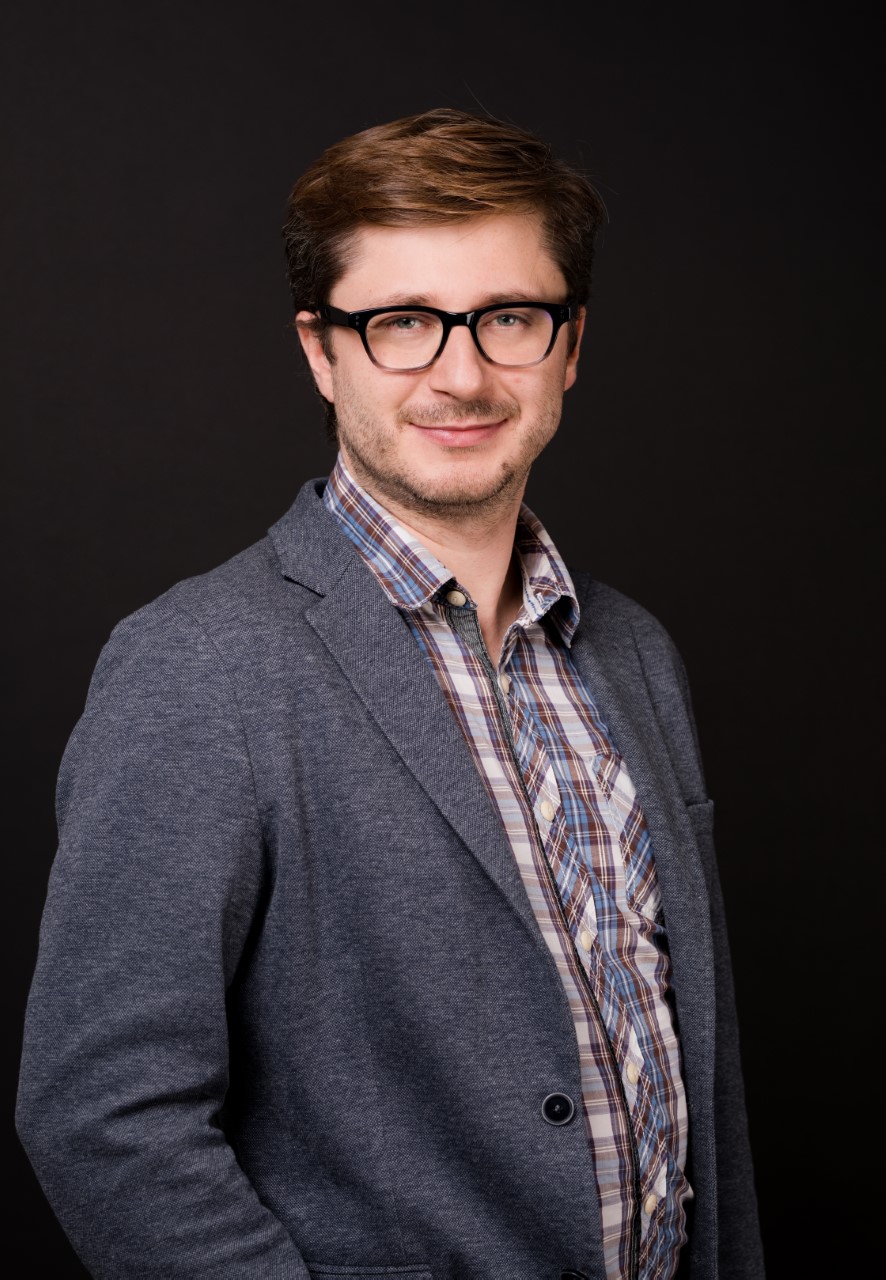
Dr Grzegorz Joachimiak from the Institute of Musicology at the Faculty of Historical and Pedagogical Sciences received Miniatura for the project “Reconstruction of a collection of Aleksander Poliński’s musical documents (1845 – 1916): queries and initial research on the lost Polish cultural heritage”.
The project concerns the reconstruction of a collection of Aleksander Poliński’s musical documents – an owner of one of the most important collections of sources about the history of Polish music. These collections were almost utterly burned down during World War II. As dr Grzegorz Joachimiak says: – As part of the research, I want to determine which manuscripts and printed matter from that collection remained to this day, which ones remained in the form of copies made before 1944, and where they can be found now.
The project aims to create the first, possibly full catalogue of scattered heritage gathered by Poliński, which will enable the dissemination of this reconstructed collection in the future. The queries are to take place in Kraków, Łódź, Warsaw, Poznań, Wrocław, Berlin, Munich, Paris, and in the USA – Harvard Library (Boston, MA) and Library of Congress (Washington, DC).
You can find more information on the website of the National Science Centre
Coverage: Katarzyna Górowicz-Maćkiewicz
Translated by Kinga Krzywonos (student of English Studies at the University of Wrocław) as part of the translation practice.
Date of publication: 25.11.2025
Date of update: 1.12.2025
Added by: M.K.


