



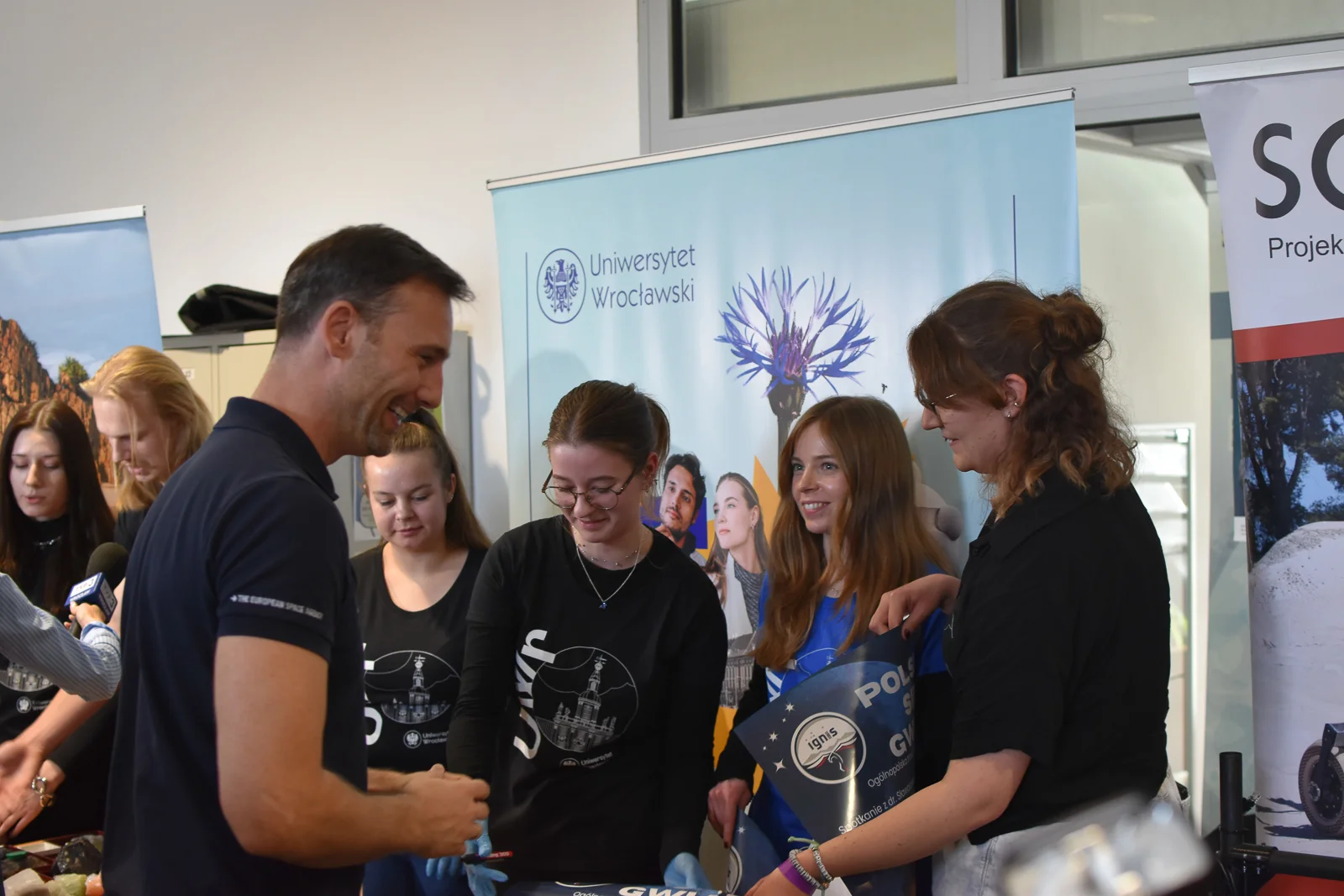
Meeting with Sławosz Uznański-Wiśniewski
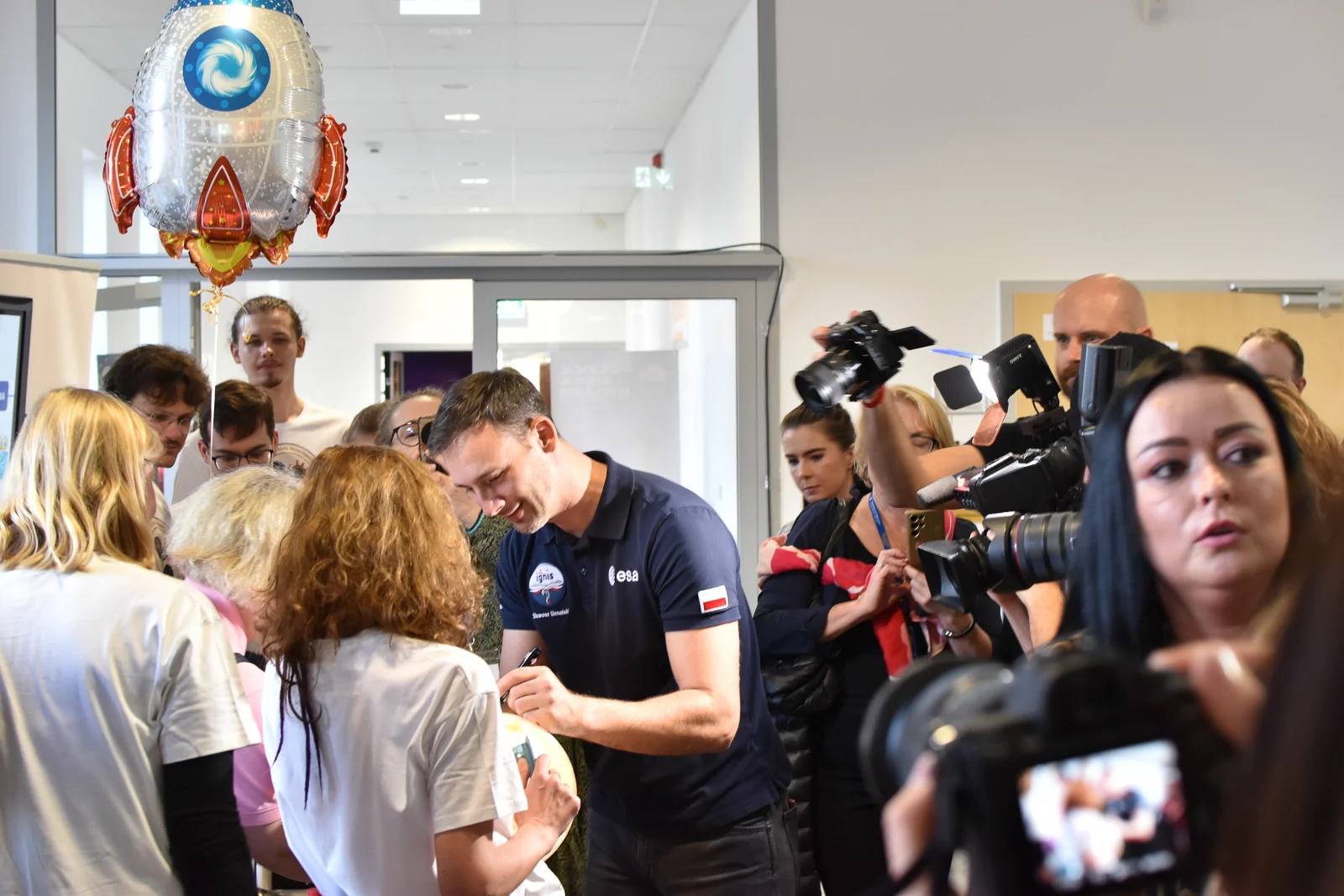
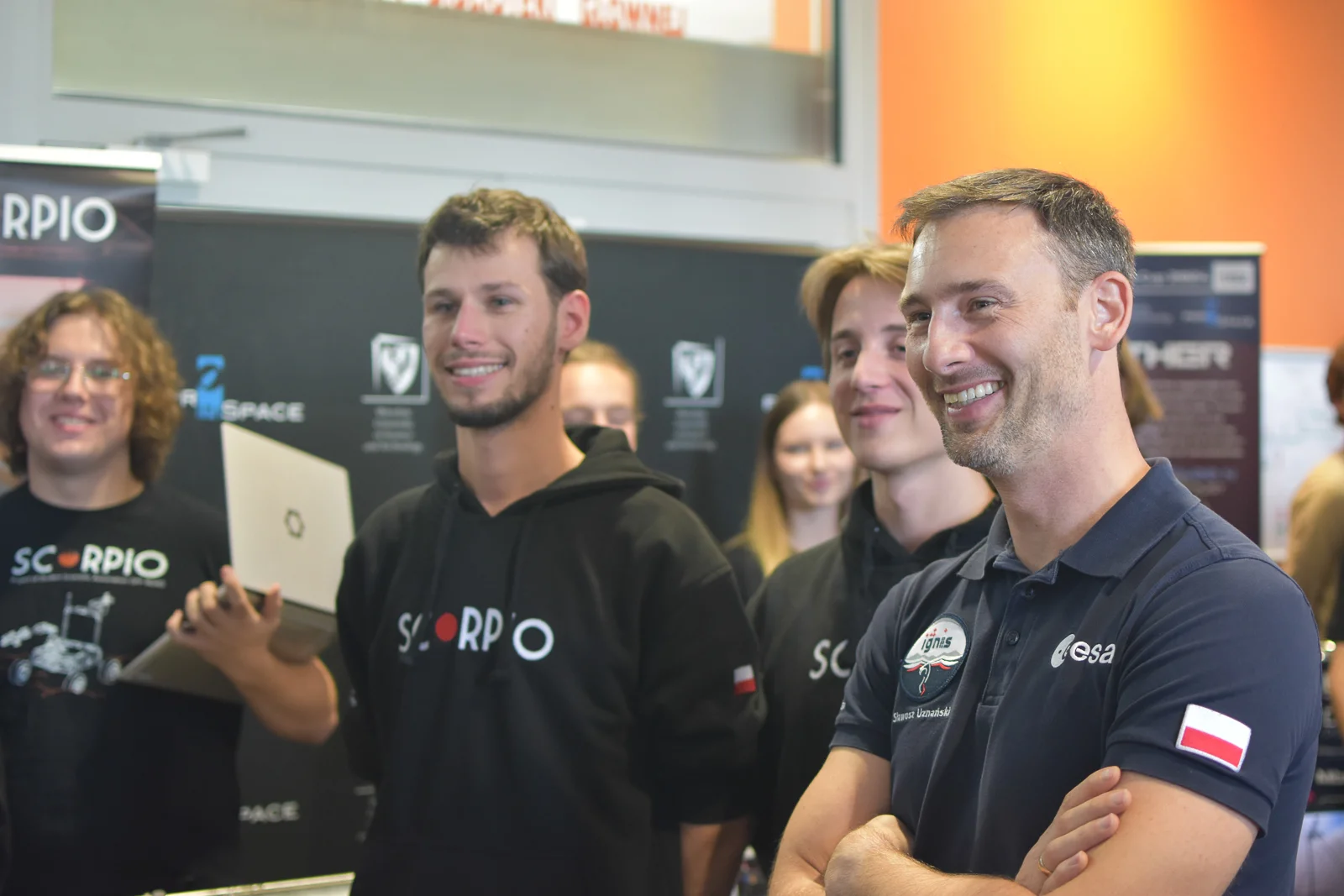
The astronaut Sławosz Uznański-Wiśniewski visited Wrocław in November as part of his technological-scientific tour “IGNIS – Polska sięga gwiazd”. Students and doctoral students from the University of Wrocław attended the meeting.
In his lecture, the astronaut spoke about the course of the Axiom 4 mission, as well as the medical and physiological aspects of staying in orbit. Dr inż. Sławosz Uznański-Wiśniewski answered many questions from the audience, including some asked by our representatives. – Space travels are sometimes said to be the historical continuation of geographical discoveries of new seas and lands. Are past experiences of those discoverers, polar research for instance, used at one point during the planning of space missions in terms of isolation and difficult conditions? – asked Kacper, a student of the Faculty of Earth Sciences and Environmental Management at the UWr. In his answer, the astronaut spoke about his private experiences from explorative expeditions in high mountains and the similarities between those experiences and a space flight. He emphasized that the choice of the aim, reconnaissance of the site, recognition of the crew’s strengths and weaknesses, and the plan of the route are important in both cases. Moreover, making decisions in real time, often with support from the team outside, is also important. The astronaut added that the willingness to cognise and answer questions, for which we do not have answers here on Earth and beyond it, lies in human nature.
Our representative also had a chance to ask the last question. Weronika, a doctoral student from the UWr Doctoral College of Biological Sciences, asked whether any unexpected situation that surprised the crew occurred during the mission. Sławosz Uznański-Wiśniewski emphasized that the “unexpected” is an inherent part of the profession of an astronaut, and the most important trait is the ability to cope with difficult situations and make decisions under pressure. He admitted that there were many unexpected situations, and a problem with the installation of one experiment is the one he remembers best. The astronaut not only shared this story, but also his emotions and a strategy he adopted to overcome the encountered problem.
The presentations of two experiments from many others that the astronaut conducted with other astronauts on the International Space Station took place during the meeting. Dr inż. Weronika Urbańska (Wrocław University of Science and Technology) told us about a project Space Volcanic Algae, which concerned studying the process of adaptation of microalgae from extreme volcanic areas and their functioning in the microgravity conditions and space radiation. Then, mgr Konrad Opaliński (University of Zielona Góra) presented a project AstroMentalHealth, which was based on studying the way isolation affects astronauts’ psychic well-being during a space mission. Prof. Dariusz Galasiński from the Division of Audiovisual Arts in the Institute of Journalism and Social Communication at the UWr also worked on the preparation of the project. A debate with the participation of guests ended this part of the event. Miłosz Wałkowiecki from Radio RAM led the debate.
Link to the lecture part of the meeting
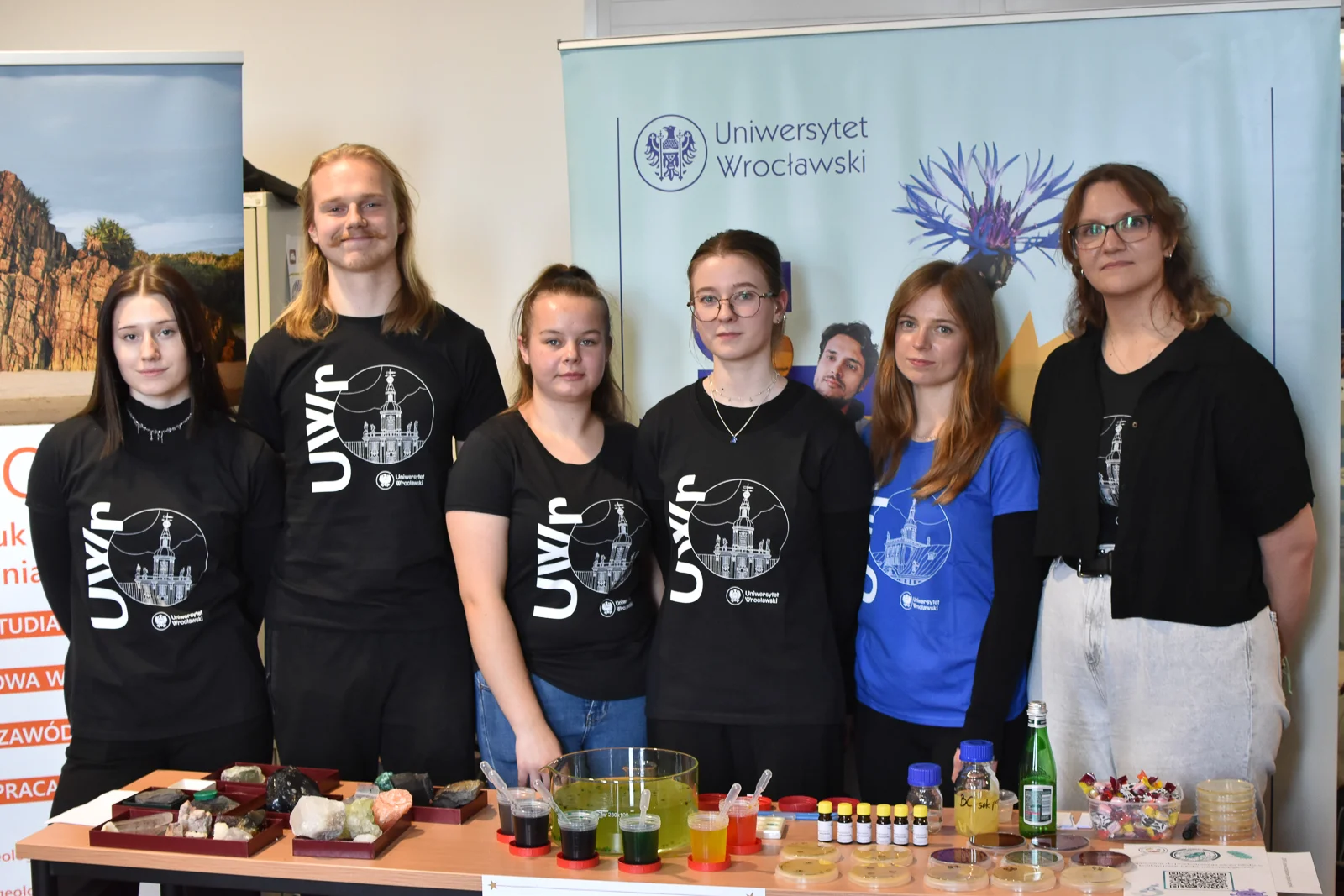
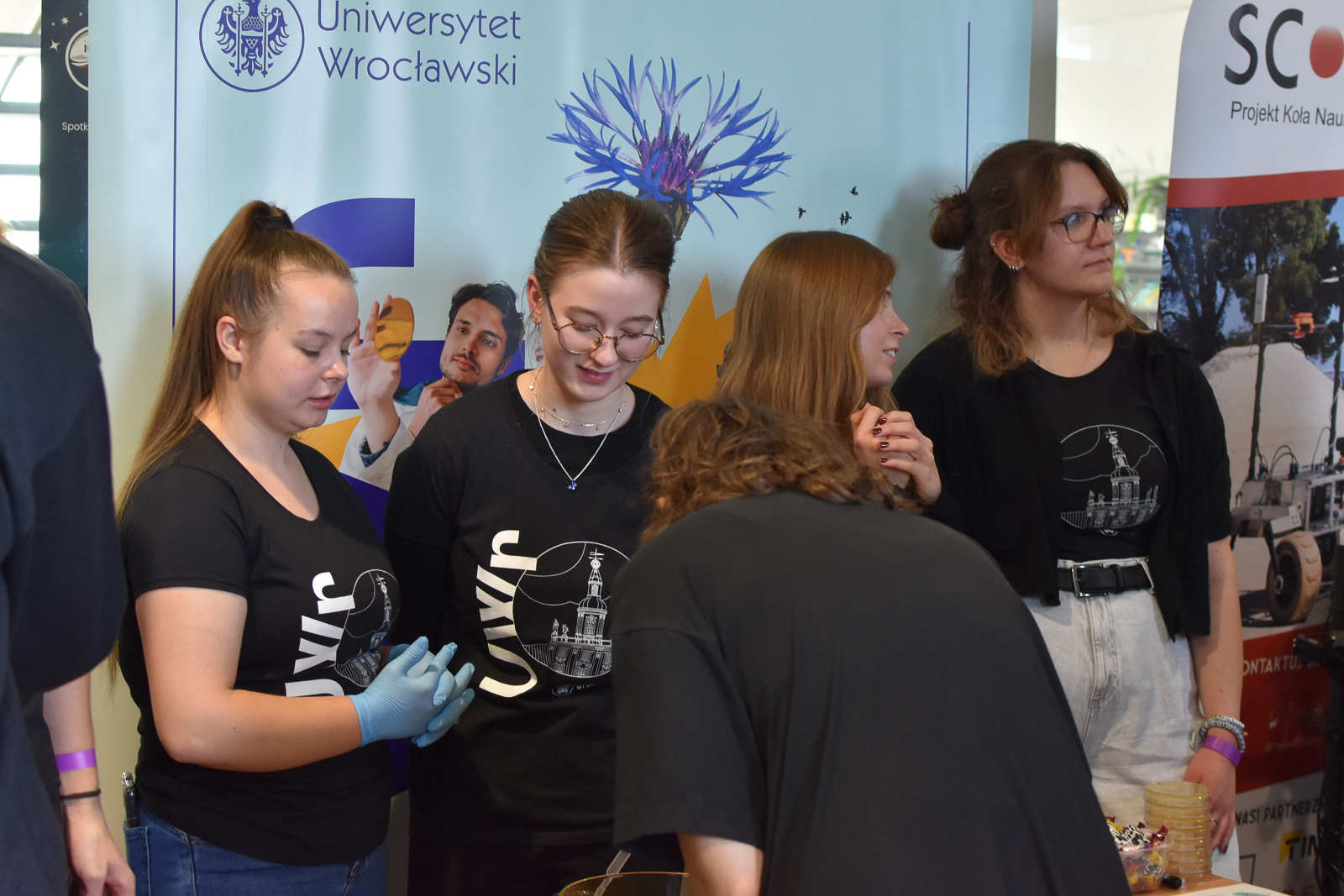
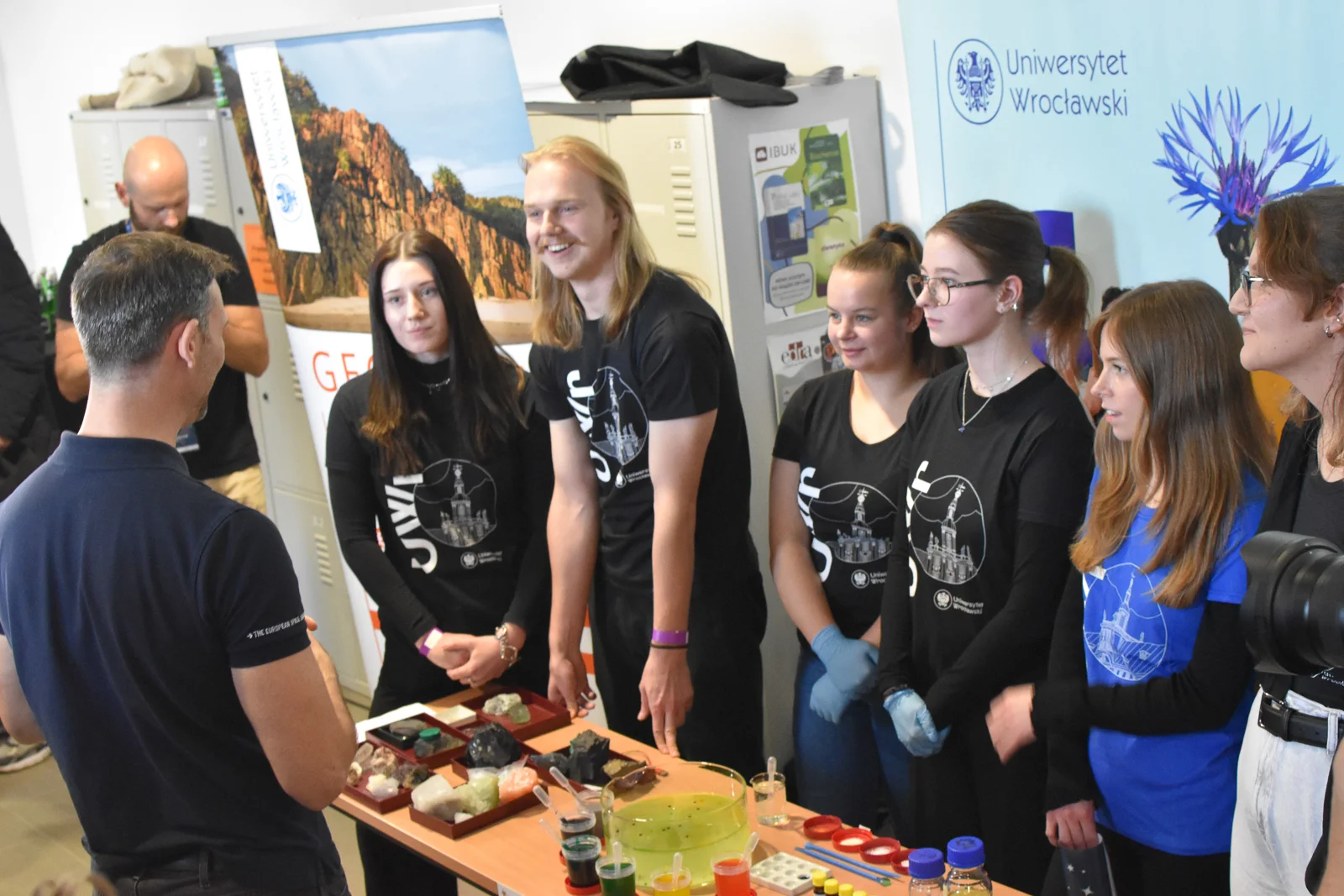
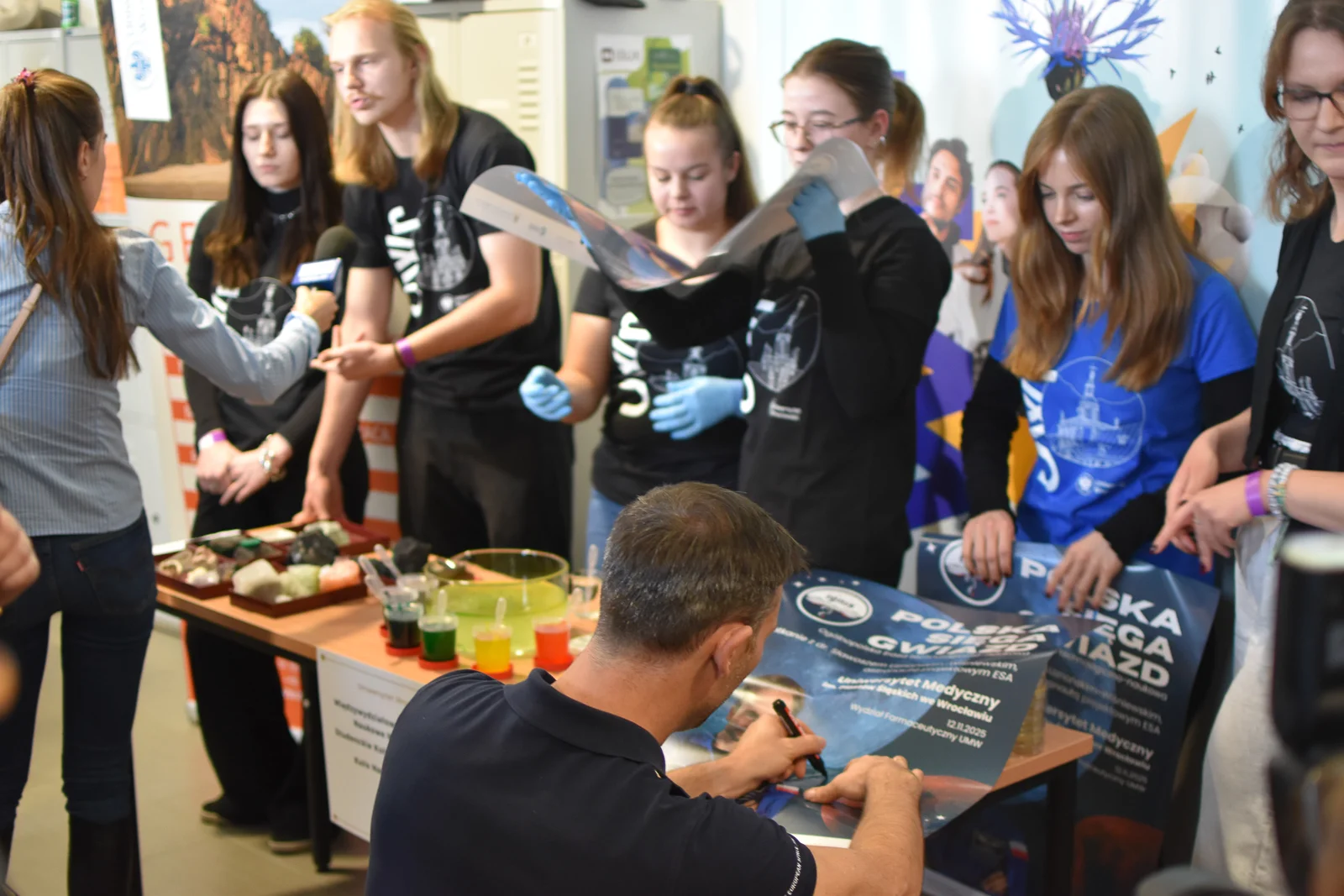
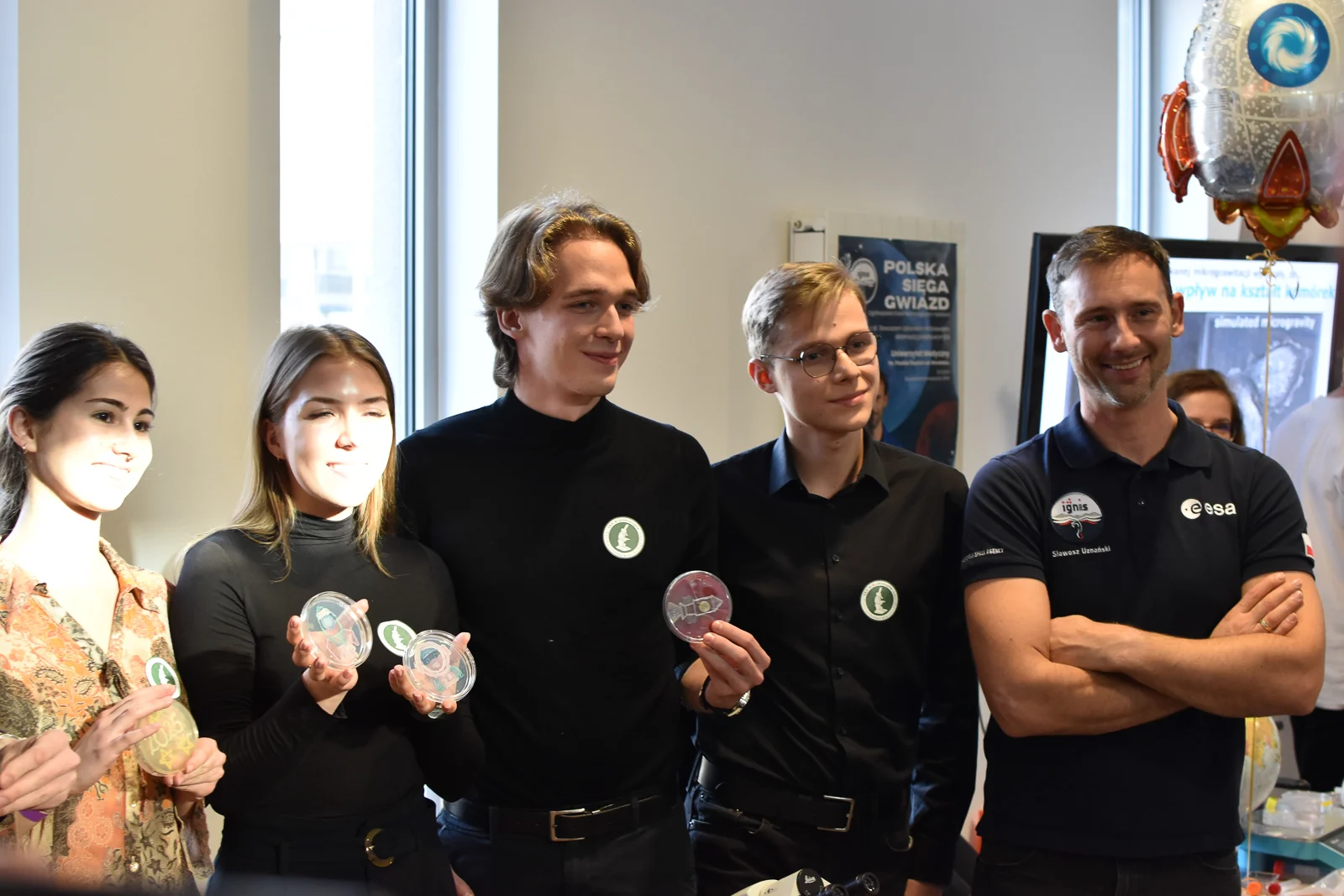
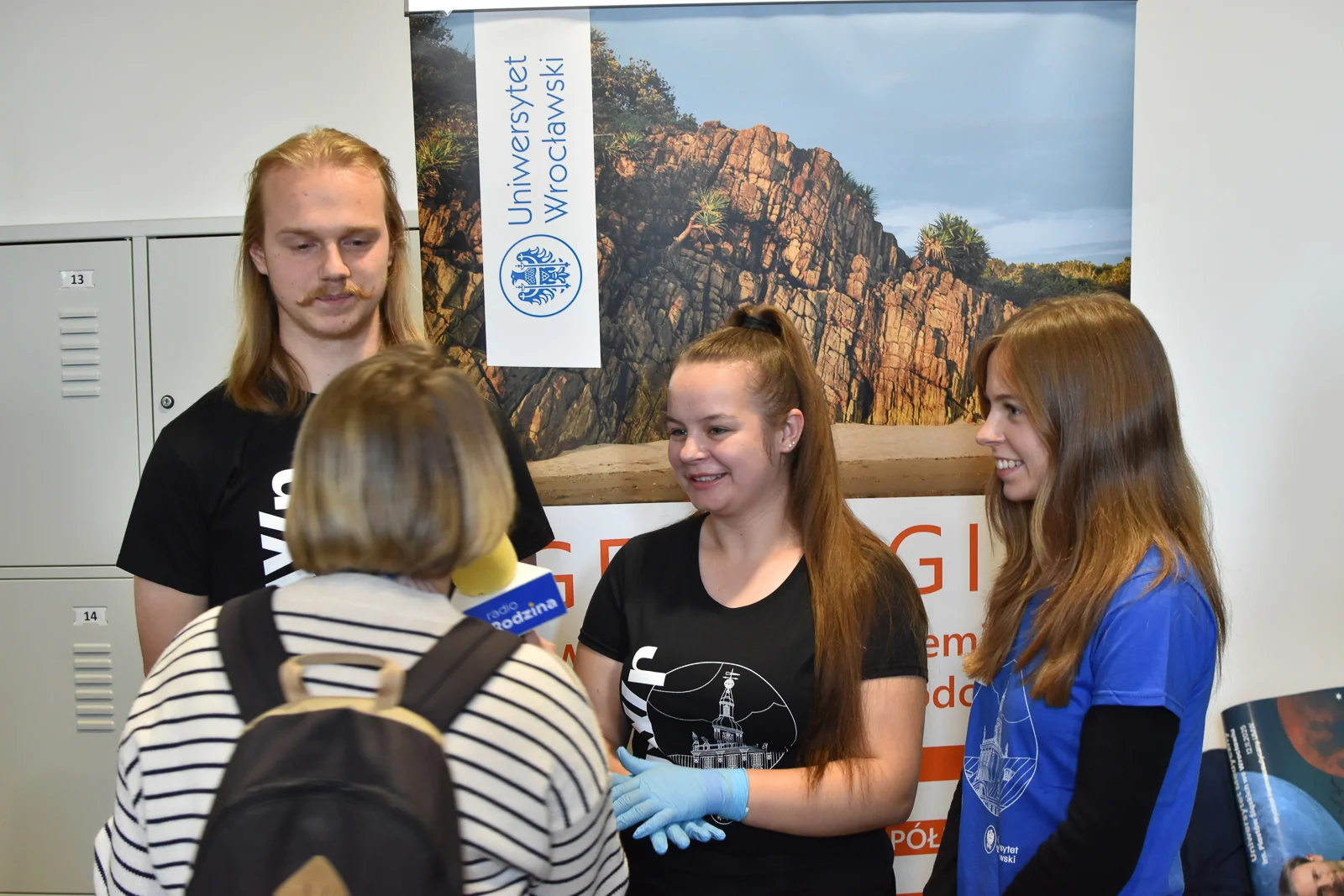
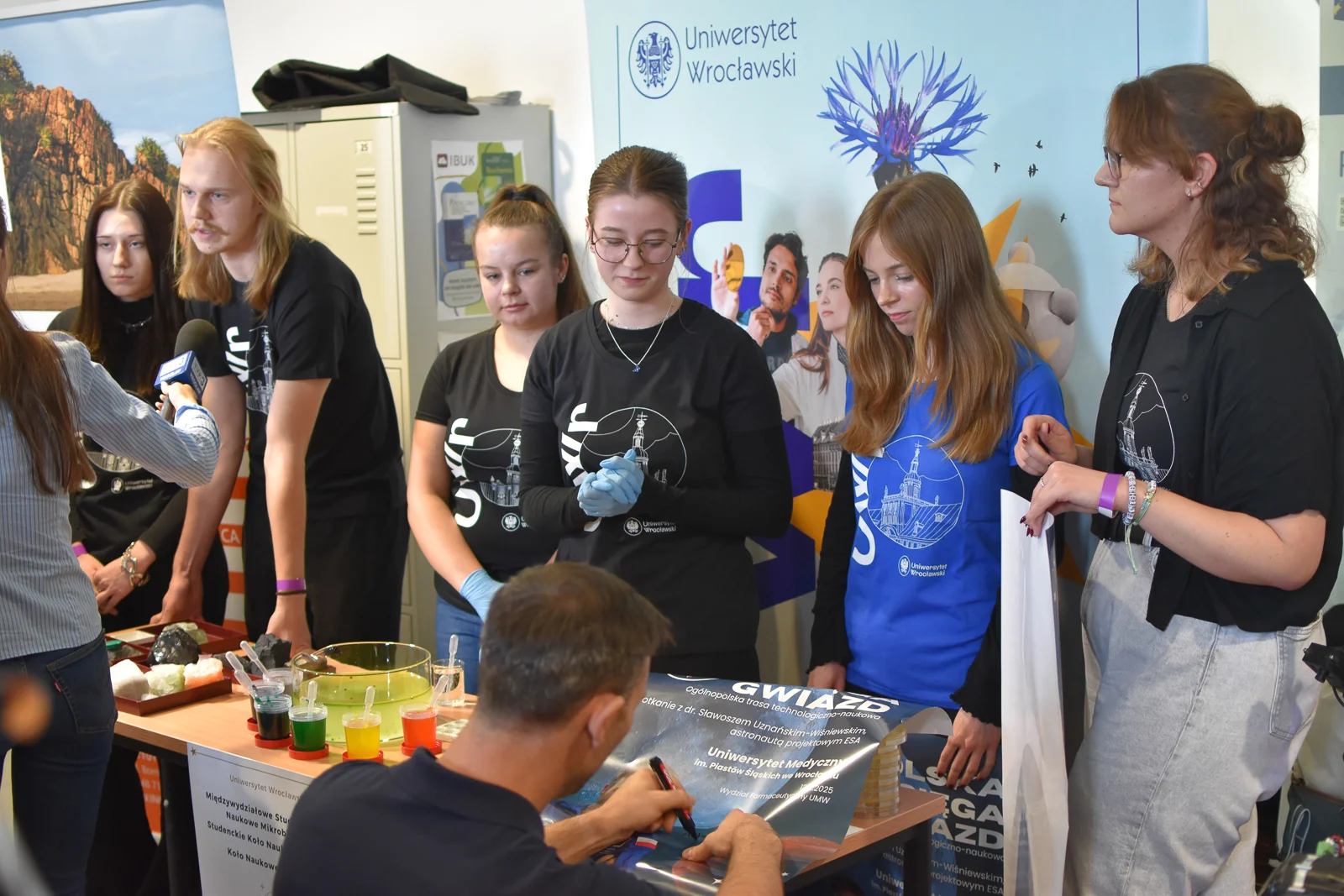
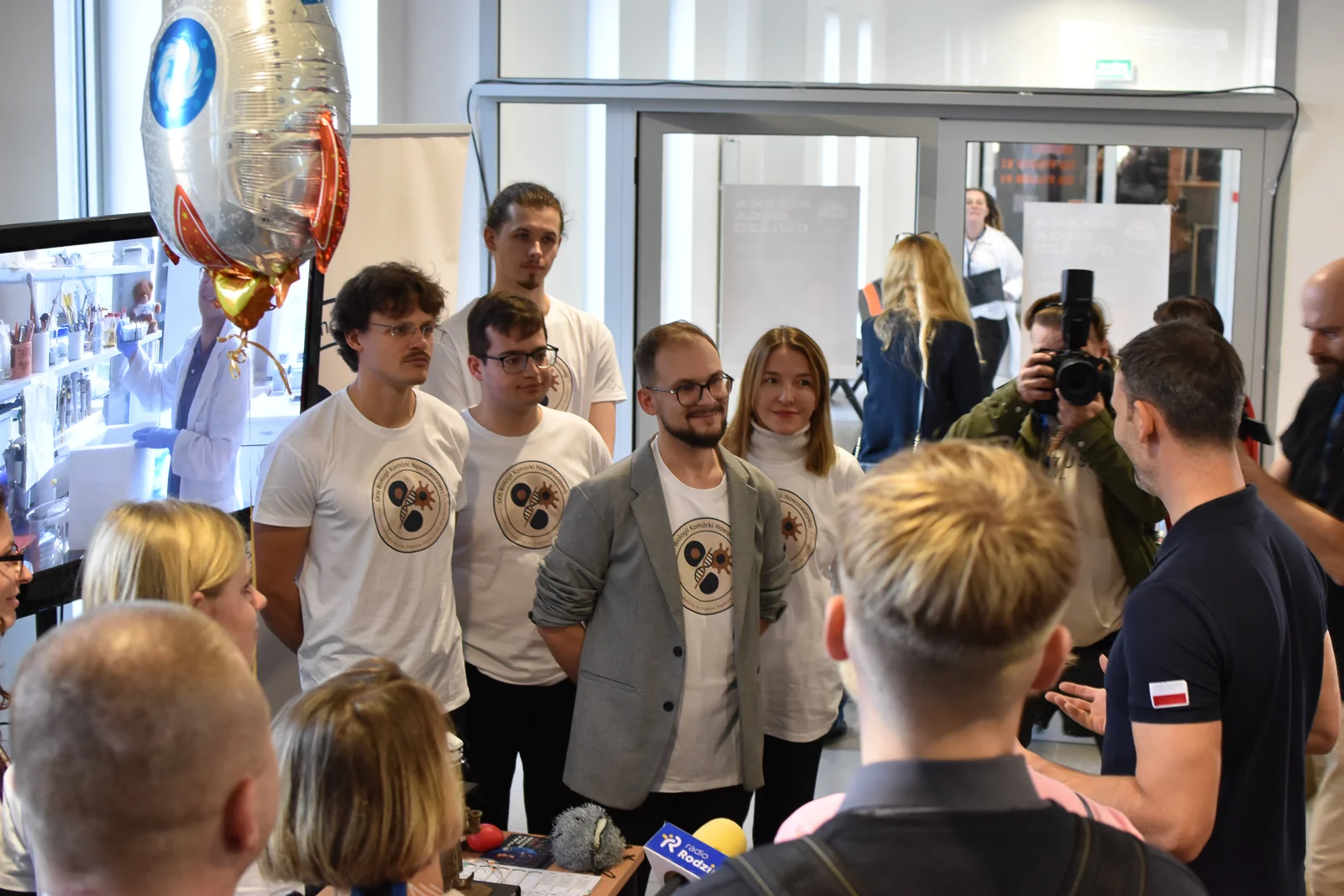
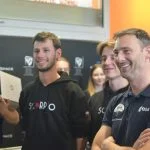
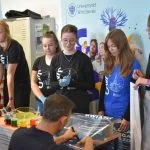
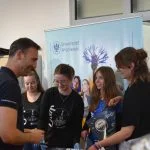
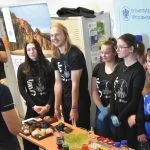
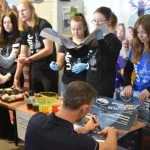
After the lecture part, the astronaut met with scientific associations representing all universities in Wrocław. Representatives of three scientific associations from the University of Wrocław spoke about their activities at the beginning. Those were: Dominika Jurkowska and Maja Kołkowska from the Student Scientific Association of Chemists “Jeż”, Paulina Ficke and Weronika Gabrylewicz from the Interdepartmental Scientific Association of Microbiologists, Julia Stasiukiewicz and Adrian Keklak from the Student Scientific Association of Geologists.
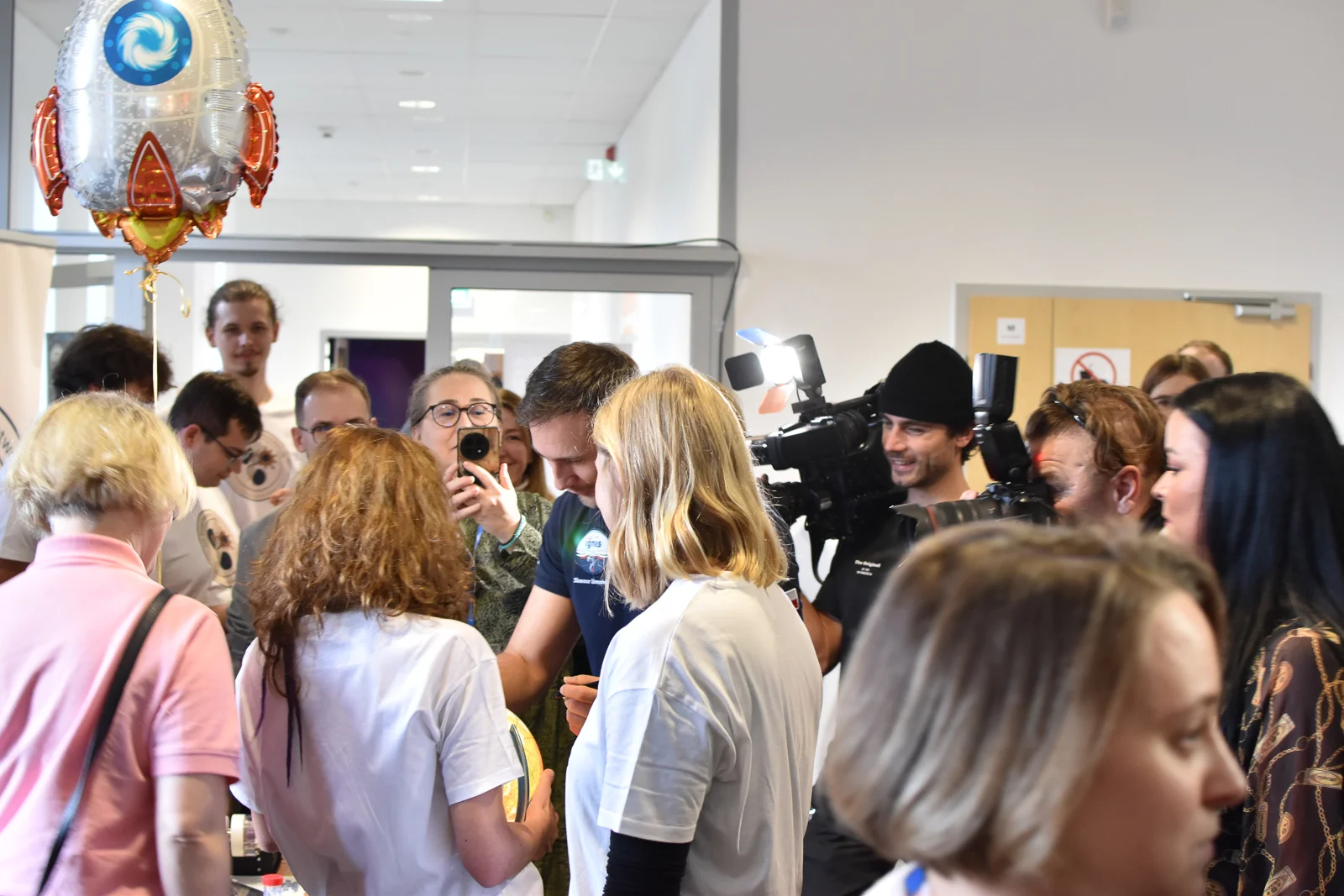
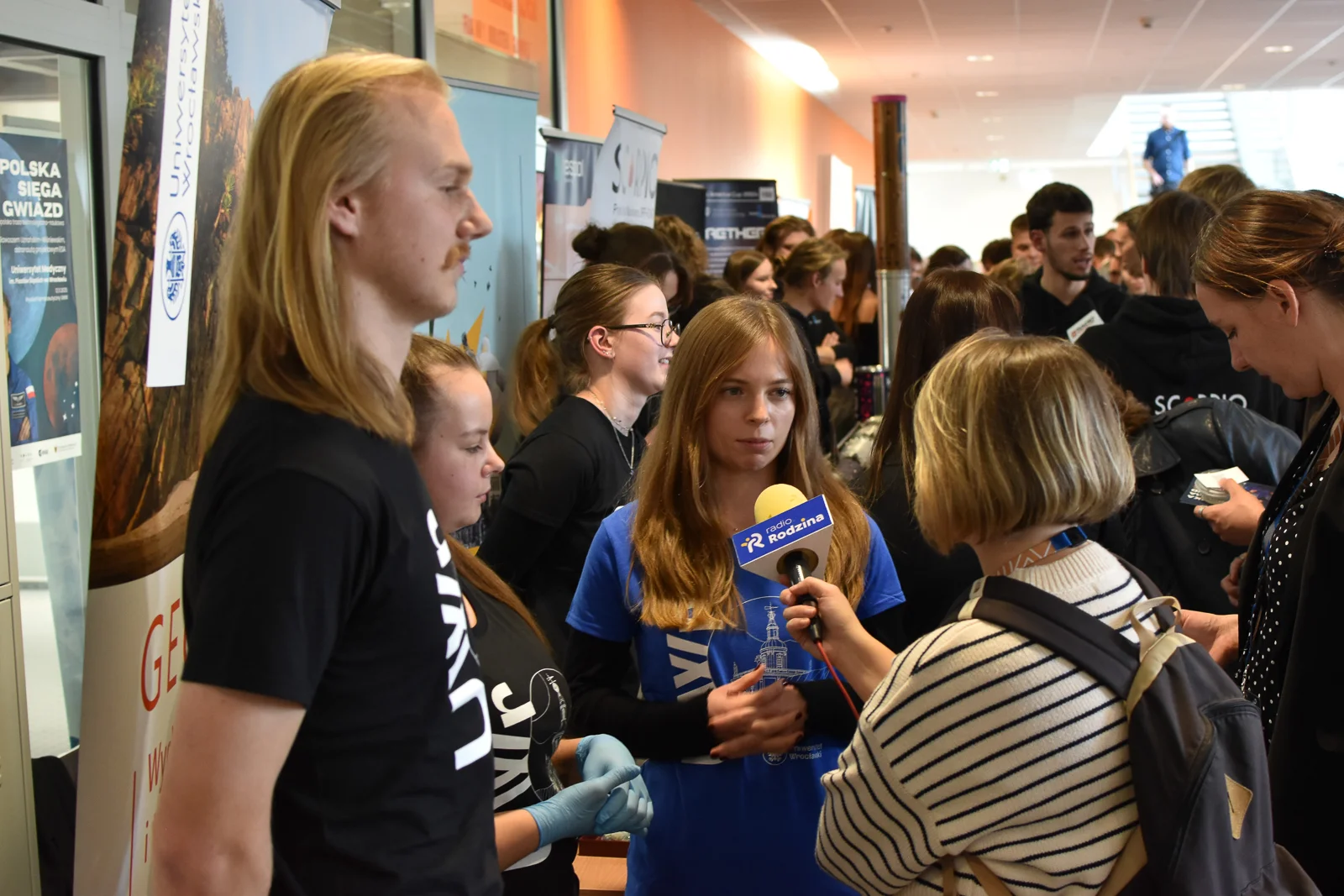
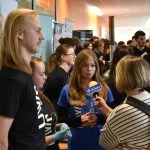
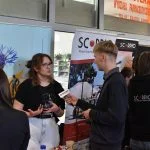
Our students’ activities drew the attention of other participants who were visiting the Scientific Associations of the University of Wrocław stand with interest. It was an opportunity to exchange experiences and initiatives, and generate ideas for common projects with scientific associations from other universities.
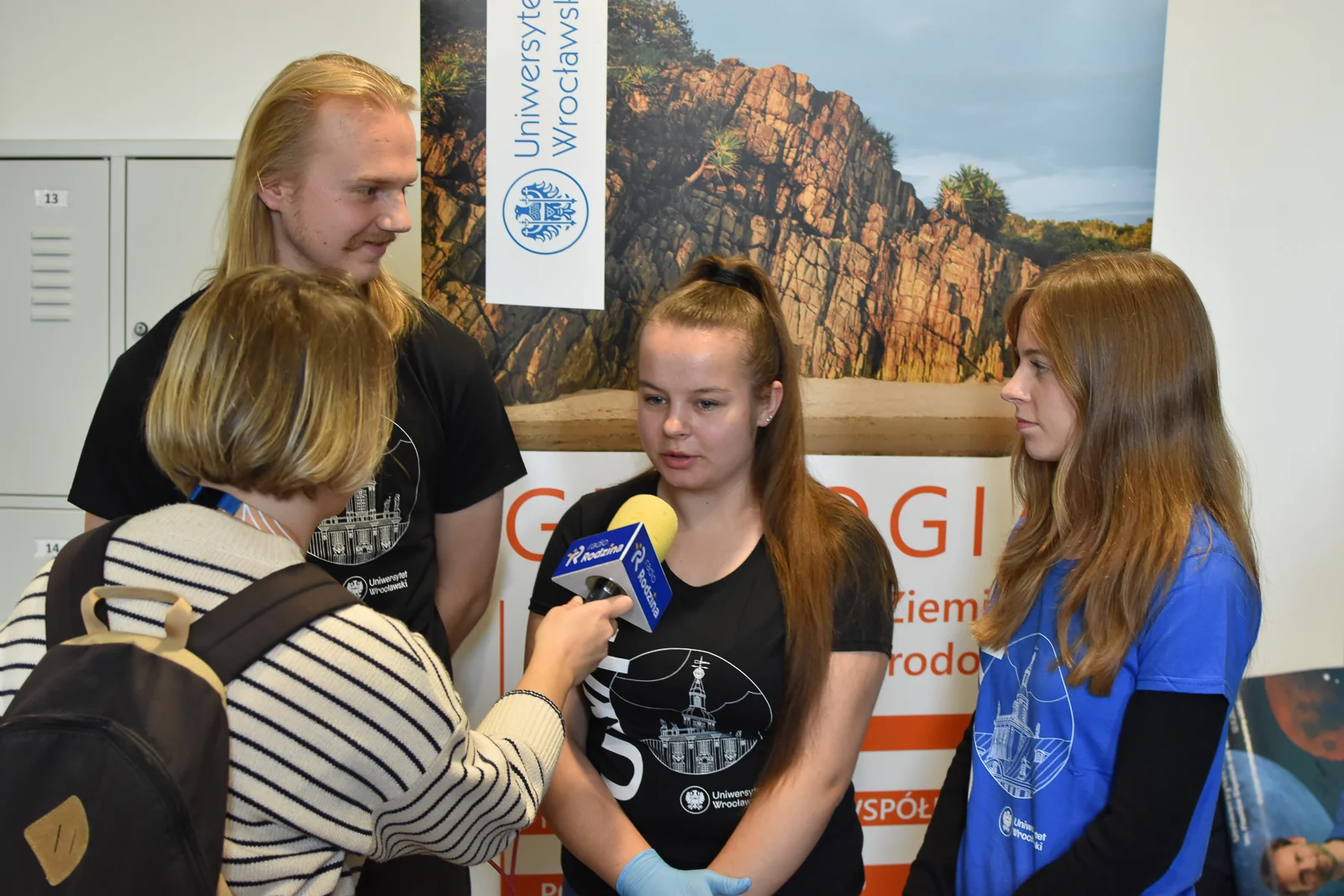
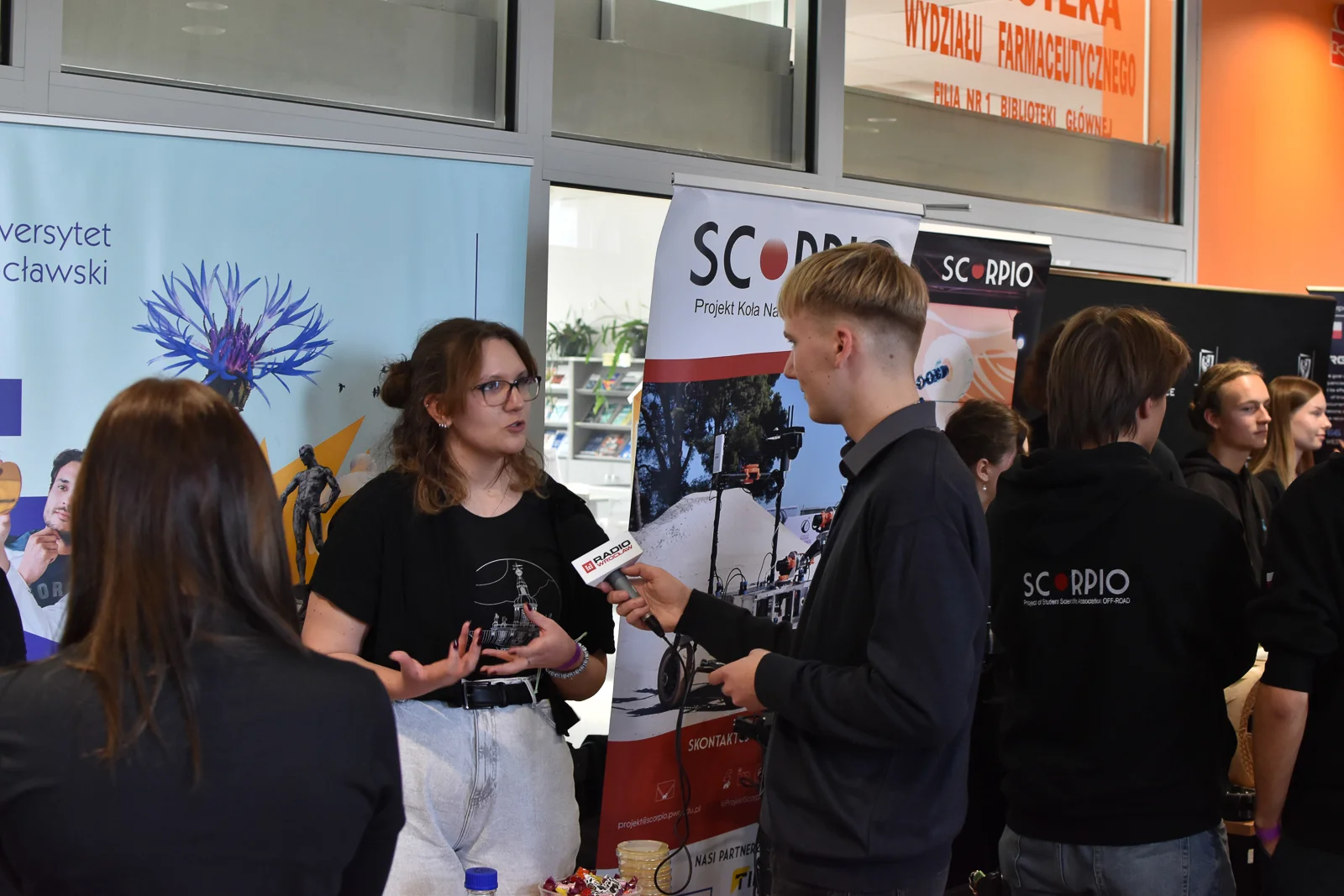
The representatives of the UWr also gave interviews to the media present at the meeting – interviews with them you can hear among others in Radio Rodzina, Radio Wrocław and TVP Wrocław.
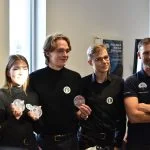
We encourage you to see the photo report prepared by Anna Brzostowska!
We also encourage you to follow our students’ activities on the website of the Office for Student and Doctoral Activities Support of the University of Wrocław.
Author: Anna Brzostowska, Office for Student and Doctoral Activities Support
The text in its original version was published on the website of the Office for Student and Doctoral Activities Support
Translated by Kinga Krzywonos (student of English Studies at the University of Wrocław) as part of the translation practice.



Edit. M.J.
Date of publication: 27.11.2025
Added by: M.J.


