



New Research reveals secrets of a child’s mummy
An Egyptian mummy of a boy is an object of scientific research. It is known how old the boy was and where he came from. The cause of death remains a mystery. The research team includes prof. Agata Kubala from the Institute of Art History.
Ancient Egyptian mummies are relics of a past that have always sparked the interest of researchers. New technologies provide scientists with more tools to help them uncover even more secrets of embalmed remains.
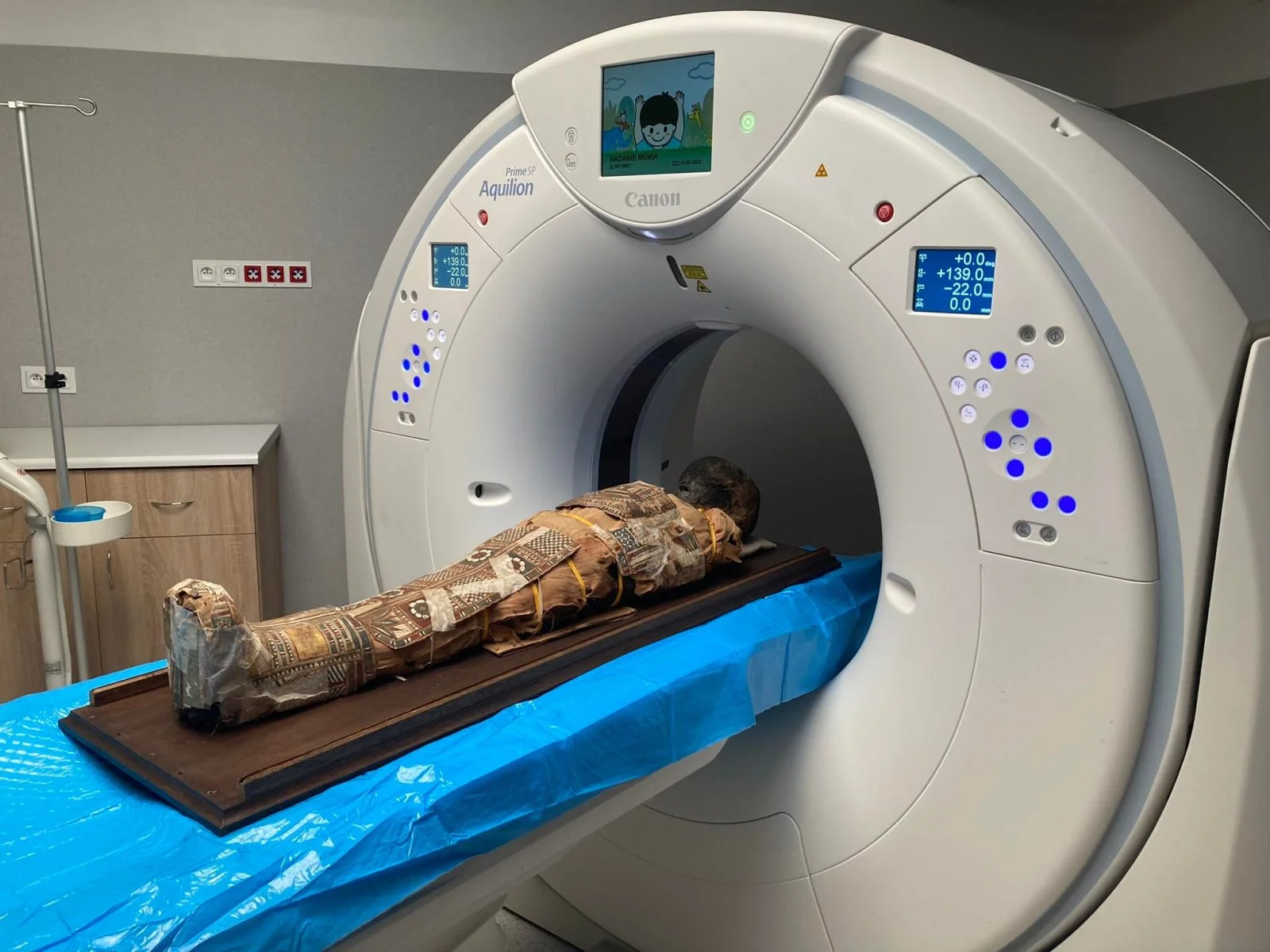
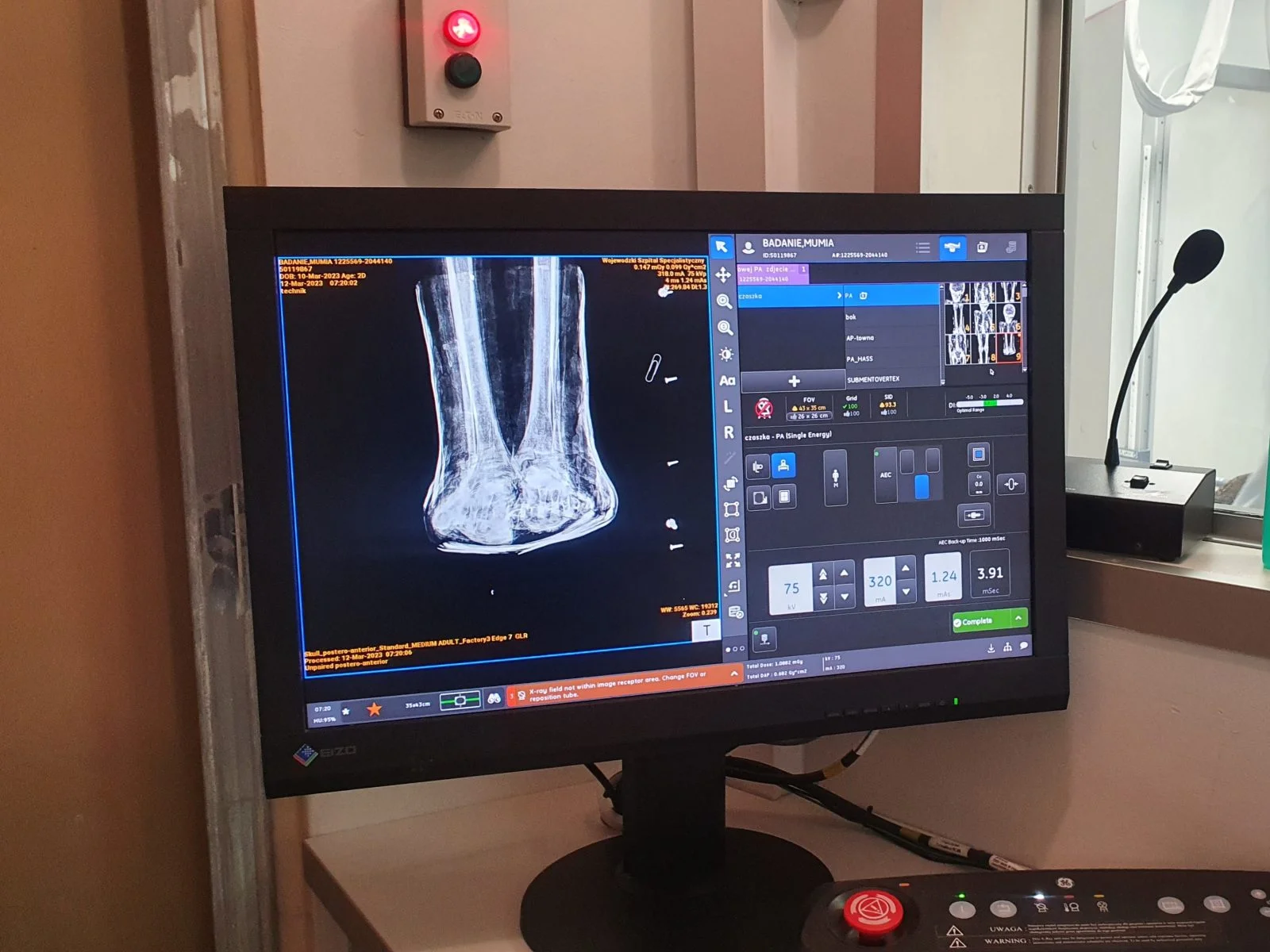
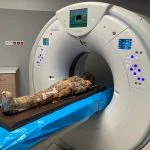
In 2023, upon the request of the Metropolitan Archbishop of Wrocław, Józef Kupny, scientists began examining the mummy. This was its first known radiological examination. Previously, the remains had never been systematically examined.
The mummy was brought to Wrocław in 1914 as a part of an antique collection belonging to Cardinal Adolf Bertram, who was appointed Bishop of Wrocław that same year. He donated his collection to the local museum (today the Archdiocesan Museum).
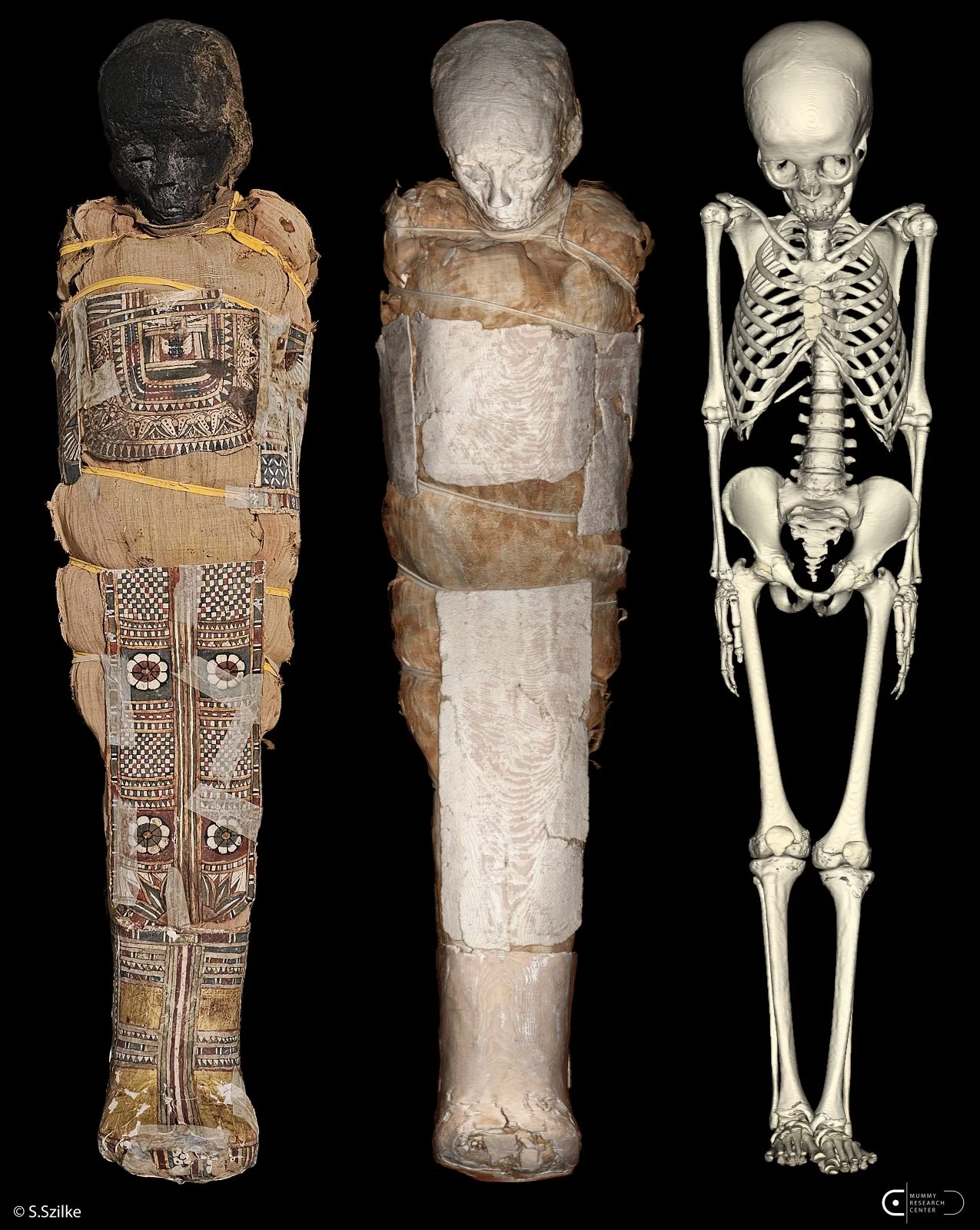
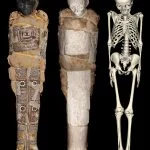
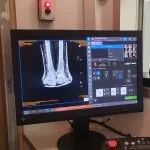
The research includes, among other things, the history of the embalmed person and their origin. Thanks to non-invasive radiological examination, it was possible to estimate the sex and age and to detect pathological changes and signs of disease.
The preserved soft tissues and dental development made it possible to accurately determine the sex and age. It is now known that the mummy belonged to a boy who died at around the age of eight.
The radiological analyses have confirmed that the brain had been removed through the nasal cavity. Most of the internal organs have also been removed.
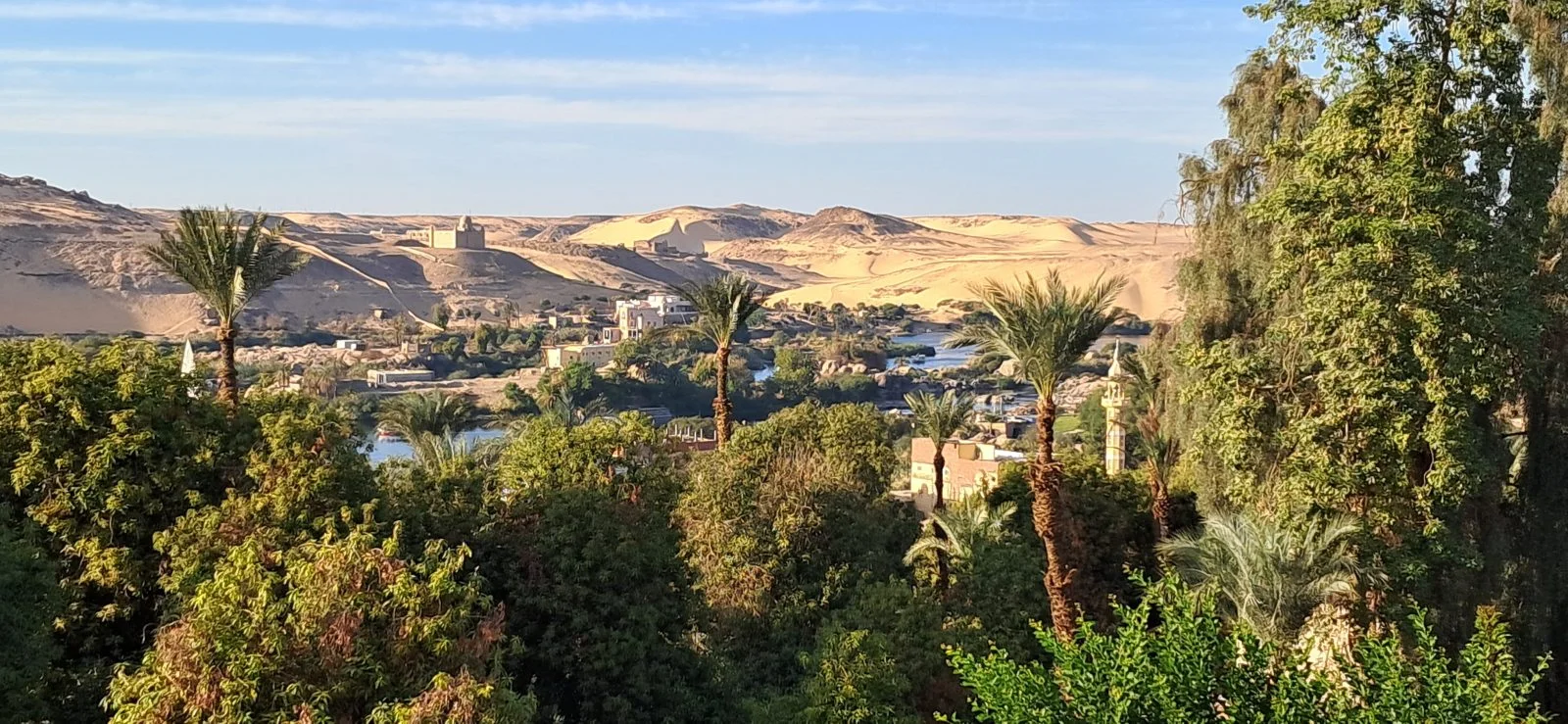
A comparison of the cardboard in which the mummy is preserved suggests that it originated in southern Upper Egypt, most likely Kom Ombo, Aswan or another necropolis in the region.
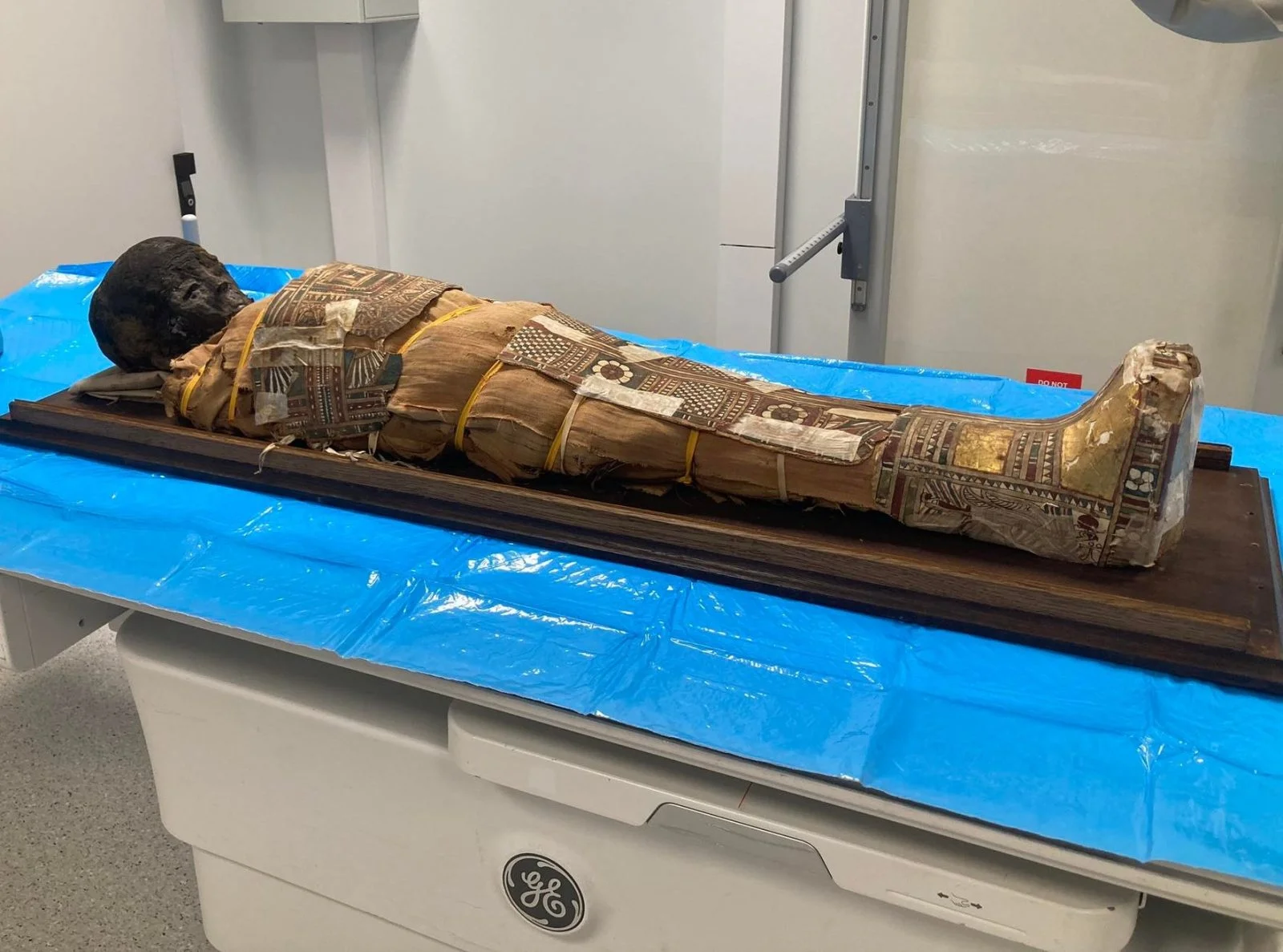
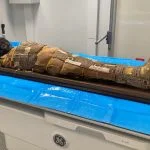
With bandages and cardboard, the mummy is 123 cm long, 28.4 cm wide at the shoulders and 15.5 cm wide at the feet. The head and neck are partially unwrapped and dark, with white salt crusts. The face of a child is visible because most of the bandages have been removed. There is a noticeable layer of brown-black embalming substances on the head and neck, which strengthens the bandages. Researchers speculate that the child’s face may have originally been covered with a mask.
“This is not the end of the research”, says prof. Agata Kubala, from the Department of Renaissance and Reformation Art History (Institute of Art History, Faculty of Historical and Pedagogical Sciences, University of Wrocław). “We are still working on the mummy, as an X-ray revealed the presence of an object on the chest – it may be a papyrus containing, for example, the boy’s name.
However, in order to reach it, scientists must develop a method for removing the cartonnage, which is damaged and, as a result, quite fragile and vulnerable to further damage. “We are also working on a detailed “reading” of the iconography of the cartonnage itself, which is a complicated task in the case of mummies from the Ptolemaic period. This will allow us to refine its dating within this era and possibly confirm our proposed region of Aswan as its place of origin”. adds our researcher.
The results of the research conducted by the team from the University of Wrocław and the International Mummy Research Centre Foundation were published in the March issue of „Digital Applications in Archaeology and Cultural Heritage”. The article enriches our knowledge and data on Egyptian mummies that are still preserved and available for research, with particular emphasis on their origin. We recommend reading: Digital technology in the service of mummy studies. Egyptian child mummy in the Archdiocese Museum in Wrocław– ScienceDirect
It is also worth checking out „Living Archeology”
The research team consisted of dr Agata Kubala, Professor at the Institute of Art History at the University of Wrocław, Marzena A. Ożarek-Szilke, Stanisław Szilke and dr Wojciech Ejsmond from the Mummy Research Centre. The radiological examinations were carried out by medical doctor Maciej Mazgaj at the Stefan Cardinal Wyszyński Regional Specialist Hospital in Lublin.
Pictures of a mummy by Marzena Ożarek-Szilke
Translated by Matylda Majda (student of English Studies at the University of Wrocław) as part of the translation practice.
Edit. Kg
Date of publication: 27.02.2026
Added by: M.J.


