



On the German Studies partnership between scholars from Wrocław and Heidelberg
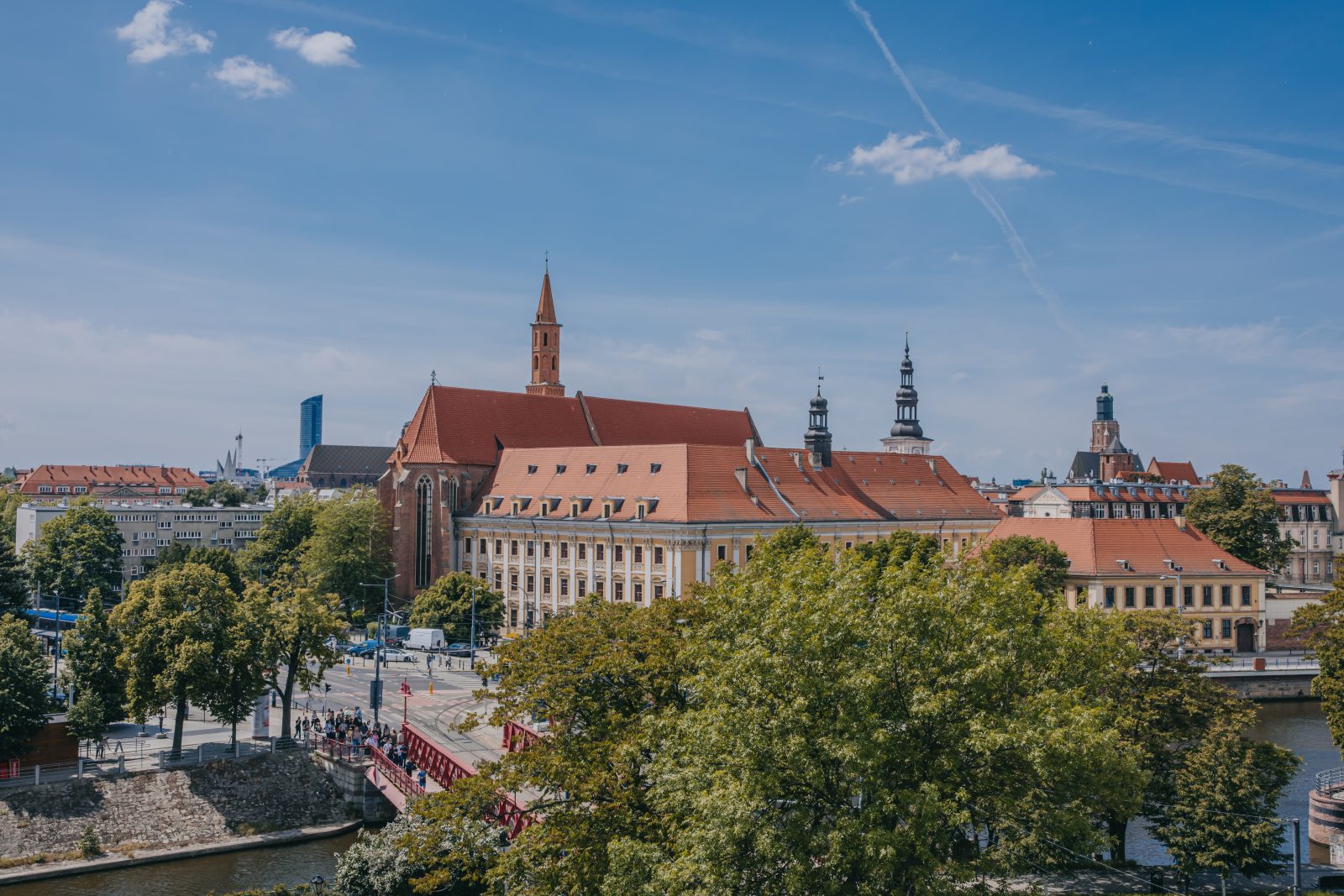
At first glance, Heidelberg and Wrocław seem to have more differences than similarities. On the one hand, there is the Ruperto Carola University, immersed in the greenery of the idyllic valley of Neckar, dating back to the late Middle Ages. On the other hand, the University of Wrocław, located in the centre of a metropolis marked by war and, in its present form, is celebrating its eightieth anniversary. Despite many differences between the two academic centres, in 2015, they were able to create an Interinstitutional German Studies Partnership [Germanistische Institutspartnerschaft] (GIP), supported by the German Academic Exchange Service (DAAD).
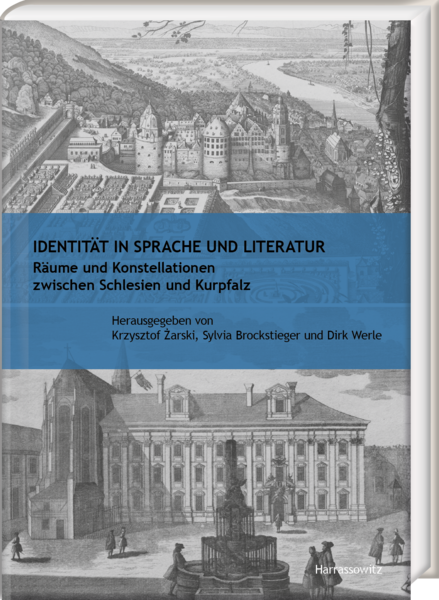
The aim of the publication “Identität in Sprache und Literatur. Räume und Konstellationen zwischen Schlesien und Kurpfalz” (Tożsamość w języku i literaturze. Przestrzenie i konstelacje między Śląskiem i Palatynatem/Identity in language and literature. Spaces and constellations between Silesia and the Palatinate), which has recently been published by Harrassowitz Verlag, is to document the collaboration between Polish and German scholars, to present the diversity of research at both universities, and to summarize the results of the long-term GIP project. The editors of the monograph are Dr Krzysztof Żarski from the Institute of German Studies at the University of Wrocław, as well as Dr Sylvia Brockstieger and Prof. Dr Dirk Werle from the Chair of Modern German Literature at Heidelberg University.
New challenges for German studies in Poland
For decades, German studies in Wrocław has been considered one of the largest, most influential, and most versatile centres of German studies in the world. Its peak popularity in the 1970s did not in any way undermine this position. On the contrary, the turn of the century brought further development, which went hand in hand with the exceptional status of German as a foreign language in Poland. This situation began to change gradually from around 2010 onwards. The GIP collaboration was initiated at a time when German studies in Poland were facing new challenges. The first of these was a noticeable decline in interest in learning German – in favour of English and other foreign languages. Secondly, the profile of university applicants changed, which had an impact on their level of language proficiency. At the same time, the debate on restructuring the Humboldtian model of the university gained importance in Poland as well, where expectations for more practice-oriented curricula were becoming increasingly more visible.
“Identity” as the leading theme of the German Studies Partnership
Nevertheless, German studies in Wrocław still present numerous advantages, such as status of a comprehensive philology, a highly specialised academic staff, and a well-established position within the academic community, reflected, among other things, in numerous publications. The GIP program, implemented in several phases (2015–2016, 2018–2020, and 2020–2022), was adapted to these conditions. Both in formal and substantive terms, it responded to the needs of the two institutes involved in its realisation. The theme of “identity” proved to be the central guiding concept, making it possible to connect various areas of interest in research and teaching at both institutions. From the perspective of Wrocław, the coordination of the fields of literary studies, linguistics, and cultural studies was of particular importance.
At the centre of the GIP’s focus were constructions of identity in historical, national, regional, historical-scientific, and linguistic terms. These were discussed within five thematic areas:
- Research on the Early Modern period from an intercultural perspective
- German-Polish identity references in language and literature
- Interregional networks and relations between Germany and Poland
- History of science
- Foreign languages didactics, academic language, translation, and the history of language
The activities undertaken included workshops, which proved to be the most effective tool of cooperation and resulted in conferences organised together. Bilateral guest lectures supported collaboration and contributed to the integration of the ongoing projects, as well as to their better profiling.
From a linguistic perspective, the theme of “identity” was addressed in research on the linguistic construction of national and cultural identities. On the Heidelberg side, the issue of the construction of regional identities was reflected in the research project “Katalog deutschsprachiger Zeitungen im östlichen Europa” (Catalogue of German-language Newspapers in Eastern Europe)[1], which focused on the analysis of regional daily and weekly newspapers collected for this purpose.
The connection between the linguistic research interests of scholars from the universities of Heidelberg and Wrocław was reflected in the selection of workshop topics, which included issues such as “The linguistic landscape of the city of Wrocław” and “Language and identity.” Joint initiatives of linguists from both institutions have brought noticeable results, which can be seen, among other things, in the articles collected in the publication “Identity in language and literature. Spaces and constellations between Silesia and the Palatinate.”
GIP conferences are the most important form of cooperation
The most important element of the long-term GIP collaboration was conferences. The first one was devoted to the topic of “Literature of the ‘conservative revolution’ in Germany 1918-1933”[2], which took place in December 2019. Workshops addressing the history of German studies in our part of Europe were held in January 2019 in Heidelberg, while a conference dedicated to the academic traditions connecting Heidelberg, Wrocław, and Lviv was organised in Wrocław in May 2019. It resulted in the publication of a collective volume that brought together specialist knowledge from representatives of various academic centres.[3] Support from the Fritz Thyssen Foundation for the organisation of the first of these conferences and for the documentation of its results can be regarded as representative of the broad scope of multilateral initiatives. Some of the speakers became so intensively involved in joint activities that they decided to travel to the Upper Silesian city of Nysa, where in May 2022 another conference was held on the topic “Natur-Geist und Macht” (Nature – spirit and power), organised in cooperation with the University of Wrocław.[4]
Other activities within the GIP framework were also highly successful, as demonstrated both by study trips undertaken by participants of the research colloquium “Silesia in the Early Modern period” from Heidelberg to Lower Silesia, and by a student excursion from Wrocław to Heidelberg tracing the legacy of Heidelberg romanticism. The contacts established with Heidelberg encouraged the Polish side to undertake further activities in southwestern Germany, including study trips to Darmstadt to explore the heritage of the Lebensreform movement, as well as visits to Marbach am Neckar and the holdings of the German Literature Archive, where participants deepened their understanding of literary heritage and archival research on this topic.
Difficult Moments in the Partnership
In addition to the ongoing, dramatic war in Eastern Europe, the GIP collaboration was also affected by other tragic events.
The sudden death of the project leader, Jörg Riecke, cast a shadow over the year 2019, especially as he had been a long-standing advocate of German-Polish close relations, who had initiated academic contacts with Poland already in the 1990s. From that moment on, leadership of the GIP was taken over by Dirk Werle, who worked in cooperation with Wojciech Kunicki. Sylvia Brockstieger worked as a project assistant. The logistics of the entire undertaking were handled by Janine Luth, and later by Maximilian Behmer and Karina Oertel.
At the beginning of 2020, the pandemic began, significantly limiting opportunities for direct exchange. This challenge was addressed through a new format of online lectures followed by discussions, which for many months replaced all previously established forms of activity. The desire for mutual meetings motivated to restore proven forms of cooperation even during periods when various restrictions made this difficult. Modern means of communication made it possible, during enforced breaks in regular academic exchange, to continue work on ongoing projects, which soon were reflected in many joint publications.
Strengthening intercultural competences
The personal character of the projects co-created by participants from Heidelberg and Wrocław was one of the distinguishing features of this exceptional academic collaboration. The strong interest of students from both universities in the program, thanks to which German students discovered Wrocław as a place of academic activity, became acquainted with its historical cultural landscape, and explored its treasury of distinguished library collections, is also noteworthy. Polish students, in turn, became familiar with the literary heritage of one of the centres of German romanticism, rich in works of art of the highest artistic quality. The strengthening of participants’ intercultural competences can be regarded as a central concern of the collaboration, of particular importance to the communities of both Wrocław and Heidelberg.
It should be emphasised that today’s students of German studies in Wrocław are among the first generations in the country to fully experience the effects of globalisation and to benefit from an unlimited freedom of travel. Increasing their awareness of the vast potential of Heidelberg provided an excellent opportunity to involve them in discussions on the significance of German literary history, culture, and language in a European context.
The GIP initiative generates further Heidelberg-Wrocław projects!
Contacts established within the GIP between Heidelberg and Wrocław will be maintained in the future through further research programs. Thanks to excellence initiatives at both universities and support for visiting professorships in Wrocław, in recent semesters three scholars from Heidelberg have delivered lectures, conducted research, and led workshops in the city. In turn, colleagues from our university participated in an academic seminar in Heidelberg, which provided a great opportunity to present their research findings in an international forum. Academic cooperation is further developing within the project “Zygmunt Łempicki between Polish and German studies in the 1920s and 1930s” funded by the Polish-German Science Foundation (PNFN), which will conclude in the publication of a collective volume in 2026. This is a joint project of Heidelberg and Wrocław, involving, among others, the Heidelberg Academy of Sciences and bringing together an international team of researchers. A related project is significantly supported by a grant from the National Programme for the Development of the Humanities (NPRH), which reinforces the translation of the most important texts by one of the most renowned Polish Germanists of the 20th century, Zygmunt Łempicki. Workshops dedicated to this figure, organised in May 2024 in Heidelberg, in the context of the history of philology, were a clear demonstration of the potential of the already existing contacts between the two universities.
The publication “Identity in language and literature. Spaces and constellations between Silesia and the Palatinate” thus documents the lasting implementation of research structures established with the support of the DAAD within the framework of the GIP project, a collaboration between two leading universities in their respective countries.
***
[1] Jörg Riecke, Tina Theobald (Hg.), Dominika Bopp (ed.), Katalog deutschsprachiger Zeitungen im östlichen Europa, Bremen 2019.
[2] Wojciech Kunicki, Natalia Żarska, Krzysztof Żarski (ed.), Literatur der >konservativen Revolution<. Schreiben zwischen Traditionalismus und Avantgarde, Göttingen 2021
[3] Uwe Maximilian Korn, Krzysztof Żarski (ed.): Institutionen – Praktiken – Biographien. Verankerung und Profilierung der germanistischen Forschung und Lehre, Wiesbaden 2021.
[4] Beata Giblak, Krzysztof Żarski (ed.): Natur-Geist und Macht. Aspekte des vielgestaltigen Phänomens, Wiesbaden 2023.
Text: Dr Krzysztof Żarski, Institute of German Studies, University of Wrocław; Dr Sylvia Brockstieger and Prof. Dirk Werle, University of Heidelberg; in consultation with Prof. Edyta Błachut, Institute of German Studies, University of Wrocław.
Title and subheadings: Communication Department
Translated by Julia Szołtysik (student of English Studies at the University of Wrocław) as part of the translation practice.
Date of publication: 24.03.2026
Added by: E.K.


