



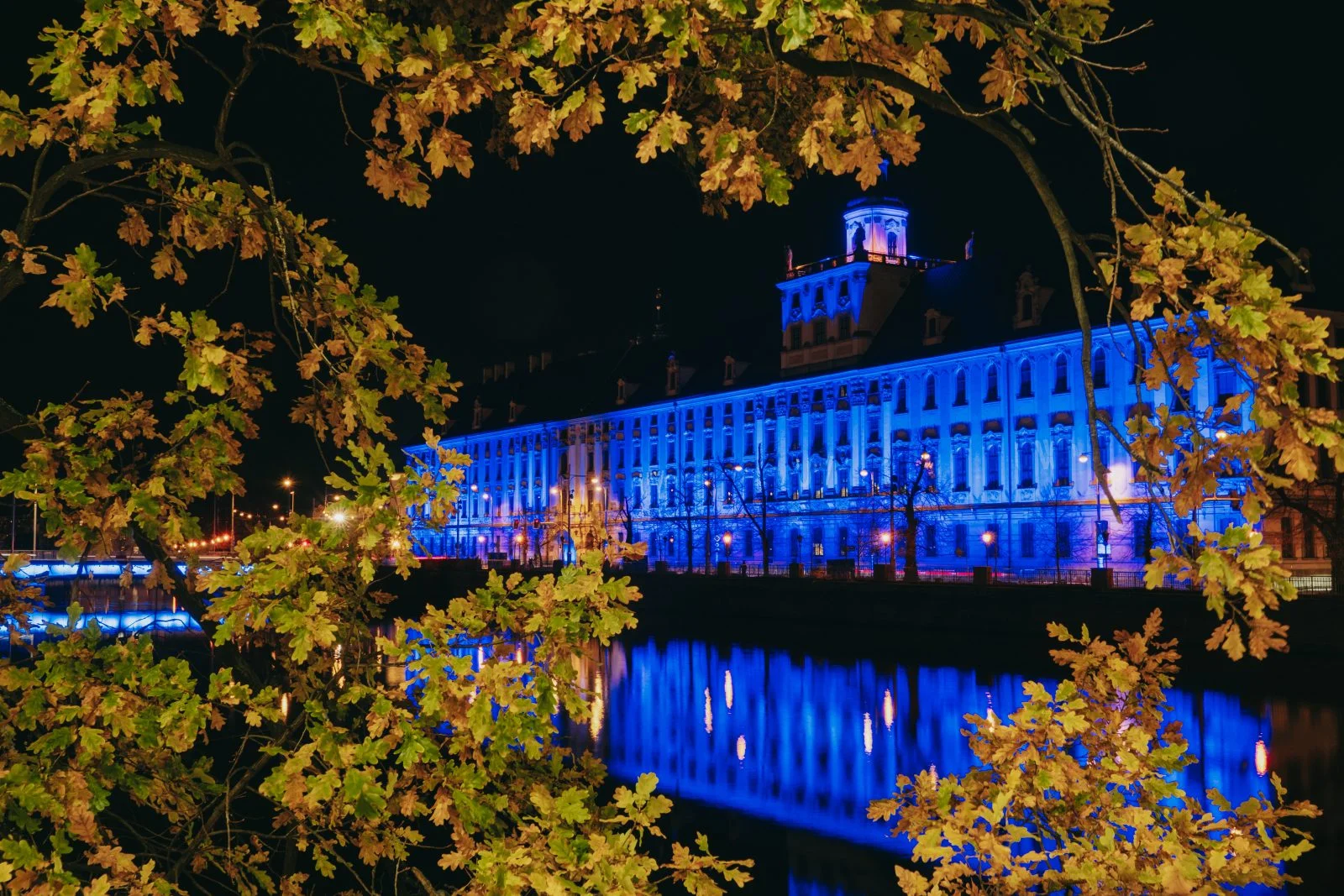
Opus grants for UWr researchersPhoto: private archiveOpus grants for UWr researchers
Ten projects by the researchers from the University of Wrocław were awarded with Opus grants by the National Science Centre. Congratulations!
The winning projects in OPUS 29 NSC were chosen from 2538 applications. 736 of them qualified to the second stage of merit-based evaluation. 344 chosen applications were funded with over PLN 636.1 million in total. The results were published on 28th November 2025.
Discover our researchers’ projects.
Love, Sexuality, and Violence in Neo-Latin Pastoral (15th–18th Centuries) (granted funds: PLN 906 240)
Principal investigator: dr Elżbieta Górka, a graduate and coworker of the Institute of Classical Mediterranean and Oriental Studies at the Faculty of Languages, Literatures and Cultures.
The project aims to provide a systematic analysis and interpretation of the relationships among love, sexuality, and violence in Neo-Latin bucolic poetry from the 15th to the 18th centuries. Even though love has always been an important topic of pastoral poetry, there is little research on the ways it is depicted, and especially in the context of sexual violence. The project is thus the first to analyse the topic of love and violence in the Neo-Latin context, from literary, socio-historical and psychological perspectives.
Diasporic public history (granted funds: PLN 706 136)
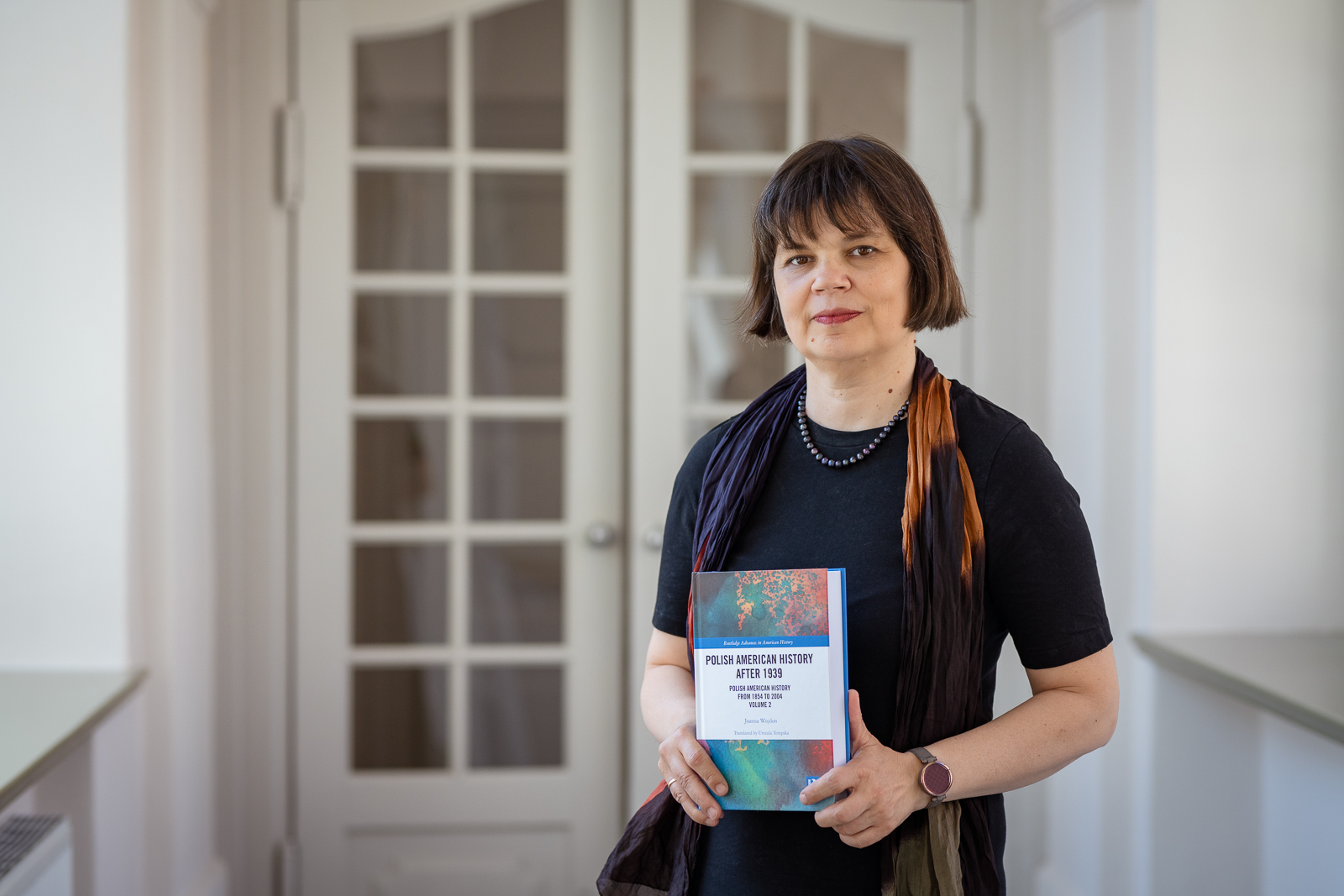
Principal investigator: prof. dr hab. Joanna Małgorzata Wojdon, Historical Institute, Faculty of Historical and Pedagogical Sciences.
The project aims to conceptualise diasporic public history as a field of research and practise; identify its goals, needs, challenges and achievements. Also, it establishes the criteria of judging the impact of various practices of diasporic public history in the context of their public reception the agency of the audience in different times and spaces.
The increase in international migration in recent years resulted in a boost to existing diasporas and the creation of new ones. The practises of the diasporic public history are thus relevant in numerous ways, both for the diaspores themselves and the societies of the dominating cultures, as the two constantly interact. The deconstruction of the hidden landscapes of diasporic public history may facilitate the assessment, management and design of migration policies, aiding in their amendment and the choice of the best possible solutions.
The project departs from the study of the Polish diaspora, in particular the one in the United States, to compare the practices of public history in different diasporic communities and local contexts. It aims to draw practical conclusions for designing, managing, promoting and funding future undertakings connected with public diasporic history. Therefore, it is relevant not only for the academic world, but also for the society.
Our public online platform will invite all interested parties, including, but not limited to, those representing diasporas, to present, compare them, comment on, judge and adjust the existing diasporic public history practices. The research tools include two sequences of video games and a mobile app.
SUBLIME-AGE: SUBurban Living and Mobility Experiences of AGEing adults in Poland through a life course perspective (granted funds: PLN 983 050)
Principal investigator: dr hab. Katarzyna Kajdanek, Faculty of Social Sciences, Institute of Sociology, Department of Urban and Rural Sociology.
SUBLIME-AGE is a first sociological project in Poland to systematically explore the experience of people 50+ in Polish suburbs, built in a chaotic period of transformation and overriding the needs of aging population. “We will see how important life events, such as retirement, widowing, disease or leaving the parental home by children influence the elderly people’s relation with suburban space and affect their decisions of aging in place or moving out”, explains dr hab. Katarzyna Kajdanek. “We want to combine the quantitative research with the interviews to create a typology of aging trajectory in the suburbs. This knowledge is crucial for social and spatial planning, especially in the context of the upcoming demographic wave.”

From Aboriginal Paintings to African Masks. Exploring Social Functions of Traditional Art (granted funds: PLN 1 894 221)
Principal investigator: dr hab. Piotr Sorokowski, prof. UWr, Institute of Psychology, Faculty of Historical and Pedagogical Sciences.
In his research, dr hab. Piotr Sorokowski, prof. UWr, will analyse the impact of traditional art on the social processes, such as creating bonds, building the sense of belonging, communicating position and property or social attractiveness and a choice of a partner. The research will be carried in the traditional communities of Africa, Asia, South America and Oceania.
FHOD1 as a Regulator of Lipid Droplet–Mitochondria Interactions: A New Dimension of Metabolic Control in Skin Melanoma Cells (granted funds: PLN 1 805 722)
Principal investigator: dr Hab. Antonina Joanna Mazur, prof. UWr, Department of Cell Pathology, Faculty of Biotechnology at the University of Wrocław.
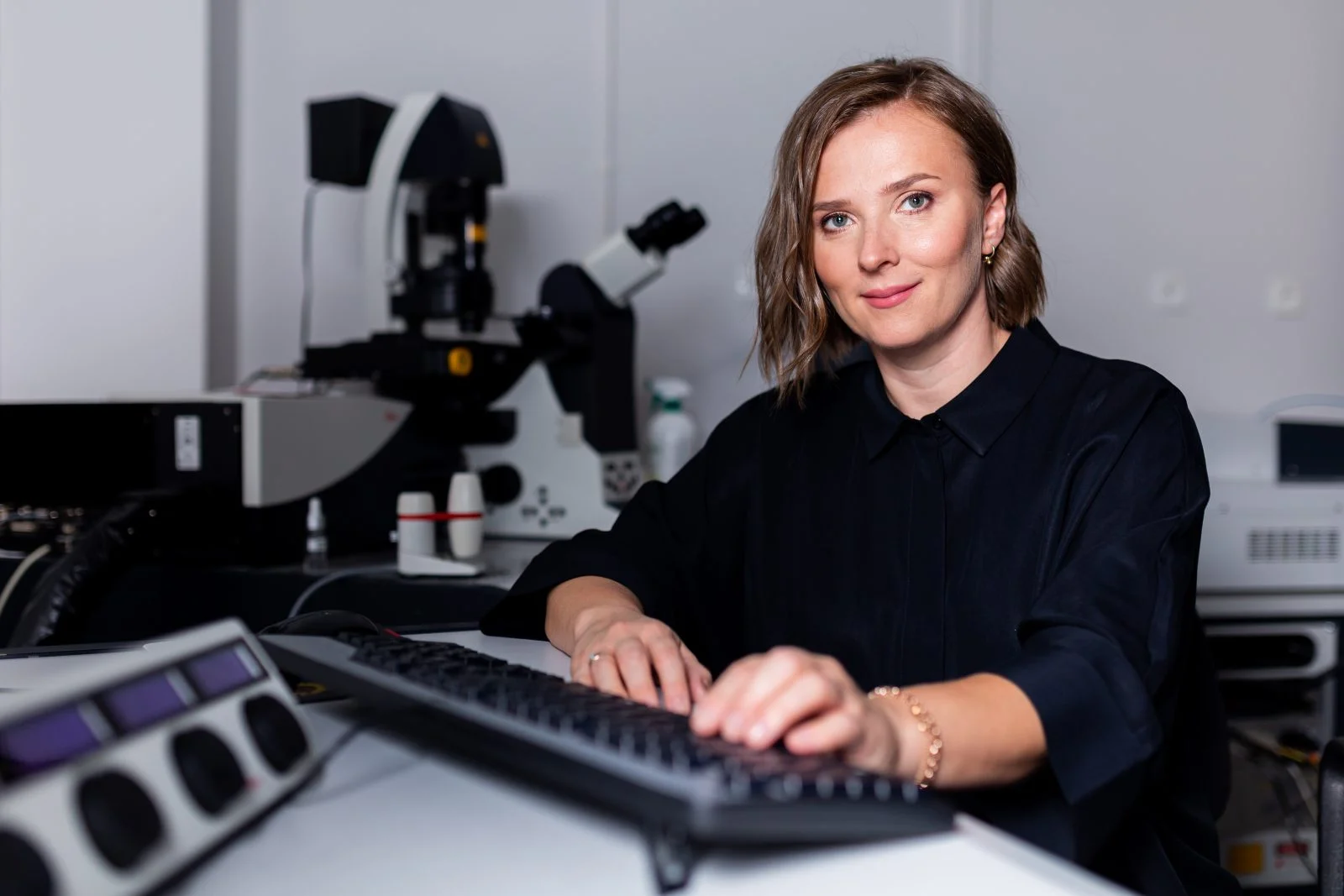
Why do cancer cells defend themselves from treatment so successfully? One of the key elements on which their strategy relies are lipid droplets – small ‘repositories’ of fat in the cell. The fat is used to store energy, protecting the cell from the toxic excess of lipids. Together with mitochondria, which are ‘power stations’ of cell, they create a system, which enables the cancer to survive even in difficult circumstances caused by the treatment. In skin melanoma, which is one of the most aggressive types of cancer, those structures pay a particular role in the cellular adaptation and the development of cells’ immunity to the treatment,
“Our research is focused on the FHOD1 forming, which regulates actin cytoskeleton – a cell’s ‘scaffolding’”, explains the researcher. “The results show that not only does FHOD1 influence the shape and movement of the cell, but it also focuses around lipid droplets and the places of their contact with mitochondria. What is more, the drop in FHOD1 levels affects the number and position of lipid droplets, which may be a symptom of metabolic stress.”
The project aims to check how FHOD1 affects those processes and whether its modification can increase the effectiveness of anticancer therapy. We will experiment on cells and animal models to learn whether supporting a pharmacological therapy with lowering of FHOD1 levels may increase the effectiveness of the treatment. We will use the newest technologies of imaging and metabolic analysis, and the cooperation with our Canadian partners will enable us to identify the molecular partners of FHOD1.
Understanding these interconnections may be a path to the new strategies of treating not only skin melanoma, but also other metabolic-disorder-connected diseases. It’s a step towards a more precise and effective therapy, based on the weak points of cancers.
Dense Baryonic Fluid (granted funds: PLN 1 539 396.)
Principal investigator: dr Pasi Huovinen, Incubator of Research Excellence – Centre for Simulation of Superdense Fluids, Faculty of Physics and Astronomy.
“I aim to research the hottest and the densest matter in the Universe, which existed for a short time after the Big Bang and may be found in neutron stars’ cores,” the researcher explains. “We have grounds to believe that the characteristics of post-Big-Bang and neutron star core matter slightly differ. I want to examine this difference.”
Quarks and leptons are the basic ingredients of the matter. The quarks build protons and neutrons (nucleons), which constitute for atomic nuclei. Electrons, which are leptons, create a cloud around the atomic cores. Interestingly, though protons and neutrons were discovered as free particles (correspondingly in the years 1920 and 1932), the free quarks have not yet been observed. They seem to be always bound in groups, creating protons, neutrons and other particles called hadrons.
The theory of Quantum Chromodynamics (QCD), which describes the interaction of quarks, assumes as a result of extremally large temperature and energy density, nucleons and other hadrons undergo a drastic change. In the temperature of over 1.66 x 10¹²K, which is much higher than the temperature of the Sun’s core (1.57 x 10⁷K), the quarks ‘melt’ and start moving as quasi-free particles (not bound in nucleons). This is what we call Quark Gluon Plasma (QGP). In the first microseconds after the Big Bang, the whole matter of the Universe existed in this state. We can recreate small droplets of QGP only for a moment, during the experiments in which heavy atomic nuclei collide at the near-light speeds.
Such experiments are carried out in Relativistic Heavy Ion Collider (RHIC) in Brookaven National Laboratory, as well as in the Large Hadron Collider in CERN.
There is one more place in the Universe, where the matter may turn into free quarks: neutron stars or, more generally, compact stars. Inside such stars, the nuclear matter isn’t as hot as during collision experiments or in the early Universe, but it’s extremely dense. Therefore, the transition towards quark matter occurs not because of temperature, but because of the unimaginable compression.
But what is the difference between the characteristics of Quark Gluon Plasma in the early Universe and compact stars? Little do we know. According to QCD, when the matter is heated, its transition from hadrons to QGP is smooth, as hadrons melt gradually, with no particular temperature beginning the process. That is how the matter was transformed when the early Universe expanded and cooled. On the other hand, cold temperatures and high density normally result in the first order phase transition – just as ice melts and water boils at a particular temperature. However, we cannot say where to put a borderline between the first order phase transition and smooth crossover (smooth transition).
“In the project, we want to examine the signatures of different types of phase transitions between hadron matter and QGP”, explains the researcher. “During the experiments, we will collide the heavy atomic cores in RHIC Beam Energy Scan and FAIR at GSI Darmstadt (which is still under construction) in order to produce droplets of strongly interacting matter of changing temperature and density. We will build new, dynamic models of heavy-ion collisions, based on relativistic fluid dynamics and relativistic kinematics. We will also compare the models with the data from the experiments, using the Bayesian inference.”
Spin Frustration in Molecular Nanocarbons (granted funds: PLN 3 761 015)
Principal investigator: prof. dr hab. Marcin Stępień, Faculty of Chemistry, University of Wrocław, Department of Organic Chemistry.
The project aims to create a new family of fully organic molecules and crystals, in which spin frustration takes place. Spin frustration occurs when a state in which three or more electrons with unpaired spin cannot simultaneously align in an energetically favourable configuration. The result may be a unique, highly correlated quant state, called quantum spin liquid, which is useful for the long-term development of quantum computers and precise magnetic sensors.
The unresolved and complicated evolutionary history of the cave bear Ursus spelaeus sensu lato in Central Europe (project run in cooperation with the University of Warsaw, worth PLN 2 348 134)
Principal investigator: dr hab. Adrian Przemysław Marciszak, prof. UWr, Department of Paleozoology, Faculty of Biological Sciences.
The project concerns the complicated and little known history of cave bear evolution in Poland in comparison to Europe. The preceding research results suggested that Ursus spelaeus ingressus is the only chronosubspecies whose remains can be found in Poland. However, the many years’ queries in museums and private collections revealed new material, which had been considered lost or destroyed.

The Sudetes and the Cracow-Częstochowa Upland are important areas in the discussion of Poland as an East-West animal migration corridor. The Sudetes findings turned out to be particularly interesting, as the morphometric analyses indicated that the discovered remains belonged not to one, but to five different chronosubspecies, including three which were discovered in this area for the first time. It is the presence of a small cave bear Ursus savini rossicus, an old and independent lineage of cave bears, which is particularly worth attention, as it is a first finding proving that they inhabited Central Europe. This discovery was based on an examination of over 8000 bones from the Połom Mountain and was confirmed by the preliminary genetic tests.
The analyses and the results of diverse morphometric (3D scans, Landmark-based geometric morphometrics), isotopic and genetic studies will be correlated with the age of the finding (established on the basis of radiocarbon and uranium-thorium dating). All the research will be carried out by an experienced team. Each finding will be examined in the whole range of tests, meant to answer the key questions about the possible coexistence of different chronosubspecies of the cave bear, the scale and character of their competition, their ecological niches and dietary preferences, their migratory patterns, as well as source of particular phylogenetic lineages, corelation of morphometric and genetical date and possible hybridization with brown bear.
The research on the cave bear, which is an almost iconic species of the upper Pleistocene, may be a tangible help in the protection of contemporary big predators. The discovery of the factors which brought to the extinction of the cave bears may help us learn how to slow down current extinction trends. It is crucial to the possible reintroduction of the brown bear to the Sudetes, where it once lived. It is also important for understanding the relations between the humans, bears and the environment at the time when the Sudetes were inhabited by those animals. Perhaps we will finally confirm the theories about the cult of cave bears at this area. Learning about the evolution process of cave bear and its relations with the environment is the first step of the study of the paleoenvironment of the Sudetes and showing its uniqueness in comparison to other upland and mountain terrains of Europe, such as Cracow-Częstochowa Upland (Poland), Swabian Jura (Germany), Moravian Kras (Czech Republic) or Ukrainian part of the Carpathian Mountains.
Capturing Serpentinization in Action: High-Frequency Multidimensional Advanced Isotopic Imaging of Reversible and Recirculating Fluid–Rock Reactions in Real-Time Core-Flow Systems (granted funds: PLN 2 940 322)
Principal investigator: prof. dr hab. Mariusz Orion Jędrysek, the head of the Laboratory of the Isotope Geology and Department of Applied Geology, Geochemistry and Environmental Management, Institute of Geological Sciences, University of Wrocław
The research goal of the project is creation of new research methods and researching the unknown mechanisms of serpentinization with the use of core-flow system equipped with pressure and temperature transductor.
Our aims are:
- distinguishing and characterising the stages of serpentinization – identification of metastable and preceding mineral states (e.g. brucite, calcite, amorphous silica) during the controlled flow of water through the core;
- analysis of the isotope fractionation for gas, solid, and liquid state of matter over time with the use of real-time isotope monitoring
- analysis of the isotope production with the use of Δ₄₇, Δ₄₈ and the relation between stable isotopes C, O and H (as above) – comparing isotopic signatures of doubly clumped isotopes parameters – solving the problem of Δ₄₇ movement and possible 17O deficit in carbonites in the serpentinite
- quantification of kinetic control in relation to thermodynamic control – determining the relative share of kinetic isotope effects as compared to equilibrium isotope effects in changing P-T conditions and changing liquid-solid ratio
- determining the isotopic mass balance constraints with the use of different flow directions and circulation and dual fluid strategy (meant to imitate the natural conditions, as well as dual fluid systems – both the ones similar to meteoric ones and the ones with the use of synthetised H2O with the mass-independent effects in δ¹⁷O –δ¹⁸O) in order to decide whether the formation of carbonate and brucite is ”remembered” by the liquids or regains the balance with rock
More information on the website of the National Science Centre.
Edited by Katarzyna Górowicz-Maćkiewicz
Translated by Julia Wdowiak (student of English Studies at the University of Wrocław) as part of the translation practice.
Date of publication: 03.12.2025
Added by: E.K.


