



Summary of a one-year scientific study period. “Perły Nauki II”
Over a year ago, four of our young scientists were awarded state-funded Academic grants “Perły Nauki II” granted by the Ministry of Science and Higher Education. We evaluate what has happened throughout this year with their research project.
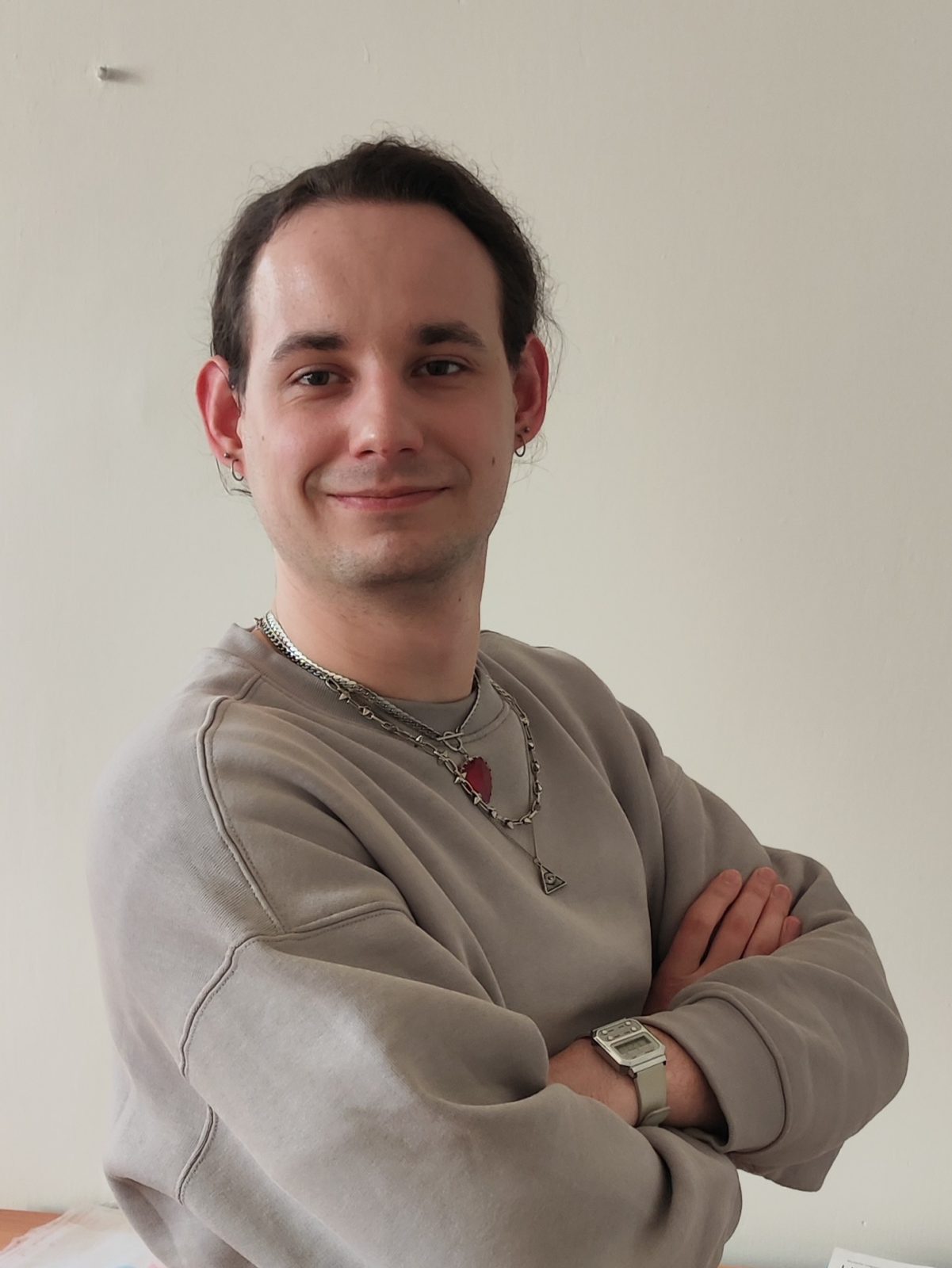
Bartosz Rusin is a physicist. This program clearly enabled him to become an independent young scientist — he says. — The academic grant I was awarded allowed me to lead an academic project autonomously as a first-year PhD student. It gave me a valuable experience in planning and consequently executing successive research objectives.
The grant made it possible for the young physicist to invest in the essential resources required for the synthesis of the composites and enabling the academic outreach at international scientific conferences, promoting the findings. — Consequently, I can be solely focused on my study and don’t have to worry about any funding shortfall — he adds.
Within the framework of the project „Nadprzewodnictwo w stopach wysokiej entropii krystalizujących w strukturach typu CsCI oraz CuAI2” [“Superconductivity in CsCl- and CuAl2-type high-entropy composites”] allowed by the academic grant “Perły Nauki II” — in less than a year he managed to synthesize tens of new high-entropy composites with a target crystal structure of CsCI and CuAI2.
All acquired samples were put through the initial analyses, focusing primarily on the measurements with the X-ray diffractometer and scanning electron microscope — he says. — Based on the obtained results, the most promising samples were selected to further study, such as transporting, magnetic, and thermal measurements to analyze superconductive characteristics.
The result? The measurements confirmed the existence of superconductivity in selected samples, consequently, for the first time since 2018 the scientists managed to discover new CsCl-type high-entropy superconductors!
Nowadays the researcher focuses on the analysis and interpretation of the findings obtained so far, to present them at the scientific conference next year. — I would like to carry out the optimization of the samples in terms of stoichiometry next, to check, if values of such superconductive parameters like critical temperature or upper critical field could be raised, which could result in potential usage of new composites in a new generation of functional resources.
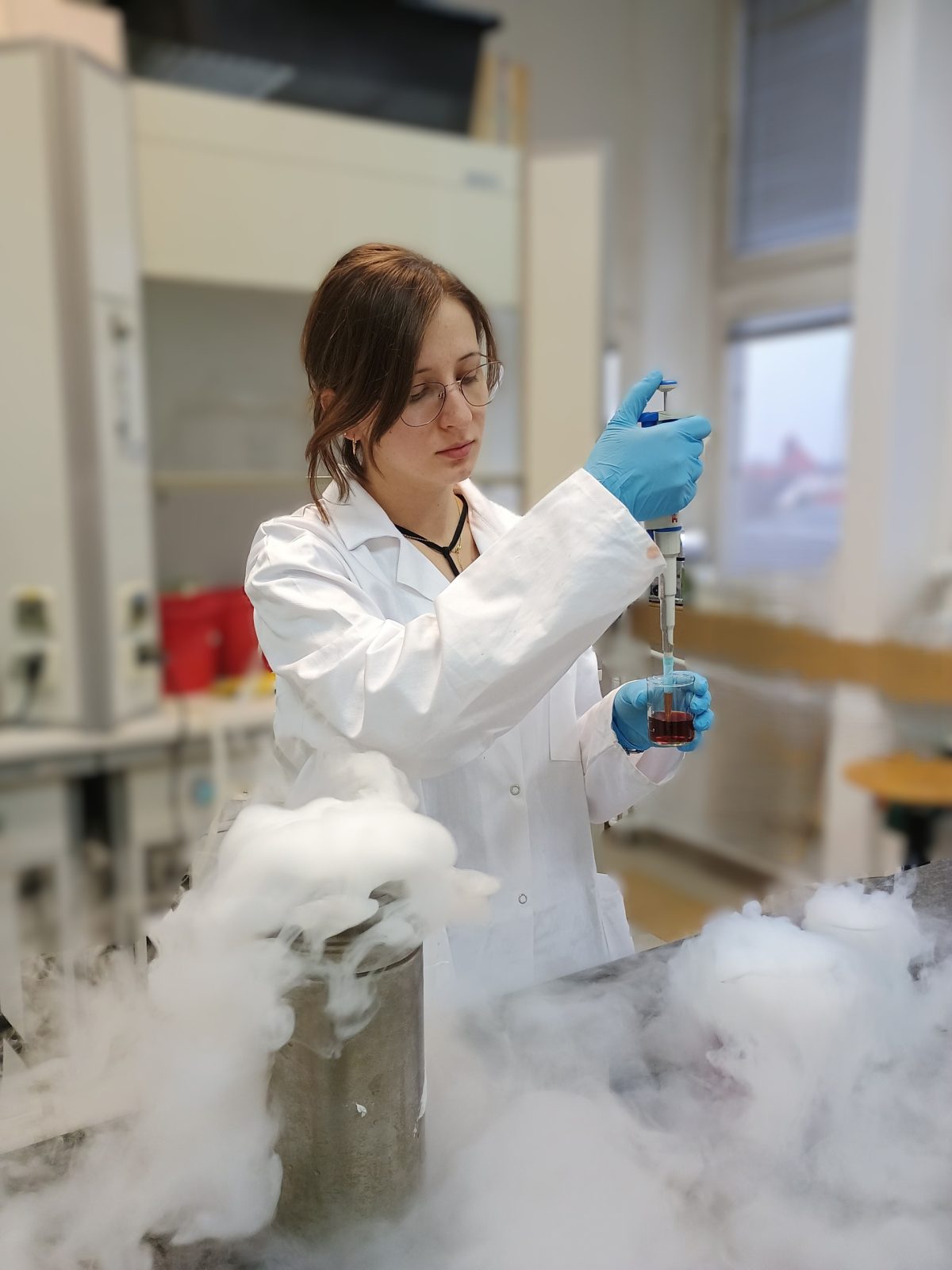
Magdalena Szmitka, the chemist, conducts a project „W kierunku ferroptozy lekoopornych komórek nowotworowych: nowe fosfinowe kompleksy Fe(II)/Fe(III)” [“Targeting ferroptosis in drug-resistant cancer cells: new phosphine-containing Fe(II)/Fe(III) complexes”].
—Carrying out the project significantly contributed to the development of my scientific passion, simultaneously making room for creative experimentation and taking a controlled research risk connected to projecting and synthesizing of new chemical systems — the researcher admits. — The possibility of combining the conceptual work with practical laboratory challenges represents a particularly inspiring part of the study for me and builds up the motivation for further scientific development.
Being awarded the “Perły Nauki II” academic grant, enabled the chemist to undertake comprehensive research about new phosphine-containing Fe(II)/Fe(III) complexes, targeting the understanding and potential application of the ferroptosis mechanism in drug-resistant cancer cells.
—The funding made a way to the advanced scientific infrastructure and made a purchase of specialized and expensive reagents, including selected parent salts and biomolecules essential to researching the highest possible level — she says. — The academic grant will make it possible for me to participate in an international research conference, with support for presenting my findings and making new scientific partnerships.
In the initial months of carrying out the project, the researcher conducted a synthesis and detailed characterization of a few phosphine ligands as a fundamental ground for further research. Currently she focuses on developing an effective and consistent method to synthesize phosphine-containing Fe(II)/Fe(III) complexes, using the obtained ligands. In the closing stage of the study she plans on conducting an expanded physicochemical characterization of acquired chemical systems, analysis of their interactions with selected biomolecules and also the evaluation of the biological characteristics in accordance with the ferroptotic cell death induction. — Such finings will be crucial for understanding the therapeutic potential of designed chemical compounds — she underlines.
Jagna Rita Sobel works currently on her PhD thesis. — Execution of the academic grant for the project “Dokumenty i kancelaria biskupa wrocławskiego Henryka z Wierzbnej (1302-1319)” [“The diplomatic activity and episcopal chancery of Henry of Wierzbna, Bishop of Wrocław”] enabled me to plan the research in the most essential facilities — from the point of view of my paper.
In August she carried out a two-week literature review in Berlin. — Owing to well-stocked libraries, Staatsbibliothek zu Berlin Preußischer Kulturbesitz oraz Universitätsbibliothek der Humboldt-Universität, is a must destination for the historian. She also spent a few days conducting an archival literature review at the Geheimes Staatsarchiv Preußischer Kulturbesitz.
The stay let her get familiar with German literature in the field of diplomatics and medieval studies in general. — In the previous year I financed the source-based literature review as well, cataloging all the documents by Henry of Wierzbna, Bishop of Wrocław (including those kept in later transcripts) stored in the State Archive in Wrocław and Archdiocesan Archive in Wrocław.
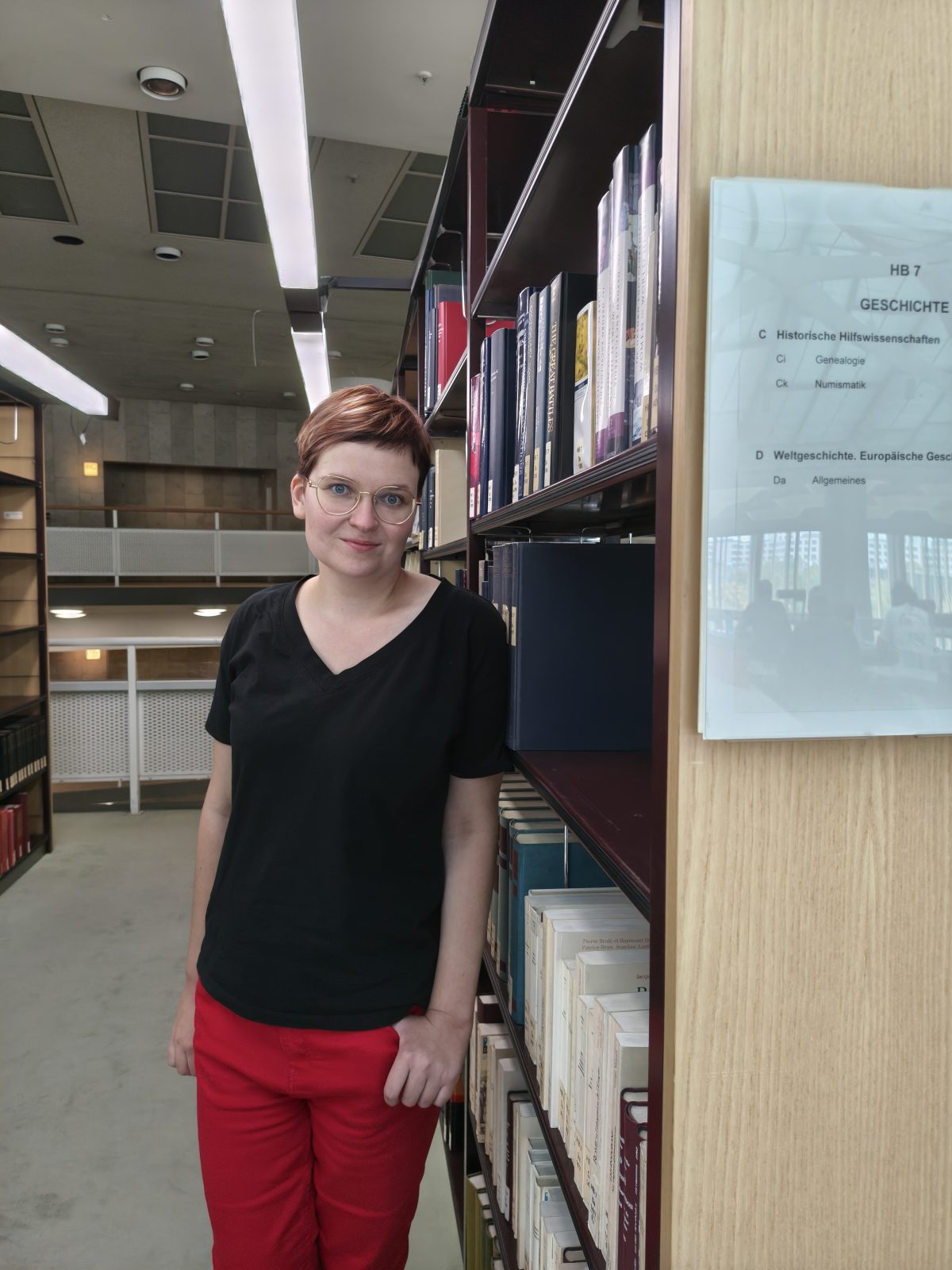
In the framework of the project Jagna Rita Skobel visited also the State Archive in Opole: — Where we can also find the diplomas of the Bishop, which are of interest to me. Collected material I processed, preparing its critical source edition, which will function as an appendix to the currently preparing monograph — she adds.
In March, she plans a three-week research stay at Utrecht University Center for Medieval Studies in the Netherlands, which is a leading research institute for medieval communication.
—The results of the conducted study could potentially be very useful for medievalists and Slavicists, offering on the one hand an attractive methodological approach, on the other providing comparative resources — she demonstrates. — Late in spring I will also visit Bibliothek des Herder-Instituts für historische Ostmitteleuropaforschung, which accumulates literature valuable for me, concerning the history of Middle Eastern Europe.
At the beginning of July, the young researcher plans on presenting her partial findings discovered while conducting the project during the International Medieval Congress in Leeds, Great Britain — the biggest scientific conference in the world gathering medieval researchers. — I will also be responsible there for coordinating a day-long medieval diplomacy session, gathering the historians from Poland, Croatia, the Czech Republic, and the Netherlands. I am thrilled for the shared exchange of the experiences that I will be able to use in the study of the episcopal chancery of Henry of Wierzbna — she sums up.
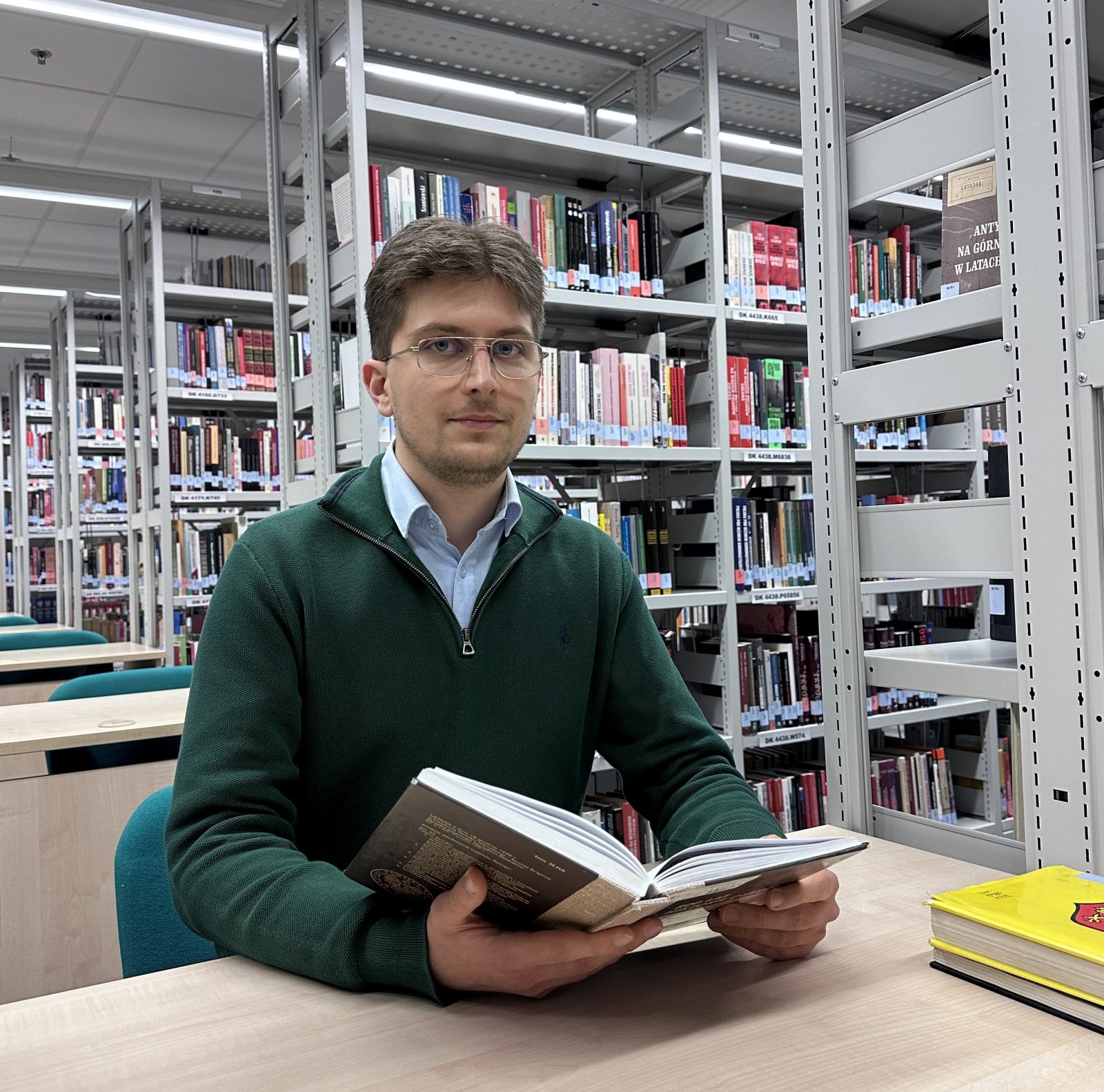
Kacper Rosner-Leszczynski, a historian as well, executes a project “Ślady wojny na Ziemiach obiecanych — oswajanie i precepcja przez nowych mieszkańców — 1945-1949” [„Traces of War in the Promised Lands: Domesticating and Perceiving the Ruins by New Inhabitants — 1945–1949”]. He admits, that the previous year was very intensive in terms of studying. — I managed to carry out a literary review in the Polish Archives and finance the purchase of subject literature, unavailable in our country — one shipment even came from Asia. Collected in the framework of the project material I successfully managed to initially organize, analyze and extract the crucial elements that will function as fundamental ground for further studies. During the research of the mentioned theme, one of my hypotheses was confirmed, the traces of war after 1945 served various roles, from strictly utilitarian all the way to entertainment. A whole range of human behavior I now have to present in detail — he adds.
How did the program “Perly Nauki II” help the researcher out?
—First and foremost, the project is a financial support that enabled the conduct of research objectives. Participation in the program made it possible for me to get practical skills in the field of autonomous leading of a research study, managing the budget, and planning and coordination of particular project stages. Essential was developing competence in accordance with the conceptualization of the findings with their initial interpretation in the broader scientific context. Despite the fact that I have already carried out scientific projects, their range was never as broad and complex as in the program “Perly Nauki II”.
What next? After analyzing collected material (administrative records, memorials — journals, diaries, notebooks and photographs) young researchers will start working on the book, which will aim for a synthetic grasp of the study results. — Simultaneously, I plan on preparing research articles for scientific conferences. In the near future, it will have the first paper concerning devastated and dangerous fields of post-war railway stations in Lower Silesia in 1945–46 — he previews.
Translated by Mateusz Tomiak (student of English Studies at the University of Wrocław) as part of the translation practice.
Edit. Katarzyna Górowicz-Maćkiewicz
Date of publication: 29.01.2026
Added by: EJK


