



Time-travelling in trams in Wrocław
Passengers on Wrocław’s MPK will be able to turn their daily commute to school, work, or shopping into a real journey through time. An educative campaign marking the Women’s History Month is currently being launched by a team led by dr Dorota Wiśniewska, assistant professor at the Historical Institute of the University of Wrocław, in cooperation with the Public Transport Company in Wrocław.
The purpose of the project is to present the figures and achievements of women from nearly 200 years ago and to encourage the reflexion about their experiences. The campaign combines a scientific approach, focused on critical analysis of historical sources and reading studies, with the perspective of a public historian, for whom history should be accessible, appealing, present in the public space and inclusive. “That is why we asked potential passengers what might interest them about the past of noblewomen living in the 18th and 19th centuries, and on this basis we formulated twelve questions,” explains dr Dorota Wiśniewska from the Historical Institute.
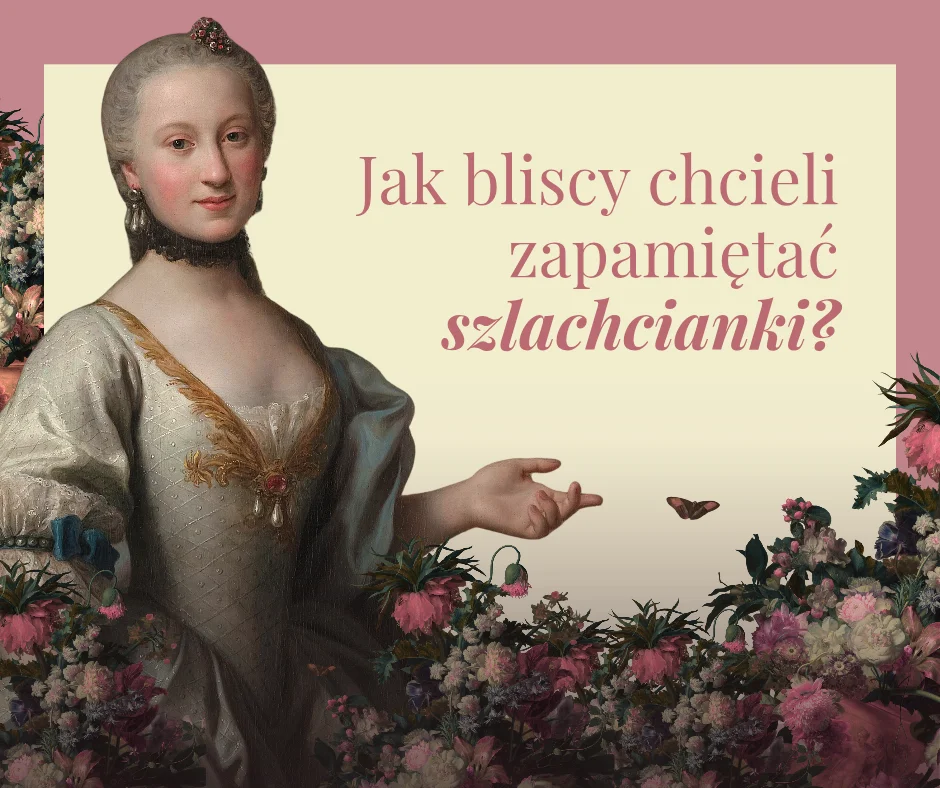
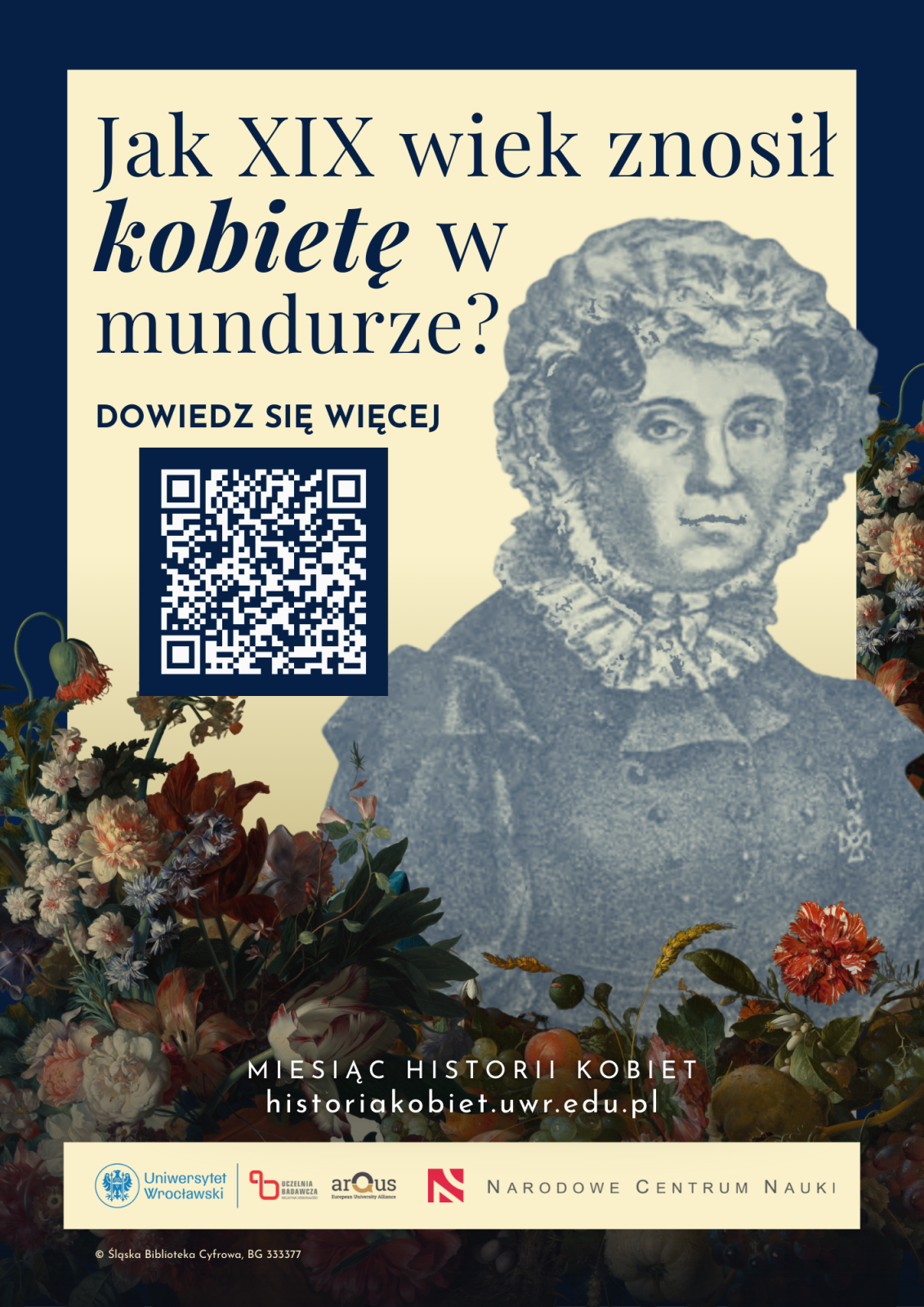
The questions inspired by the audience’s interests appeared on posters placed on the backrests of seats on selected tram lines and on LCD monitors in trams and buses. They also feature QR codes, which, when scanned, link to articles answering the questions. They address issues related to the role of noblewomen in politics, the subject matter of their publications, and the expectations regarding on unmarried and married women.
The text was based on questions asked by respondents while looking at a portrait of Izabela Branicka, formerly Poniatowska, from the collection of the National Museum in Wrocław.
“In this way, the tram journey becomes an interactive history lesson, allowing passengers to reflect on the past while gaining new knowledge”, adds the researcher.
The project consisted of two phases: conceptualisation and execution. As a part of the conceptual phase, dr Dorota Wiśniewska, together with students of History in Public Space, reviewed good practises in the execution of similar initiatives, created a profile of target groups, defined the objectives and main message of the campaign, identified challenges and difficulties, and conducted a risk analysis.
The work was carried out as a part of classes on the visualisation of history at the Institute of History of the University of Wrocław in the academic year 2024/2025 by: Katarzyna Dzielińska, Wiktoria Goll, Alicja Grzesińska, Michał Iwański, Agnieszka Kasprowicz, Wiktoria Maćkowiak, Zofia Manijak and Dominika Zdziebło. Dr Wawrzyniec Kowalski and Zuzanna Szeredi assisted in surveying potential passengers of Wrocław trams.
A team of students and doctoral students consisting of Karolina Cholewa (Jagiellonian University), Dawid Maciejczuk (University of Wrocław), Wiktoria Goll (University of Wrocław and Zofia Manijak (University of Wrocław).
The group came up with questions and texts for popular science articles for travelling people, put together a database of women born between 1700 and 1800 whose biographies are included in the Polish Biographical Dictionary, and designed posters, a website, and promotional materials for the campaign. The texts were revised by dr Magdalena Gibiec.
The campaign was financed by the National Science Centre as part of a grant held by dr Dorota Wiśniewska, Before Feminism. Women and the World of Politics in England, France and Poland, c. 1750-1830 (No. 2021/43/B/HS3/02105). The authoress drew inspiration for combining fundamental research with its dissemination from the experiences of scholars working in the field of public history in other European countries and North America. A particularly inspiring initiative was the Capital History project, coordinated by prof. David Dean from Carleton University. His team used traffic light control boxes on the streets of Ottawa to spark the interest of the passers-by in the city’s past and its residents.
The campaign not only promotes women’s history but also serves as an example of effective cooperation between academia and commercial partners with the intention of influencing society. The project shows how scientific research can function in the public sphere and benefit both young researchers – by developing their skills in conducting and communicating research results in an accessible and engaging way – and the urban community, which gains access to valuable and interesting educational content.
The campaign continues throughout March.
Answers to questions inspired by the audience’s interests can be found on the website.
Translated by Matylda Majda (student of English Studies at the University of Wrocław) as part of the translation practice.
Date of publication: 27.02.2026
Added by: M.J.


