




ROSIE to monitor the Sun’s radio activity
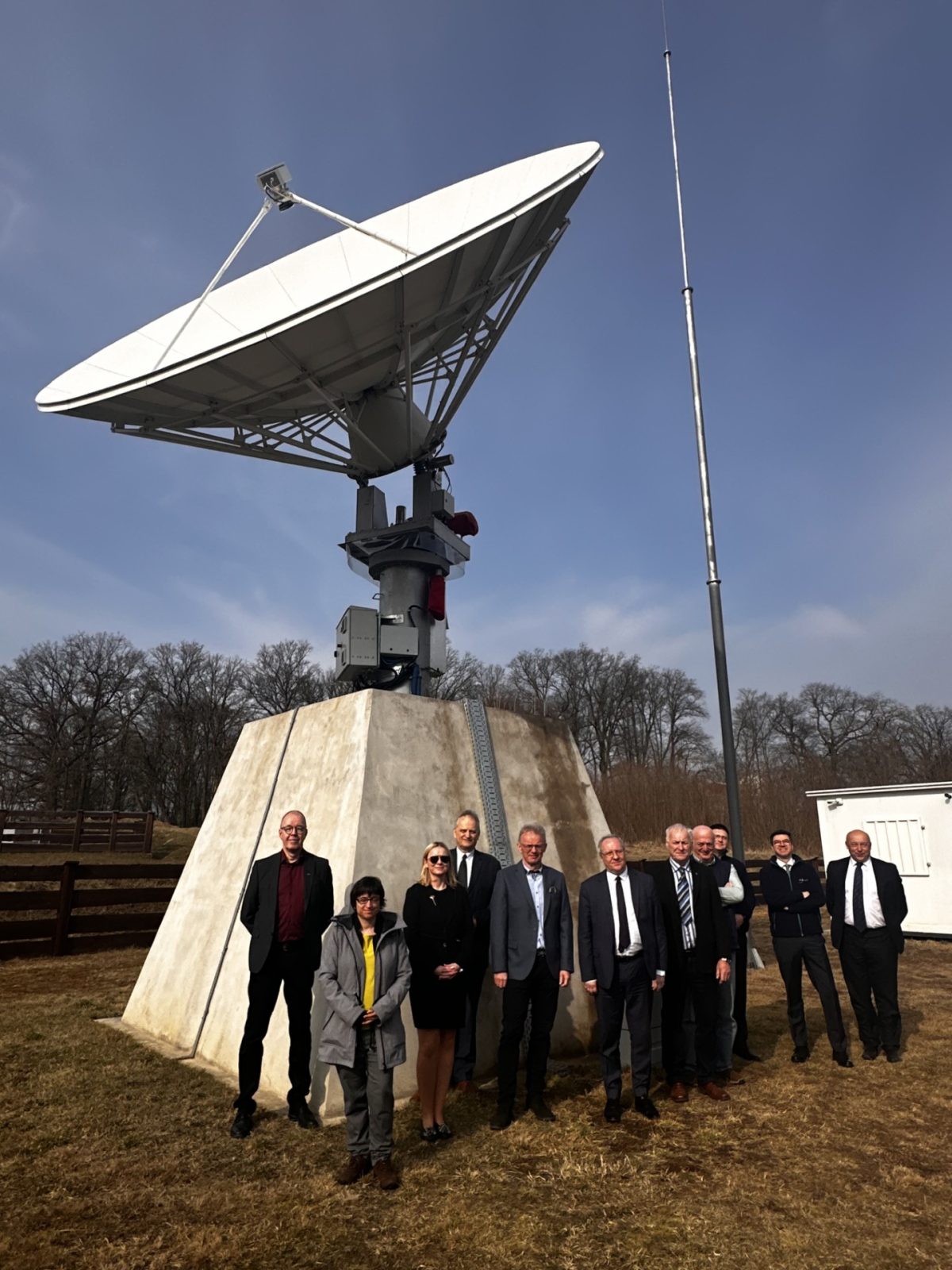
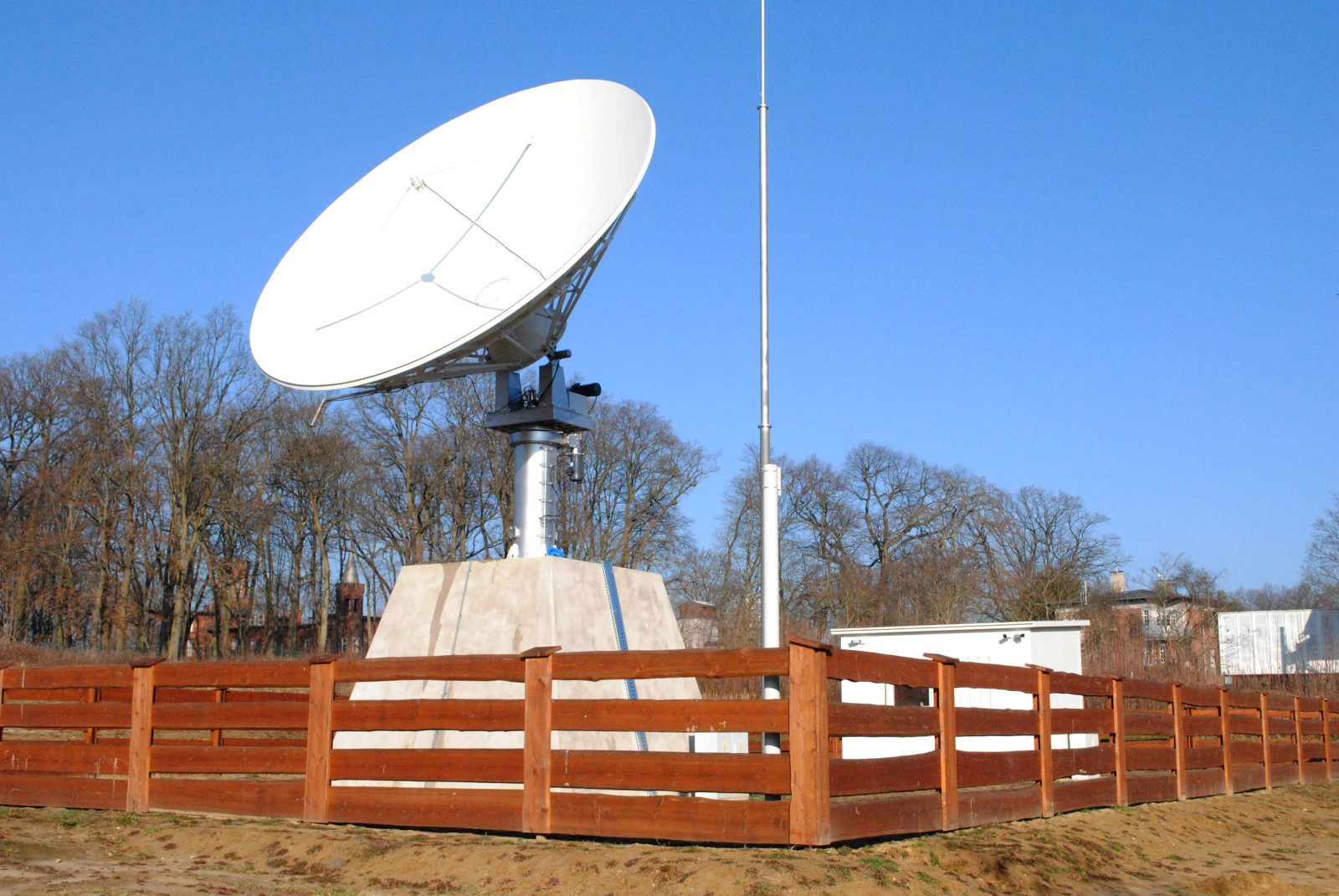
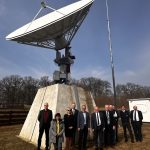
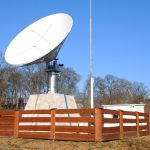
A state-of-the-art radio telescope, “ROSIE,” has been launched at the University of Wrocław Astronomical Observatory in Białków. It was built as part of the European Space Agency (ESA) program: “ESA programme PL_RM22 European F10.7 and F30 monitoring system” (currently known as the ROSIE program).
The objective of this program is the continuous monitoring of solar emission changes in the 1 GHz and 2.8 GHz radio bands (the so-called F30 and F10.7 bands). This is aimed at detecting phenomena potentially hazardous to the critical infrastructure of European Union member states, generating alerts, and developing forecasting methods for such events. A long-term goal of the program is to make the European Union independent of external data providers in this field.
“The new radio telescope is equipped with a 6-meter diameter antenna and two high-end receivers/digitizers capable of recording up to 1,000 spectra per second in each observed channel, with each spectrum having a resolution of 8,192 points,” says prof. Paweł Rudawy from the UWr Astronomical Institute.
On March 9, 2026, official acceptance and qualification tests were conducted by an ESA commission, which included: dr Piermario Besso (Head of ESA Antenna and Infrastructure Division), dr Juha-Pekka Luntama (Head of Space Weather Office), and dr Judit Palacios (Space Weather Applications and Software Researcher). Following the tests, an audit was performed on the software and web solutions prepared by ITTI Sp. z o.o. from Poznań, the University of Wrocław’s partner in the consortium executing the program for ESA. On March 10, following the successful completion and acceptance of the test results, the instrument was officially inaugurated.
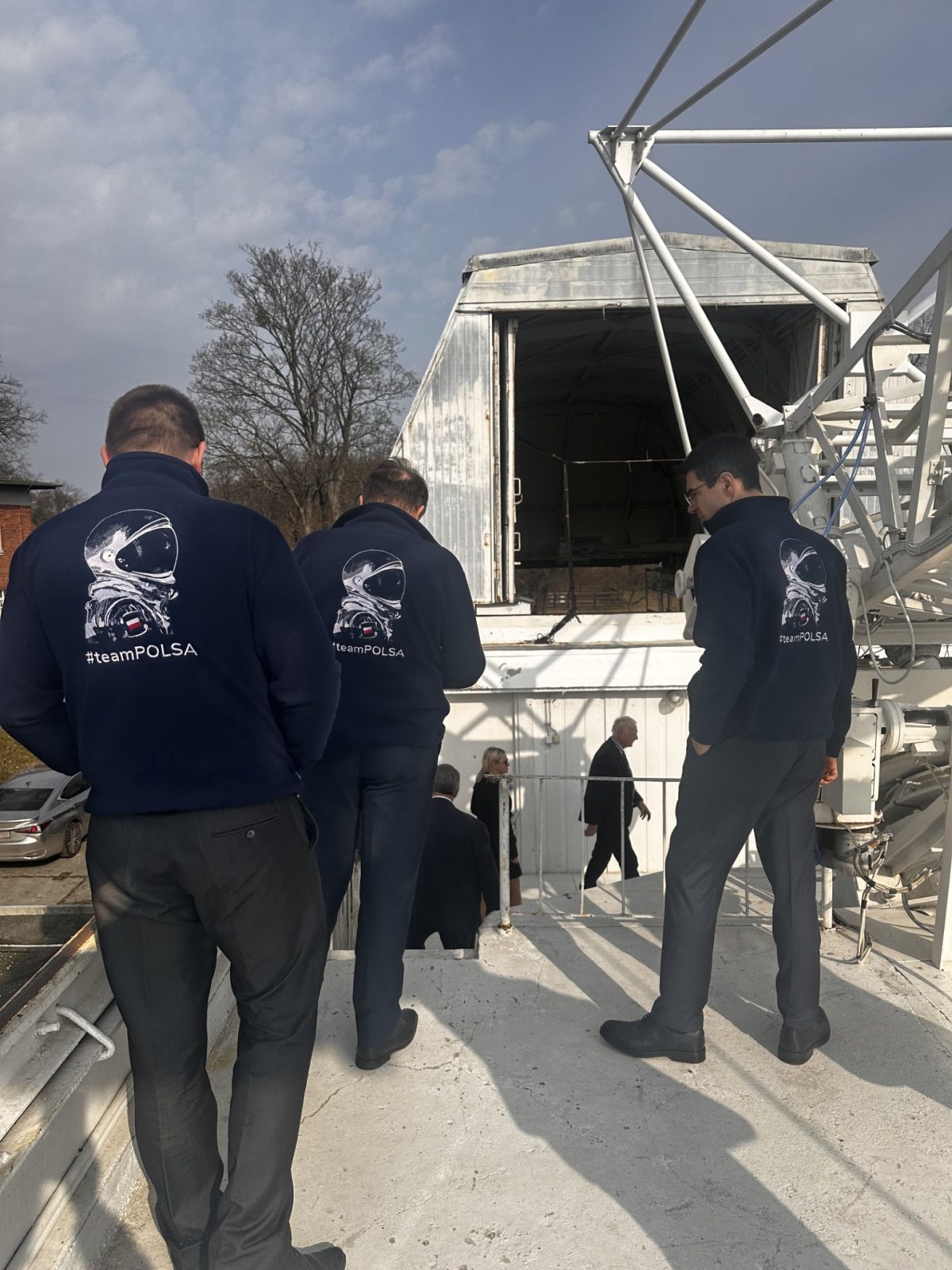
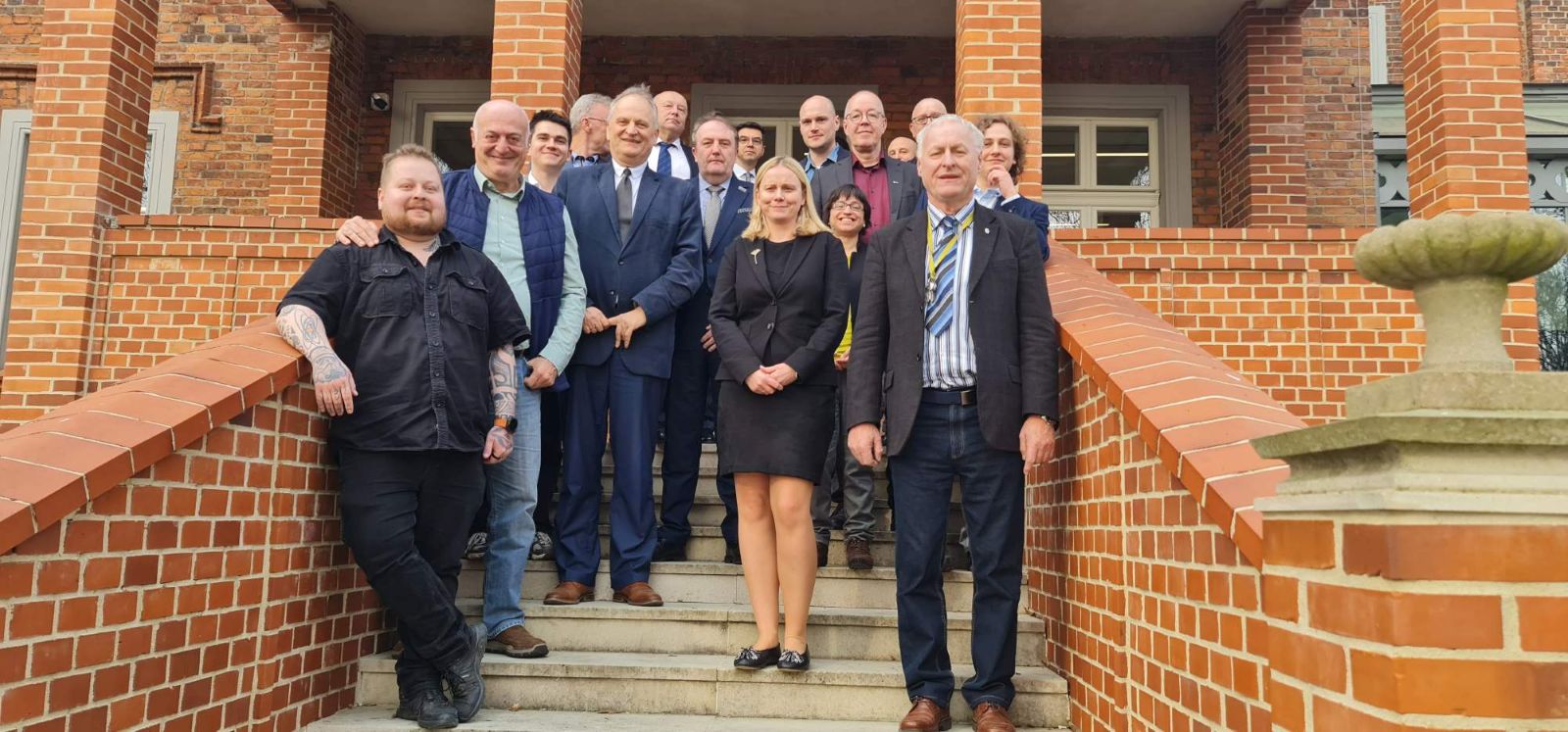
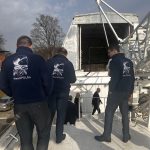
The ceremony was attended by: the Rector of the University of Wrocław, prof. Robert Olkiewicz (a physicist); the Dean of the Faculty of Physics and Astronomy, prof. Michał Tomczak (astronomer); the Director of the UWr Astronomical Institute, prof. Robert Falewicz; dr Holger Krag (Head of ESA Space Safety Office); and members of the ESA acceptance commission. Guests also included representatives from the Polish Space Agency (POLSA): Col. Zygmunt Anioł (Head of the Space Safety Department), dr Mariusz Kołodziejczyk, and Tymoteusz Trocki. The management and representatives of ITTI Poznań – dr Rafał Renk (Chairman of the Board), dr Joanna Baksalary (Director of the Space Division), as well as dr Bartosz Kaźmierczak, dr Kacper Najda, and Mr. Paweł Białobłocki. STAMAX representatives – Robert Dudek and Eugeniusz Pazderski (responsible for mechanical, electronic, and programming work) were also present.
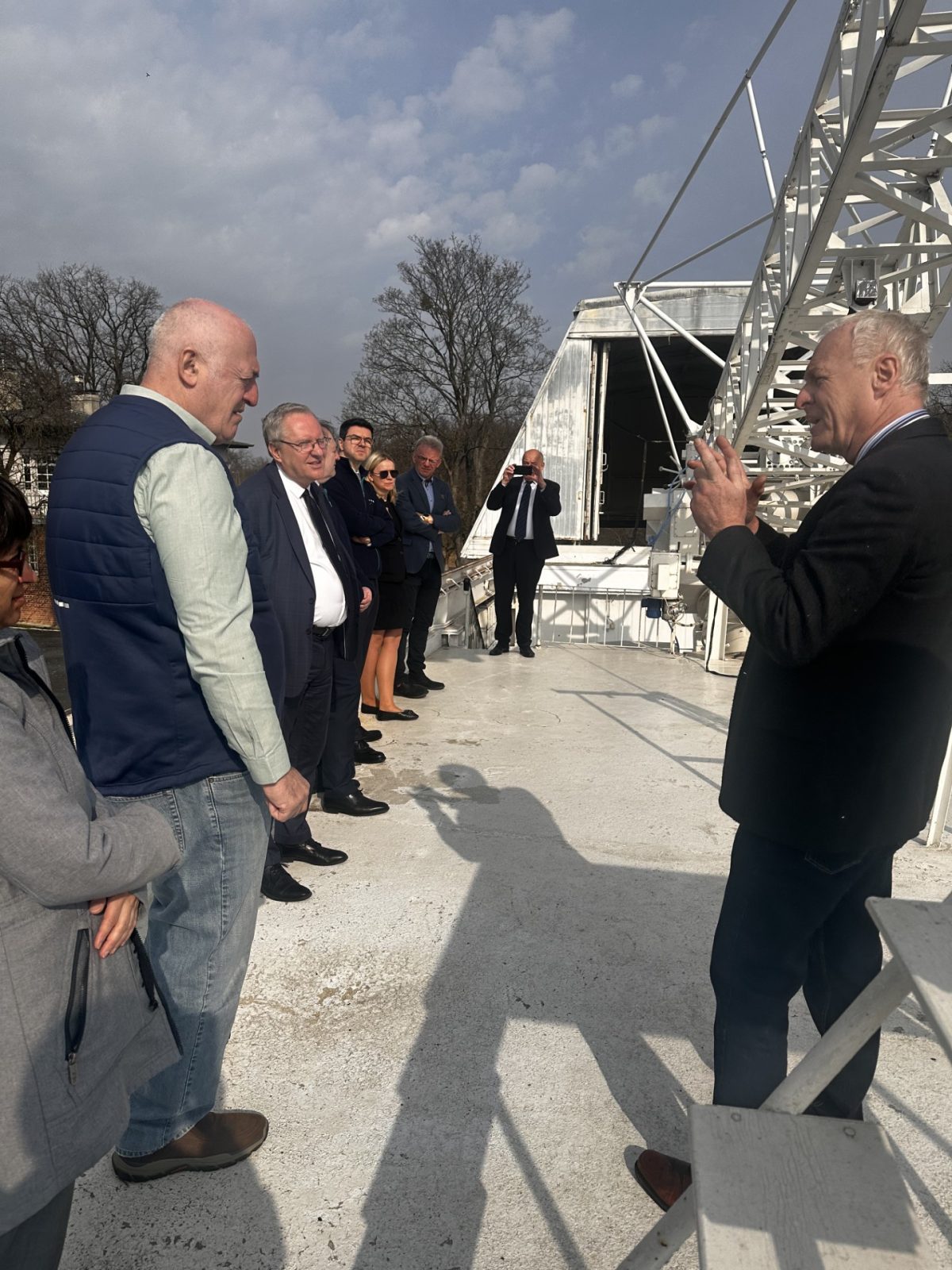
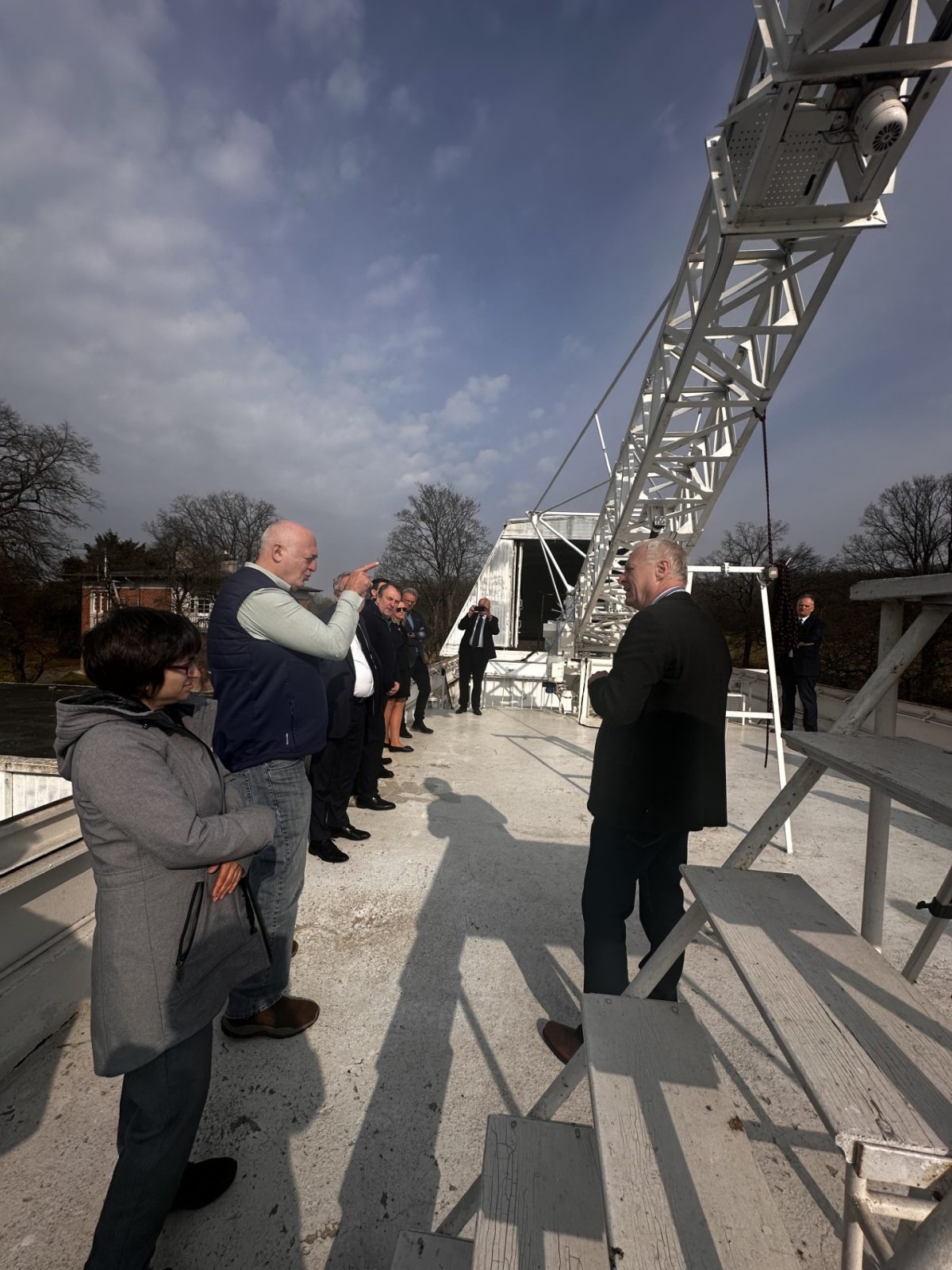
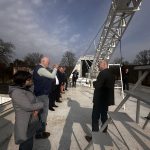
Prof. Paweł Rudawy, the author of the ROSIE project and the person responsible for its practical implementation, demonstrated the new radio telescope and led a tour of the Observatory. Prof. Rudawy is a heliophysicist who has been involved in solar physics research for several decades.
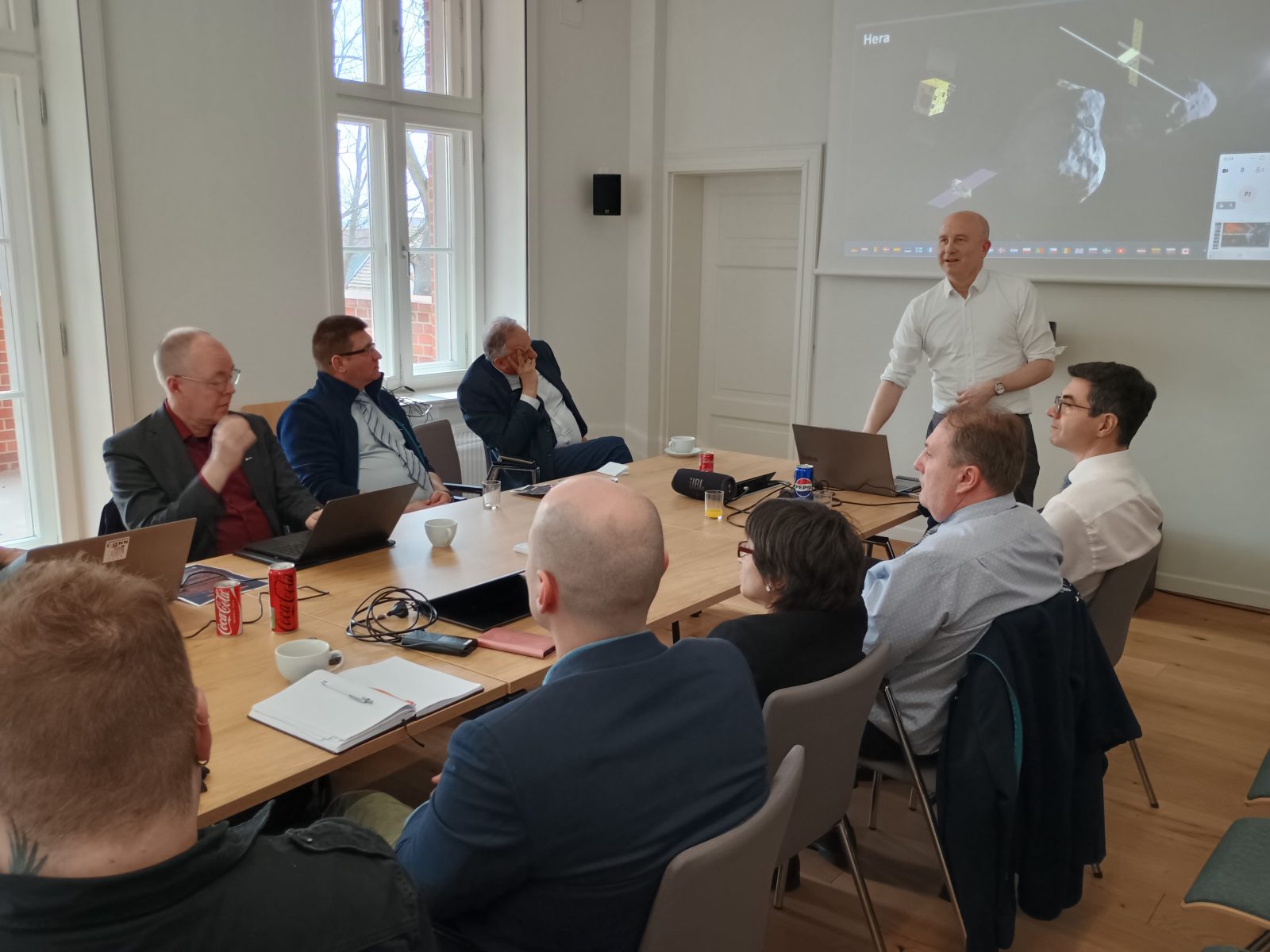
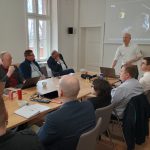
After the official launch, a briefing was held where participants debated the full implementation of standard observation procedures, the sharing of observational data with all interested EU institutions and recipients, and the subsequent phases of the program’s development. The meeting took place at the UWr Astronomical Education Centre in Białków, where participants utilized the seminar hall and visited the modern digital planetarium and a precision 3D model of the visible lunar hemisphere.
It is worth noting that Lower Silesia is applying to host the European Space Agency’s Technological Center. We fully support this initiative! Because when it comes to the many aspects of space, the scientists from the University of Wrocław truly know no limits.
Read more in our article: University of Wrocław: Reaching for the Stars. (Uniwersytet Wrocławski. Sięgamy gwiazd.)

Publication date: 11 March, 2026
Edited by: M.J.


